Marrow Pike
4 energy · 4 attack / 4 health

The Current Beneath the Names
The day the river counted it
The pike’s birthday was June 24, when the river keeper first recorded a bright-backed hatchling in the cemetery channel. That day falls under Cancer in the city almanac, the sign associated with protection, memory, and a strong pull toward home. A fish could not choose a date or sign, but boatman Darel marked the sighting because the small pike returned to the same stone seam the next morning. He called the date its birthday after the hatchling survived its first week in the current. The record cannot prove it was the day the fish hatched. It was the first day the living chose to celebrate its return.
The watercourse ran below the eastern wall, where a narrow sluice carried rain toward the river mouth. The city had built the channel before Darel was born. Its old stones were stained green, and roots had pushed through the mortar in two places. Above it stood a cemetery whose quiet lanes were crossed by families bringing flowers and undertakers carrying wooden biers. When the ground was too wet for wheels, smaller funeral boats moved through the channel and out to a sheltered bend where ashes and simple offerings could be left.
The pike hatched beneath a loose stone in the lower channel. Its nest was a hollow where the water warmed in late spring and slowed enough for small fish to shelter. Darel did not know how many eggs had survived. He saw three hatchlings that morning; after a hard rain he saw only one. The fish had a pale scar along its snout and a thin red mark beneath its left gill. It stayed near the stone seam as if the current had given it one safe address. Darel entered the sighting in his route book beside the names of the dead he had ferried.
Darel’s boats and the old channel
Darel was the son of a ferry repairer. His mother, Senna, kept the channel gates clear; his father, Oren, built the flat-bottomed boats used in rain season. Darel learned to read water by noticing which reeds leaned upstream and which stones showed foam on their lower edge. His father said a safe pilot did not try to command a current. He found the line the current would allow and kept enough room to change course.
When Oren died, Darel inherited a narrow boat with one uneven plank and a small brass bell. He did not plan to carry the funeral route for long. He had wanted to work with maps, but the undertakers needed someone who knew the channel and could keep a boat from scraping the cemetery wall. Darel accepted the work because it gave grieving families one less danger to think about. He tied the bell below the bow so it would sound when the hull passed under the low arch.
The route had rules that were never printed. The boat moved slowly beside the cemetery landing. The ferryman asked whether passengers wanted silence, directions, or someone to hold a bundle. The family decided whether flowers went into the water or stayed at the stone bend. Darel did not ask why someone had died unless the family wanted to tell him. His route book kept the names and dates needed to avoid carrying the wrong box, not stories for strangers to repeat.
The names on the route
Before Darel accepted the cemetery route, he worked as a ferry hand for the lower district. The work was mostly unremarked: help an elderly passenger step over the gunwale, keep a parcel dry, and tell a late traveler which crossing still ran after rain. He learned that a name written on a cargo list could describe a box while a name spoken by a family described a person. He kept those uses separate. The route book had the information needed to carry someone safely; it did not become a public register of their private life.
His sister Evi had taught him how to draw maps that showed the way a place felt, not only the distances between its walls. Her maps marked a bench where a tired person could sit, a gate that stuck in cold weather, and a market stall whose owner would give directions without asking for payment. After her death, Darel found one unfinished map folded inside a book. He carried it for years, though the lower channel had changed. When Lera became his apprentice, he showed her the route and asked her to correct anything that no longer matched the ground.
That act became part of how Darel taught. He did not make memory sacred by refusing to update it. If a landing moved or a wall cracked, the book changed. If a family asked for a name to be removed, he removed it. Lera learned that a route could honor those who had traveled it while still making room for the next person. When the pike began following the boats, Darel applied the same rule: write down what could help its living neighbors, but do not mistake a record for ownership.
The fish that followed the funeral boats
The pike appeared behind Darel’s boat on a cloudy afternoon. Its scarred snout surfaced just beyond the wake. At first Darel thought it was following the scraps thrown from the market boats. Then he noticed it returned only when the cemetery route carried offerings: fish skin from a family’s meal, stale bread, or the tiny silver bait that old boatmen used to keep as a token. The pike ate what drifted down and disappeared beneath the stones. It was not tame. It kept its distance and struck at Darel’s pole when he pushed it too close.
Darel had learned not to confuse repeated presence with permission. He watched from the boat and changed his course so the pike’s hiding seam stayed undisturbed. During the next weeks, two younger fish began appearing with it. Darel saw how the scarred pike positioned itself between the hatchlings and the boat’s shadow. When a heron swept low, the larger fish darted toward the reeds and the smaller ones vanished into the rock gap. It was not a guardian in a human sense. It was an animal keeping its young alive with the tools it had.
Some boatmen wanted to set a net in the channel. They said the pike would grow large enough to damage the oars or eat the store of bait. Darel asked them to set their lines farther downriver. He could not promise the fish would never take a catch. He could say the cemetery channel was the only nursery that had stayed sheltered since the sluice gate was repaired. The fishermen accepted the boundary after Darel offered them a place to leave spoiled scraps beyond the wall, away from the spawning stones.
A name spoken carefully
Darel called the pike “Morrow” because it appeared after every night the current turned rough. He did not call it to make it obey. He spoke the name from the boat when he saw the scarred snout near the stone seam, then kept rowing. The fish never answered as a pet might. Sometimes it sank. Sometimes it turned broadside so that the pale line on its head caught the gray light. The name was a marker in Darel’s route book: the fish seen by the lower arch, alive and moving downstream.
The name mattered to Darel because of his sister, Evi. She had died before he began the funeral route, and for years he had avoided saying her name when he passed the cemetery. His mother had told him that remembering someone did not require turning every errand into a ceremony. Darel still struggled to know when silence was respect and when it was fear. Watching Morrow return to the same seam helped him understand that a creature could have a place without being trapped there by another person’s grief.
One evening, Darel spoke to the fish about Evi while he waited for a boat to clear the lock. He said that she had hated the cold water and would have laughed at a fish choosing to live beneath a burial wall. Morrow rose once, took a scrap of fish from the current, and dropped beneath the arch. Darel did not treat the motion as a reply. He wrote the route’s water level in his book, then wrote Evi’s name on the page margin. Both entries were allowed to stay.
The bell Darel carried for Evi
Evi had died in the winter before Darel took the funeral route. She was his older sister, a patient mapmaker who could draw a street from memory after walking it once. Their mother wanted her buried on the hill. Evi had asked for the quiet bend by the channel, where she used to sit and sketch the sluice stones. Darel followed her request, but he could not bring himself to make the last crossing. Oren rowed that boat while Darel stayed at the landing and held the brass bell so tightly its handle left a mark in his palm.
For months, Darel carried the bell on ordinary ferries but never rang it. He thought that using it would make the sound belong to the route instead of his sister. Senna told him the bell had been made to warn people under the arch, not to preserve the exact last day he had heard Evi speak. He did not accept the advice immediately. He hung the bell below his own boat's bow and began with a single quiet ring each time he passed the low stone arch. The sound became part of the work, not a replacement for the person he had lost.
When the pike first followed the cemetery boats, Darel wondered whether it had come for the bell’s vibration or the scraps. He never tested the question by withholding food or striking the hull. He watched where the fish surfaced and noted what the current carried to it. The creature’s return did not make Evi present again, and Darel did not tell himself that the fish was her messenger. It gave him a reason to look outward while he passed the bend. That small change let him say Evi’s name in the route book without turning every crossing into a private vigil.
Darel learned that grief could stay beside work without controlling every decision. He could carry the dead and still ask living families what they needed. He could remember the pike’s scar without claiming that its life belonged to him. The bell marked a safe passage; the ledger marked a name only when the family wanted it recorded. He began to understand the difference between keeping a memory close and keeping a person from leaving.
The fare that was not a bargain
The cemetery families began leaving food deliberately. Darel asked them not to throw whole meals into the channel or feed the fish by hand. He made a small basket at the landing where scraps could be placed for the current to carry downstream. The pike could find them without approaching the boats. The rule was practical: food near the landing attracted rats, while food in the central channel could foul the sluice. It was also a boundary. Morrow could share the water without becoming a public animal for children to chase.
A boy named Pellin wanted to see the fish. He had been told it was a monster and asked Darel whether it could bite through a boat. Darel said a pike had teeth and would defend itself, so the boy should not reach into the water. He also told him that a creature did not become a monster simply because it was difficult to touch. Pellin returned with his aunt after the funeral and watched from the stone steps. Morrow surfaced once, then turned away. The boy did not throw a rock or call it closer. He left one small piece of fish in the basket.
Darel refused a merchant’s offer to catch Morrow and put it in a glass tank near the market. The merchant promised clean water, daily feeding, and visitors who would pay. Darel answered that the pike already had water, food, and a place to hide, and no one had asked whether it wanted an audience. The merchant accused him of valuing a fish over the city’s business. Darel said the fish’s existence was not a service the city had purchased. The pike remained in the channel, unowned and difficult to see.
A second boat on the route
Years later, Darel took on an apprentice named Lera. She had lost her father during a winter crossing and wanted to learn how not to repeat the mistakes that had led to his boat being caught in a crosscurrent. Darel did not teach her to blame one error. He taught her to mark the water, check the stern rope, ask the passenger whether they were ready, and keep a second exit in mind. Lera learned slowly and wrote every correction into a pocket ledger.
Morrow grew broad. Its scar became a white crescent from the tip of the snout to one side of the jaw. Darel saw it feeding less often near the landing, but it still moved between the young fish and the boats. Lera was frightened when it surfaced beside her oar. Darel told her to hold still and keep the oar out of the water until the fish passed. Morrow circled once, then dropped into its hiding seam. The apprentice laughed afterward, not because the fish had been harmless but because her hands had stopped shaking.
Lera asked whether Darel had named the fish. He said he had, but the name did not mean the pike belonged to him. She asked why he kept making a record of it. Darel said a route book helped the next pilot avoid disturbing the nursery. Lera added the fish’s scar, its usual resting place, and the months when the hatchlings were most visible. She did not add a story about friendship. She knew that some things became more vulnerable when people insisted on making them familiar.
The city’s answer to a flood
The flood came after three days of rain over the hills. Water poured through the cemetery channel and lifted the landing stones. Darel tied the boats above the wall and moved the families along the upper path. The old sluice chain, normally raised when water rose too high, had been lowered for repairs and fastened across the channel. The city workers had intended to replace a cracked hinge before the next storm. The storm arrived first.
The chain held branches, broken crates, and a tangle of reeds. Water rose behind it, turning the narrow channel into a shallow pool with nowhere to release pressure. Darel and Lera warned the ward clerk that the masonry beneath the east wall was beginning to shift. The clerk refused to open the gate because the flood schedule had been signed by the cemetery trustees. He feared that a sudden surge would carry the boats into the river and damage the lower bridge. Darel understood the risk. He asked the clerk to send workers with a release line. The clerk sent no one.
Morrow struck the chain from the water side. The first impact sounded like a rock against the iron. Then it hit again, using its body and the force of the flood. Darel saw its scarred head disappear beneath the debris and come back against the links. He wanted to row closer, but the current had begun pulling the boat sideways toward a broken wall. The pike kept striking the barrier because the high water had closed every passage to its nursery. The fish could not understand the clerk’s schedule. It could only push at the thing holding the water in.
The chain across the nursery
Darel and Lera tried to release the chain from the dry side. The lower walkway was already underwater, and the line snapped when they looped it around a post. Darel tied off the boat and asked Lera to carry the route book and the family names to higher ground. She refused to leave him alone. He said the book mattered because the undertakers needed to know who had reached shelter, not because he expected to survive the flood. Lera stayed long enough to pass him the second rope, then began leading the waiting families uphill.
The chain was pinning branches against the channel throat. Each time Morrow struck it, the trapped water surged backward. The fish’s young had vanished from the stone seam. Darel could see Morrow’s tail break the surface, then the white scar of its head as it turned for another rush. It might have been trying to open the path for the hatchlings. It might have been driven by pain and current. Darel could not translate the animal’s movement into a sentence. He knew only that the barrier had made the safe passage a trap.
The wall gave way above the chain. A stone dropped into the flood, and the resulting wave lifted Darel’s boat across the lower steps. Lera and two cemetery workers pulled the rope from the bank. Darel tried to hold the stern line so the boat would not crash into the funeral landing. Morrow struck the chain once more. The links broke at the corroded hinge, but the freed iron swung with the current and dragged the fish beneath the falling stonework. When the water opened, the small fish escaped through the gap. Morrow did not come back up.
The boatman’s account
The flood receded over two days. Darel searched the channel with Lera and the cemetery crew, checking every place a fish might shelter. They found broken boards, a cracked bell, and the iron chain wrapped around a section of wall. They did not find Morrow’s body. Darel’s boat had survived, though one side plank split. He had a cut across his palm from the rope and a deep bruise from the landing stone. He could still row, but he no longer knew what to tell himself about the fish.
The ward clerk wrote that the chain had failed under exceptional water pressure. Darel refused to sign the statement. He recorded that the sluice had been closed during the flood, that workers had not been sent when the wall began to move, and that Morrow had struck the chain before it broke. He did not claim the pike had understood the danger in human terms or made a deliberate sacrifice. He wrote what he had seen and left the line about the fish’s final moments uncertain.
Some families thanked the fish for opening the water. Others were angry that a creature had become part of the route at all. Darel accepted both responses. He told them the water had escaped because the chain and wall failed, not because the city had planned a rescue. The pike had been living there before anyone made a story of it. Its death did not turn the flood into a lesson that made the loss acceptable. Darel kept the scar and the date in his book, along with the names of the people who had been carried to safety.
When the current refused to end
Morrow’s spirit did not travel downstream with the flood. It remained in the channel, where the chain had blocked the water and the familiar stone seam no longer existed. The spirit did not return as a full fish. It gathered as pale bone beneath dark water, a moving outline that appeared where currents pressed against closed gates. When the city installed a temporary barrier, the apparition struck it. When a boat scraped the wall, the water around it shivered like a fin had passed underneath.
Darel felt the presence in the old route. At first he thought his grief had made him look for the scar on every wave. Lera also saw the pale shape turn against the remaining chain. Neither of them claimed it was Morrow’s whole mind. It did not respond when Darel spoke the name, and it did not circle the feeding basket. The spirit kept reenacting the pressure of the blocked passage. A barrier appeared, and the bone shape went toward it, even when the channel behind it was empty.
The city wanted to replace the sluice with a reinforced gate and leave the channel closed until a new flood plan was approved. Darel asked for the chain to be removed and for the watercourse to remain open to the river. The clerk said the channel was dangerous and the families needed protection. Darel answered that the flood had grown dangerous because a repair had blocked the only outlet. He did not ask them to forget the risk; he asked them to keep a path for the water and to maintain it before rain began.
The route written by more than one hand
Lera helped Darel assemble the evidence for a public hearing. She brought the route book, the worker’s missed repair order, and a map of the cemetery channel. Darel added the names of the families who had been evacuated and asked each person before including a statement about their loss. The hearing was not a trial of the fish or a contest over which neighbor had suffered most. It was a discussion about whether the city could close a watercourse without giving the current a safe release.
Some officials argued that the channel was too old to keep. They proposed filling it and building a concrete drain under the cemetery. Darel asked how a new drain would be cleared, who would inspect it, and where overflow would go if the river rose at the same time. The questions made the engineers revise the plan. Lera drew a maintenance route with two access points and a removable chain that could be raised without sealing the water entirely. The city did not accept every part of it, but it agreed that a permanent blockage was no longer an option.
Darel’s account changed as other people contributed. A cemetery gardener remembered that the sluice had been slow to open for years. A child recalled the hatchlings near the stones. A boat repairer identified the rusted hinge as older than the official maintenance date. The route book gained copies, not because one account could settle everything, but because no single person should be able to erase the evidence. Darel wrote Morrow’s name only in the margin where the fish’s scar had been described. The hearing concerned the channel and the people responsible for it.
The last chain lifted
The city eventually sent a crew to remove the broken chain and rebuild the gate on a higher hinge. Darel insisted that the watercourse be tested before the cemetery route reopened. Lera stood at the upper landing with the route book and called out each change in level. The crew lifted the chain in short intervals, then lowered it again to check the latch. The river passed through without carrying the boats toward the bridge. The stone seam where Morrow had lived was split, but water moved through it again.
Darel came to the channel before sunrise the day after the work finished. He set no food in the water and did not expect the pike to return. He walked to the upper bank with the brass boat bell in his hand. He rang it once for the route, not as a signal to the dead. A pale shape surfaced beneath the channel arch. The bone head turned toward the reopened current, then away from the gate. It did not strike the iron. Darel wrote that the channel remained open and that the chain had been removed for good.
He understood that he had not brought Morrow back. The pike could not recover its body, its lost young, or the quiet stone seam that existed before the flood. The spirit’s return to the open water was a change in the living arrangement, not a reversal of death. The route could continue because the obstruction had been taken away. Darel still grieved the fish. He also stopped asking it to prove that the chain’s removal had been worth the cost.
What the water kept
The spirit remained after the channel reopened. It no longer struck at every gate, but it circled places where boats met walls and where water narrowed around iron. Darel saw the outline less often as the seasons passed. When it appeared, he could distinguish the pale snout and the red mark beneath the gill. The shape was not the animal restored to life. It was the trace of a life that had been interrupted by a preventable barrier and had not found another place to go.
Darel retired from the funeral route when his hands could no longer manage the stern rope in cold weather. Lera took over, keeping his route book and adding her own observations. She carried the names of the dead carefully, checking every label before a boat left the landing. She did not treat the pike as an omen or a saint. She taught new pilots which channel stones had shifted and why the chain must never be lowered without a release passage for high water.
Morrow’s name lived in the route ledger, but the fish’s existence belonged to the water. Children sometimes asked if it had saved the cemetery. Lera answered that it had tried to force open a blocked current while the people responsible for the gate failed to do their work. The pike did not choose to die as a lesson. It was a fish protecting its young in a place it knew. When the current carried its outline past the wall, Lera let the water keep its silence.
The Crow’s record of the passage
The Ledger Crow came when the channel maintenance book recorded a full season without a closed sluice. Darel was old, and Lera had become the boatman the families trusted. The Crow read the route notes, the flood account, and the names of those who had asked to have their statements removed. It did not gather the fish’s remains, which no one had found. It asked Darel what he wanted preserved. He said the open channel mattered more than a monument and that no one should be allowed to turn Morrow’s death into proof that the flood had been necessary.
The Crow bound the spirit as Marrow Pike, a 4-energy, 4/4 Hollow creature with Tide affinity. Its printed effect says, “Gain +2 attack while attacking a Guard.” The record carries the pike’s collision with a barrier into a precise game rule: while it attacks a creature with Guard, its attack rises from 4 to 6 for that attack. It receives no bonus while defending, attacking a champion, or attacking a creature without Guard. The pike remains a 4/4; the effect does not increase its health or change which targets are legal.
At the table, Marrow Pike is a focused answer to a Guard that can legally be attacked. Against a 5-health Guard, its 6 attack can remove the defender in one attack, but return damage still applies and the Pike’s 4 health does not rise. Against an unguarded 5-health creature or a champion, it attacks for 4. The bonus does not make the Pike a general-purpose stronger attacker. C31 Undertaker’s Swan is recorded as another passage through the same current, carrying names; the two entries share a waterway, not a crew, family, or claimed meeting. The Crow closed the folio only after Darel’s route kept moving without a chain across the water.
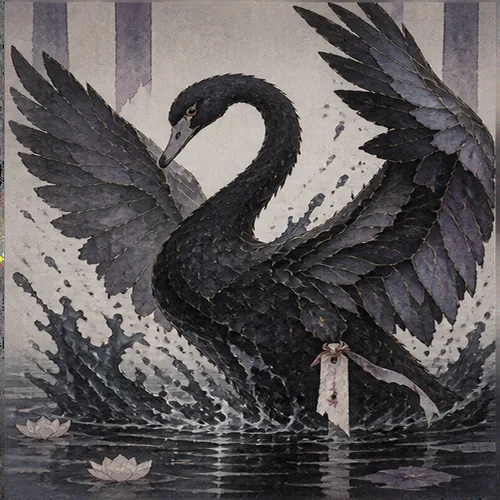 Undertaker's SwanIt ferries names written on feathers and washes its beak only after it has earned someone one more morning..
At the table
Printed effect: Gain +2 attack while attacking a Guard.
Break through a Guard
Marrow Pike is a 4-energy 4/4 Hollow creature with Tide affinity. It gains +2 attack only while attacking a creature with Guard, so that attack is 6. It does not gain health, does not receive the bonus while defending, and does not gain it when attacking a non-Guard creature or a champion. The Pike's own attack does not change what targets are legal.
One move, shown
A Guard is legally available as an attack target, its current health is low enough for 6 attack to remove it, and its return damage will not make the Pike's 4 health lethal. Check the defender's attack before sending the Pike in.
Spend 4 energy to play Marrow Pike. Apply the printed effect exactly as written.
Attack a 3/4 Guard with Marrow Pike: the Pike attacks for 6, removes the Guard, and takes 3 return damage, leaving it alive at 1 health. Against a 4/4 Guard, the Pike still removes the defender but takes 4 and dies too. Against an unguarded 3/4 creature, the Pike attacks for its printed 4, not 6; against the champion it also attacks for 4. The bonus is temporary for that Guard attack and never increases the Pike's health.
The example explains a legal choice, not an additional card effect. Check the live game for current targeting and timing.
Chibi mode
This is the current game’s chibi rendering of Marrow Pike. The alternate art changes presentation, not the printed card rules.