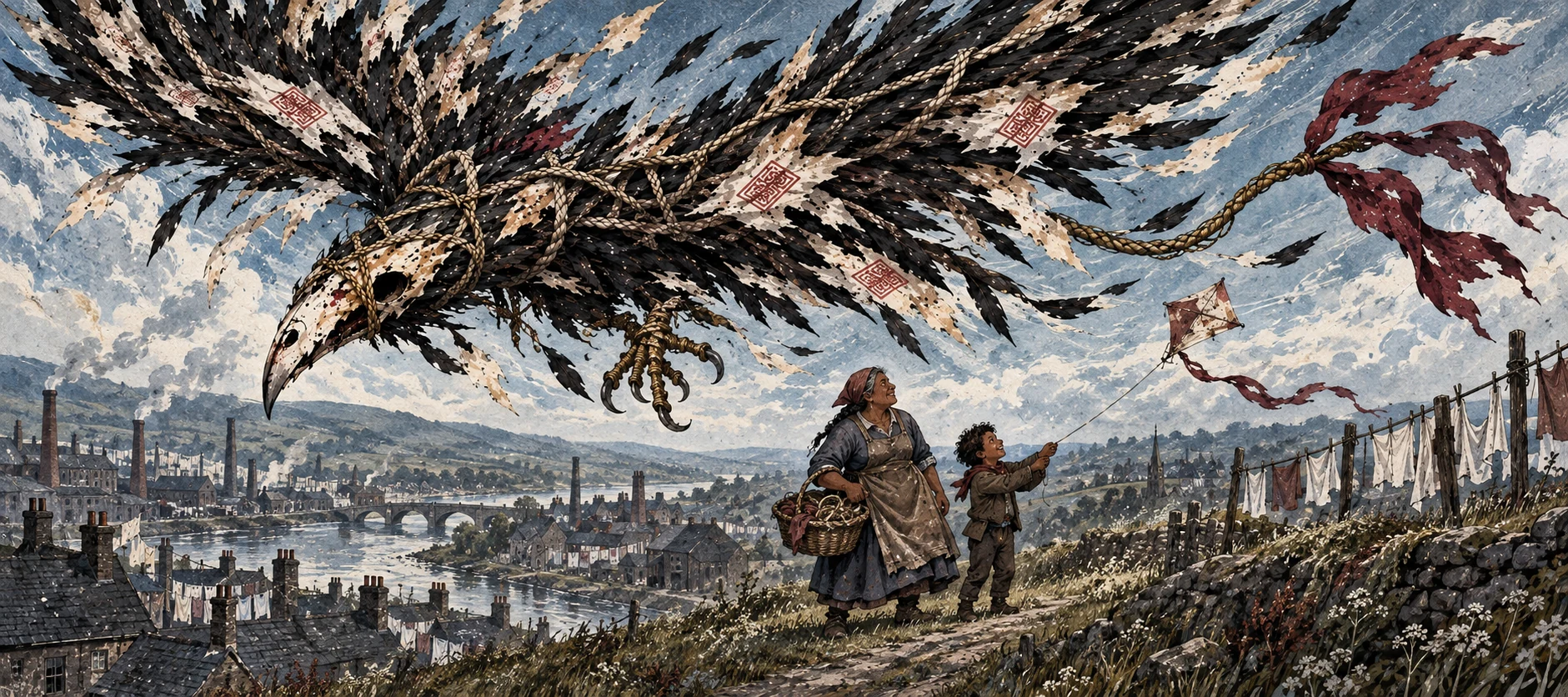
A winter nest above the dye
Tarn hatched on December 5 in a nest above the eastern dye works, where warmth rose through a broken flue and kept the roof clear of frost. His mother had lined the sticks with stolen wool. His father brought food and argued with every other bird that approached the chimney. The smallest of three hatchlings, Tarn learned early that a full crop required attention and a certain disregard for his siblings' comfort. A boy watching from the neighboring rope loft marked the hatching on a scrap of account paper. Nilo was ten, supposed to be counting cord, and much more interested in the pale head appearing above the nest.
The roof was Tarn's first country. It contained the warm side of a chimney, the dangerous gap beneath a cracked tile, and a raised stone that became enormously desirable whenever another bird occupied it. He did not know the boy's name. He knew the small moving shape that stopped below the nest without reaching toward him. His mother tolerated that shape at a distance and struck at it when it came too close. Nilo accepted the correction, although he later described the encounter to his aunt Jevra as an entirely friendly conversation. Jevra examined the scratch across his cap and declined to believe him.
Tarn grew into a dark, narrow-bodied raptor with a hooked beak, long wings, and a deeply forked tail. He liked water more than either sibling did, especially rain collecting in the shallow depression of a roof slate. He would lower himself into a puddle too small for the purpose and splash until the whole patch was dry. He also liked the windward ledge of the dye works, where rising warm air made his first hovering attempts less difficult. His boldness was uneven. He would challenge a bird twice his size over a morsel, then retreat from a sack that moved unexpectedly.
His first long flight ended beyond the familiar roofs. He landed in a courtyard, startled a line of washing, and found that the ground offered few good approaches to height. A dog appeared beneath the sheets. Tarn struck upward through the wet cloth, caught one wing against a wall, and reached a low beam with pain running through the joint. Nilo found him there near dusk. The boy had followed the washing woman's complaints, expecting a broken window. He sat down instead, held his hands where the bird could see them, and waited until the courtyard stopped feeling like a place full of pursuing shapes.
The hand that opened
Jevra allowed a recovering bird in the rope loft on three conditions: Nilo would clean up after it, keep it away from the finished cord, and remember that healing was meant to end. She made a low enclosure beside a window, with a door that could be opened once the wing strengthened. Tarn bit her glove during the first examination. She called him a troublesome little lord and treated him anyway. Nilo brought food, spoke too much, and gradually learned that stillness could be useful. The bird learned the smell of hemp dust and the small scrape of Jevra's uneven boot on the stairs.
The name came from a dark rain pool in the hills that Nilo had visited once with his mother. He remembered it as somewhere a whole sky could fit. Jevra thought the name too grand for an animal that had just stolen a strip of drying fish from her supper. Nilo used it until Tarn began turning toward the sound. Affection did not make the bird agreeable. He snatched offered food, objected to the broom, and seized the finest loose fibers for a nest he did not need. Nilo found these preferences magnificent. Jevra found them expensive and moved her best cord to another room.
When the wing could bear weight, they practiced between two beams. Nilo wore a thick glove, lowered his wrist for a landing, then opened the fingers and raised the hand to offer a launch. He never threw Tarn. The first time the bird refused, the boy grew impatient and tried to tip him forward; Tarn struck his sleeve and would not approach again that afternoon. Nilo sat beneath the beam until he understood the difference between offering a place to leave and deciding when another creature should leave it. Their later gesture retained that pause: an open hand, a breath, then the lift.
The window stood open when Tarn made his first flight outside. He passed straight over Nilo's waiting glove, circled the chimney, and disappeared behind the roofs. The boy tried to hide his disappointment by scrubbing the enclosure with unnecessary force. Jevra let him finish before reminding him of the third condition. Tarn returned two evenings later, landed on the uneven boot left outside her door, and demanded food with the confidence of an established customer. Nilo laughed so loudly that the bird moved away. Thereafter the loft was a place Tarn chose among several places, and the boy became better at welcoming a return without calling it ownership.
Lessons in loose string
Nilo made paper kites from spoiled invoices and cloth offcuts. He liked them crooked, with long tails that corrected some of his careless construction. On free afternoons he carried one onto the hill above the washing grounds. Tarn sometimes followed, drawn by the movement and the small rewards concealed in Nilo's pocket. The bird learned to catch the tail without fouling his wings, then discovered that taking the entire kite was much more satisfying. Nilo would chase him, laughing and furious by turns. Jevra eventually required the boy to explain each ruined piece of account paper before she gave him another.
Their best game used a loose loop placed over a short upright peg. Nilo lifted his hand; Tarn took the loop in his beak and carried it to the roof edge, where he could drop it into a basket below. He missed frequently and appeared untroubled. The boy cared about scores until he noticed how often Tarn preferred the miss, which sent him wheeling after the falling cord. He began making wider loops and leaving the basket aside. Jevra said they had invented the least efficient method of storing rope in the district. She nevertheless kept suitable scraps in a separate pocket for them.
Nilo was proud enough of Tarn to become foolish. When older apprentices offered coins to see the bird perform, he promised tricks they had never practiced. A tight loop caught around one talon during the demonstration. Tarn fought it, tore free, and stayed away for six days. The boy spent those days searching the roofs and inventing excuses for the watching apprentices. On the seventh he left the glove on the sill and waited downstairs. Tarn came for the food but avoided the loop. Nilo did not put it out again. The small loss of trust taught him more than the coins had been worth.
On December 5 he began leaving a dish of water on the sunniest ledge, even when he had to break ice to fill it. Jevra called this an unsuitable birthday feast. Nilo replied that Tarn could choose his own supper. The bird bathed when the weather permitted and ignored the dish when it did not. A little sketch of his forked tail appeared beside the date in the household book. Nilo kept a naturally shed flight feather between those pages, using it to trace the curve of a wing on his paper kites. The feather remained a keepsake; he would not trim its good vane into a pen.
A country without roads
As Tarn matured, his visits grew irregular. He hunted beyond the dye works, rode the warm air above kilns, and learned where rain arrived before the people below began bringing their washing inside. The city from his height consisted of movements and openings rather than named streets. One courtyard offered dependable scraps; another contained a cat he remembered. He preferred the river's crooked bend to its broad straight reach, because wind lifted against the warehouse wall there. He was neither brave everywhere nor gentle by habit. He drove strangers away from a favored perch and sometimes abandoned a good meal simply because a better-looking one moved below.
A pale-marked female began sharing his stretch of the river. Their first encounters were arguments. She took the perch he wanted, ignored his displays, and outflew him when he tried to pursue her. By spring they were carrying sticks to a sheltered ledge above an abandoned toll house. Tarn stole soft cord from Jevra's yard for the nest. When Nilo followed him and discovered where it went, he left more cord on the wall and watched from a distance. The boy wanted to climb closer. Jevra asked how he would enjoy a giant looking through his bedroom window. For once, the comparison settled the matter.
Their chicks changed Tarn's days. He brought food, watched weather, and discovered that the pale-marked bird would not tolerate his habit of keeping the best part for himself. He became efficient at arriving with something useful. Nilo saw him less and learned to take pleasure in sightings that did not end on his glove. One afternoon he watched Tarn turn in the sky with a young bird following awkwardly behind. He went home excited enough to tell the story three times. Jevra listened to two versions and required him to finish his work before the third. The loft's open window remained part of Tarn's wider country.
Some seasons were good. Others left nests empty after storms. Tarn returned to the river after loss because there was wind there, food, and the pale-marked bird moving along the same line of roofs. His life did not wait for Nilo to notice it. He acquired a notch in one tail feather, a dislike of bright laundry pins, and a habit of sleeping with one foot drawn high beneath him on the warm chimney lip. When he visited the loft, he sometimes brought a twig too large for any useful purpose and dropped it on Jevra's bench. She kept one above the door, calling it rent.
The price of a length of rope
By sixteen, Nilo could judge a cord's weakness before Jevra finished asking. He had also become impatient with the smallness of their yard. He wanted work on river barges, where knots held cargo beneath an open sky. Jevra wanted him to finish his apprenticeship before announcing himself to the world as indispensable. Their arguments were familiar enough that Tarn sometimes slept through them. Nilo saved coins, spent some recklessly, and drew boats in the margins of orders. He had friends who considered leaving an adventure and others who considered it a betrayal. He was not yet good at admitting that both kinds of talk frightened him.
The trouble began during a collector's seizure of goods from the neighboring mill. Nilo cut a restraint holding a younger apprentice to a cart while the collector argued with the miller's wife. The apprentice ran. When a court servant seized Nilo, there was a struggle and a fall against the cart wheel. Witnesses disagreed about the blow. Jevra knew her nephew's quick temper and could not honestly say he had never meant to hurt anyone; she could say that several accounts described things their tellers could not have seen. The court accepted the accounts it preferred. Breaking its restraint became defiance of its authority, and defiance became a sentence intended to instruct the square.
Tarn knew the change first as an absent hand. The glove stayed on its peg. Jevra worked late, stopped work suddenly, and left meals untouched. She visited offices carrying documents that came back with more marks and no useful answer. Tarn followed her across the roofs until he learned the barred windows of the holding house. Nilo appeared behind one of them with a face grown thin and the same small lift of his fingers. The bird landed outside. For several minutes the boy said nothing. Then he began telling Tarn about a barge he still meant to see, as though describing its deck might keep it available.
Jevra brought the household book to support an appeal about Nilo's age and the court's hurried record. The keeper allowed him to inspect it, then returned the book to her. Nilo retained the loose flight feather, asking for something from home that the room could not spoil. Around 2990 A.B., the notice of his execution was delivered on stiff cream stock with a red court impression. He wrote a message on its blank reverse. The words were intended for hands that could read them; Tarn watched the moving pen and understood only the familiar care with which the boy protected the paper from a wet windowsill.
The fold before the wind
The bird came again on the morning appointed in the notice. Nilo had saved a little food. When Tarn slipped between the bars, a guard struck at the sudden wings with a short staff, meaning to drive him out. The blow sent him against the stone beside the bed. Nilo gathered him before the guard could reach again and backed into the corner, using the notice beneath the injured body to keep its feathers off the damp floor. His anger dissolved into urgent, repetitive promises. Tarn heard his name, felt the familiar curved hand beneath him, and tried to spread a wing that would no longer obey.
This sheet had once served another purpose. Beneath the fresh execution printing lay an incompletely cancelled seal for retaining spoken testimony until its hearing. An economy in the court stores had returned the old stock to use. The seal usually held an impression of a witness's words; its receiving stroke and retaining stroke had been cut apart when the first testimony was discharged. Neither Nilo nor the guard saw those faint remnants. Nilo eased Tarn onto his folded coat, leaving an edge of the notice beneath the bird’s beak. He placed the shed feather along the paper and began folding it into the shape they had flown above the washing grounds. He wanted something of their afternoons to reach the sky when the living bird could not.
Tarn died while the boy closed the central fold. His departing awareness rose toward an opening beyond the boy's warmth, but the fold brought the old strokes into contact around the feather. Nilo was speaking Tarn's name directly into the receiving mark. The feather identified the life in his hands; the last breath supplied more than an ordinary spoken impression. The joined seal caught the whole departing bird as unfinished testimony and closed its instruction to remain. Tarn felt the open way withdraw. He was pressed into a narrowness that still remembered wings. The dead body lay quiet beside the boy, while sensation gathered in the paper under his fingers.
Nilo gently slid the folded paper free of the still body, tied a scrap of cord through the kite, and lifted it toward the window. He could not know what had happened inside it. His fingers opened with the pause Tarn knew, then rose. Wind caught the paper before the door opened for the boy. The kite cleared the bars, twisted above the courtyard, and vanished into rain blowing across the holding house. Tarn tried to turn back, but the unfamiliar body answered slowly. By the time he found the window again it was empty. He had seen neither a death nor a rescue. Rain ran through the reverse of the notice and carried its handwritten message down the folds in unreadable gray threads.
What the paper remembered
The first night was a series of falls. Tarn could feel wind but had no muscles with which to correct it. The central crease pulled him straight whenever he tried to settle. He landed in an empty gutter and waited for the hunger, cold, and exhaustion he remembered. What came instead was a persistent inward tug, as though the boy's folded hand had never finished opening. When dawn reached the roofs, he tried to follow the same distant opening he had sensed at death. Every approach ended at the center of the notice. He could fly across the city, but he could not pass beyond the instruction holding the bird inside its testimony.
Jevra found him three days later tangled in a line above the rope yard. She recognized the feather and Nilo's crooked folds. When she lowered her wrist, the kite leaned toward it. She almost dropped him. Her grief had not yet taken a settled shape: the holding house would not produce Nilo, the square's records contradicted themselves, and somebody had sent his coat back without explanation. She brought the kite inside and dried it by a modest fire. Tarn settled on the uneven boot beside the bench. Jevra covered her mouth with her hand, then fetched the old water dish although neither of them knew what use it could be.
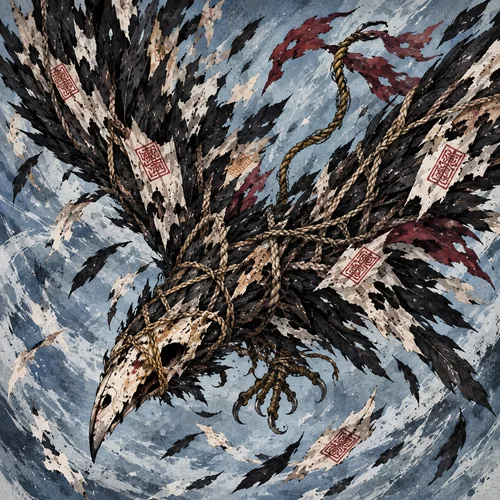
His form grew around the movements he kept attempting. Black feathers caught in the yard's corners lodged along his paper wings. Ragged cloth gave them weight. The notice's fibers stiffened into a long, pale beaked head that followed the remembered shape of his own skull; no child's remains lay within it. Cord drawn through the central fold became a body and gripping feet. Tarn worked loose ends with his beak, building a forked tail from rope and faded streamers. Jevra supplied clean scraps and removed dangerous tangles. Red impressions and fragments of printing remained visible between the dark layers, even when the wings spread broad enough to shadow her worktable.
She brought Tarn to a retired hearing clerk. The bird perched on his bench and opened one wing so he could examine the notice’s central fold within its body. He recognized the joined retaining strokes and the feather's identifying trace. A proper discharge would have required a hearing entered under the captured witness's mark. The reused stock had no surviving docket, and every attempt to address it to Nilo turned aside from the bird inside. The clerk could describe the mistake but could not safely undo it. Jevra paid him for that honesty. On the walk home Tarn carried one of her loose cord loops above the street, dropping it when she lifted the basket she had brought without quite knowing why.
Where the crossbeams rise
Tarn returned to the river and found the pale-marked bird defending her ledge against him. She recognized neither the paper face nor the sound of rope moving through dry wings. He stayed on a neighboring roof until evening, then left when his presence kept her from settling. For weeks he watched the old territory from farther away. The wind remained familiar; the place he had occupied among living birds did not. Sometimes he descended to bathe in a rooftop puddle, only to feel the water loosen his edges. Jevra learned to set the dish beneath a shelter where he could hear the drops without standing in them.
Raised timber drew him more powerfully than any offered perch. A new gallows assembled in a square brought back the holding house, the opening door, and hands that had vanished before he could return. He flew among its ropes and pulled at every knot that yielded. Loose pieces followed him home. Jevra found them on the bench beside useful cord and could not bring herself to sort them immediately. People began calling the shape above the square the Gallows Kite. Some cheered when he troubled a scaffold; others drove him away. Tarn looked down through every crowd, searching sleeves, wrists, and the moment before a hand opened.
His urgency could harm the people trying to help him. Once he seized the cord supporting a worker's ladder because its knot resembled the one beside Nilo's window. The worker fell a short distance and broke an arm. Jevra brought food to the man's household and kept Tarn outside while she apologized. Later she sat beneath the loft window and refused the loop he offered her. He dropped it beside her boot and waited. She touched his folded head at last, but the injured man's sling remained visible whenever he crossed the yard. Tarn began watching what a rope held before he pulled. The lesson came slowly, through attention rather than absolution.
He still stole knots from empty scaffolds. He still arrived when workmen raised a new crossbeam. Yet he also learned the difference between a crowd gathering to watch and people gathering to carry something away. He hovered over dismantled timber, watched prisoners leave under guard, and followed carts until the passengers turned into faces he had never known. Some searches ended in relief for someone else. None gave him Nilo. Back at the yard, Jevra kept the returned coat folded in a chest and took occasional work from boatmen who might have seen a young rope worker traveling under another name. Hope acquired errands and expenses. She carried them without calling them proof.
The line that was not there
The years after the notice took flight did not remain one long morning. Jevra's hair grayed. A new apprentice entered the yard and learned to leave the upper window unlatched. Tarn acquired preferences that belonged to his changed body: dry rafters, broad rising winds, soft rag that did not catch at the joints. He liked the sound of loose cord falling into a basket and disliked anyone handling the central crease without first showing their fingers. Every December 5, Jevra laid out the dish and read the date from the household book. Tarn could no longer splash in it, but he settled close enough to watch the reflected sky break when a drop fell.
He returned to the hill above the washing grounds when children flew paper kites there. A child once offered him a tail torn from her own construction. He took it with such careful slowness that she laughed instead of retreating. The faded burgundy cloth became one of the streamers behind him. Jevra watched from the path and realized she had been waiting for every new kindness to diminish the old attachment. It did not. Tarn could learn another person's hand without ceasing to search for the first. She began bringing scraps to the hill on free afternoons, sometimes staying long enough to enjoy herself before the practical work called her home.
Near the present era, a silent Procession Page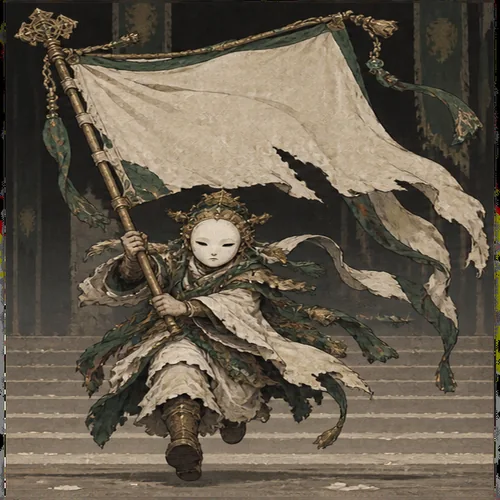 Procession PageC39 · 1 energy · 1/2The smallest herald carries a list of names too heavy for its paper arms, adding one final mark to debts already bleeding.Read this folio → passed through a square beneath Tarn's circling shadow. Its register drew Jevra's attention because it held names and burdens absent from ordinary public lists. She asked about Nilo. There was no entry for his name. Tarn descended until his rope feet nearly touched the moving paper, then rose when the Page continued without offering an answer. The Ledger Crow recorded the omission and suspected an erased sentence rather than an erased life. Jevra would allow the suspicion onto the page only beside the limits of what they knew. A missing entry could not tell her where the boy had gone.
She repeated the question in offices, on barges, and to travelers whose answers deserved a hearing. Some sold her lies. Others remembered a young man whose description almost fit. Tarn followed several such reports, returning tired in a way his dry body had learned for itself. Jevra stopped apologizing when she chose not to pursue a rumor with nothing behind it. Keeping faith did not require handing every stranger the contents of her purse. She continued to repair the old glove, adding new leather where the fingertips wore thin, and left it beside the window with the palm open. The place remained available even when neither of them watched it.
A crease is not a door
A traveling paper conservator named Edda came to the yard to examine court stock damaged in a warehouse flood. Jevra showed her Tarn's central fold after the ordinary work was done. Edda found that the old seal did not simply sit beneath him like a weight that could be cut away. Its closed path had become the route through which his whole remembered body held together. Feather, fold, and returning stroke referred continuously to one another. Releasing any single part without carrying the rest would tear through Tarn's recognition of himself. She asked permission before touching the paper. He extended one wing and kept the other folded against Jevra's sleeve.
They tried opening a shallow section of the crease. Tarn's right wing lost its sense of distance at once. He reached for the sill and struck empty air, unable to remember how far his own feathers extended. Edda closed the fold before the confusion spread. The wing returned, but for the rest of the day he would land only on the broad bench. Another test addressed a discharge to the seal's old court; the mark circled back through the feather and left him exactly where he had begun. Jevra ended the trials when he pulled away. A person able to name a trap was not entitled to keep demonstrating its teeth.
Edda proposed moving the closed path whole instead of attempting to open it. A prepared soul card could receive the central fold, identifying feather, and every returning stroke together, giving the trapped bird a vessel that did not depend on weathered paper stretching across the sky. The notice would remain a captivity carried within that vessel. She could offer rest from the drag of wind and a safer return to form, but no passage beyond death and no answer about Nilo. Jevra listened, then placed the old glove beside the prepared sheet. Tarn approached it, stepped back, and spent the night on the windowsill considering the offered place.
They left the window open throughout the following day. Tarn flew to the river, the hill, and the roof above the holding house. New stone filled the old window. He circled it once and returned with a short length of cord from the loft gutter. On the bench he set the loop beside the glove, then lowered his beaked head until the central crease faced Edda. Jevra did not call him brave or tell him the boy would have wanted this. She put on the glove, held her wrist steady, and waited through the pause that had always belonged to him. This time he chose to land.
The palm beneath the wings
Edda had traced the exact closed retaining path onto the receiving layer of one narrow card, leaving a single junction open. She laid it across Jevra's gloved palm beneath Tarn's feet. With a fine bone folder she guided the original central fold down to meet that junction, keeping the shed feather inside it. Tarn felt a second small shape answer the instruction that had held him since the cell. When he pressed his weight forward, the receiving junction closed around the original path. Edda guided the still-joined outer paper into the receiving surface without separating its strokes. The tether changed its extent in one continuous motion, and the rest of the bird followed inward.
The long wings gathered first, bringing every stained notice strip and remembered feather into the vessel. Rope feet loosened their grip on the glove. Jevra felt the familiar weight diminish, then the last small pressure of a beak against her thumb. The whole soul entered with the retaining fold; no part remained circling outside. In her palm lay a thin card, tall enough to hold comfortably between finger and thumb. Its dark reverse bore gold framing, teal rings, and a printed red seal marked with a skeletal hand. The weathered materials that had carried Tarn were held within it rather than discarded as a broken second body on the bench.
For the first time since the holding house, he rested without bracing against the paper's command to stretch into flight. Jevra sat until Edda's kettle boiled, cooled, and needed heating again. When they called him forth later, Tarn emerged whole, with the same pale skull shape and trailing knots, still anchored to the closed record inside the card. He crossed the room, settled on the uneven boot, and reached toward the water dish. Jevra moved it where he could see the sky. Neither the quiet nor the new vessel had changed what he was seeking. They had made room for something besides the search.
The Gallows Kite still turns toward newly raised crossbeams. He tests ropes, carries stolen knots, and studies the hands beneath him with a concentration that can make a stranger stop speaking. Sometimes he also visits the washing hill, where the smallest kites need the best wind. Jevra takes the card there on afternoons when the yard can spare her. She holds it in one hand and the repaired glove in the other. The glove is available, not occupied by an invented ending. Above her, Tarn circles until he finds the current he wants, then lets it carry him higher before deciding for himself where to turn.
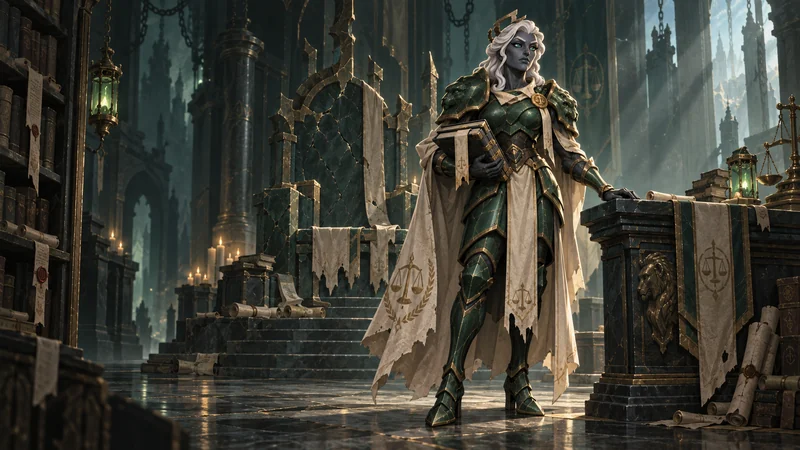 IonaFirst-generation championIona catalogs the promises every ruler abandoned.Read this biography →
 Mourning BobbinC19 · 3 energy · 1/5Nera wound this bobbin with the final threads from a hundred funeral coats.Read this folio →
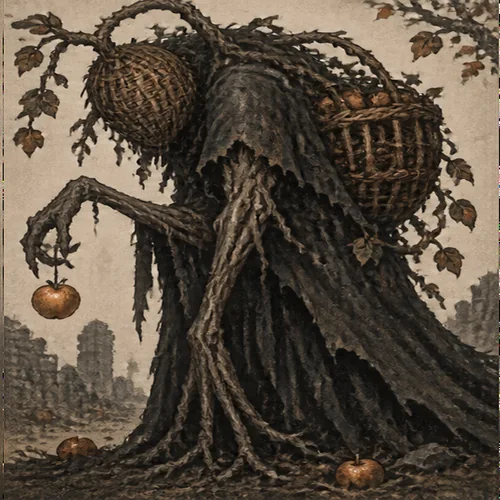 Orchard WretchC27 · 4 energy · 4/4Built from burned stakes and evacuation coats, it brings dark fruit to doorsteps and listens below the oldest tree for a name the roots will not return.Read this folio →
 Waxwork MatronC10 · 4 energy · 2/6She casts a new face for every child the winter takes, setting them around a supper that never cools.Read this folio →
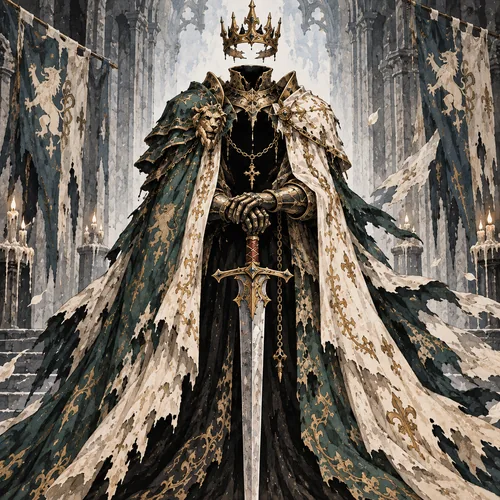 The Hollow RegentC12 · 6 energy · 5/7The crown was buried with an empty suit of armor, yet the taxes continued to arrive.Read this folio →