The spoolmaker's daughter
Edda Marr was born July 16 in a riverside quarter where wood shavings collected in the seams of the floorboards. Her mother, Vessa VessaFirst-generation championVessa once played every role in the mirror theater.Read this biography →, cut mourning cloth; her father carved bobbins from fallen branches and discarded furniture. Edda grew up listening to two kinds of careful work: cloth turned so its hem would not fray, and wood turned so it would not split.
Her older brother Kelm thought she was too solemn until she hid his best awl inside a hollow spool and asked him to pay a retrieval fee. Edda enjoyed practical jokes that ended with the missing object returned. She liked knowing exactly where a tool had gone and who would be upset if it did not come back.
On her birthday, her father carved her a bobbin from the handle of a broken chair. One side was pale and one side dark, because the wood had aged unevenly. The hole through its center was crooked. Edda loved it anyway and wrapped the first length of thread around it without asking him to sand the edges smooth.
As a child, she spent long afternoons sorting scraps by texture. She could tell linen from cotton in a dark room and recognized her mother's cutting shears by their uneven click. The family teased her that she could hear a shirt coming apart. She said the cloth usually warned you before the rip became visible.
The mourning workroom
The family workroom took in garments after funerals and before them. Some coats needed a black cuff, some needed a name removed at the owner's request, and some were returned exactly as they had been so a family could decide what to do later.
Edda's first paid job was hemming a coat for a dock worker whose partner had died in an accident. The customer asked for a seam deep enough to let the coat be shortened later if she gained weight. Edda did not call the request hopeful or sad. She made the fold, marked its depth, and gave the woman a note showing how to release it.
At the end of each job, Edda left one small loop of thread beneath the inner collar. The loop was not a symbol of a spirit or a blessing. It meant that the garment could be brought back for repair, even if the customer could not afford another fee. The family called it her return loop.
Edda kept a ledger of every coat, owner, requested change, and unfinished question. She wrote only what customers agreed to share. If a family asked her to destroy a note, she did. Her father wanted a more reliable accounting system, but Edda said a record that ignored consent was simply another way to take something from the bereaved.
Edda liked the small ritual of choosing a needle before opening the shop. She tested each one against a scrap, set the bent ones aside, and returned usable needles to the tin point-first. The order calmed her, especially on mornings when someone arrived with a coat and could not yet say the name of its owner.
The first coat she could not finish
Edda was nineteen when her brother Kelm took a job repairing a riverside winch. He promised to return by the first frost, and she promised to shorten his work coat when he did. The frost came early. The winch broke under ice, and Kelm's body was never recovered from the current.
His coat came back with a torn pocket and a strip of river reed caught in the lining. Edda sat at the worktable for three days without touching it. Her mother asked whether she wanted the coat cleaned, mended, or left exactly as it was. Edda said she could not tell yet, and VessaVessaFirst-generation championVessa once played every role in the mirror theater.Read this biography → closed the workroom for the week.
When Edda returned, she removed the reed and repaired the pocket, but she did not shorten the sleeves. She left the inner collar loop open so Kelm's coat could be changed if he somehow came home. That was not a claim that he would return; it was the only honest answer she could give at the time.
The unfinished coat taught her that a skilled hand could still meet a boundary. She did not use grief to claim that Kelm's spirit lived in the garment, and she never told his mother that a thread could carry him back. She kept the coat until VessaVessaFirst-generation championVessa once played every role in the mirror theater.Read this biography → chose to place it in the cedar chest.
Her mother kept Kelm's coat in the cedar chest, but Edda did not ask to visit it every week. Some days she wanted the smell of river reed; other days she wanted to forget the chest existed. She learned to let those needs change without reading either one as disloyalty.
The loop that meant return
Customers began asking about the loop beneath the collar. Edda explained it each time: bring the coat back if the seam loosens, if your body changes, if you change your mind, or if you simply need another person to look at the cloth. The loop did not promise comfort. It promised that the workroom would not treat a finished order as a finished relationship.
A widow named Oris came back after a year to let out the deep hem of her coat. She had begun taking longer shifts and needed room to walk quickly. Edda adjusted the seam and returned the saved fabric in a paper packet. Oris said she no longer wanted the coat to drag like a funeral curtain.
Another customer, a father named Bel, asked Edda to remove his daughter's name from an old jacket. He wanted the coat for his younger child, who could not bear to wear a garment that still seemed addressed to someone else. Edda removed the name and left the cloth unmarked, without asking him to explain the decision.
The return loop became a quiet feature of Edda's work. It mattered because it left the next choice with the wearer. People could keep the garment, alter it, pass it on, or stop looking at it altogether. Edda considered each option a real form of care, even when the neighborhood praised only the ones that looked like remembrance.
A sister chooses another road
After Kelm's disappearance, VessaVessaFirst-generation championVessa once played every role in the mirror theater.Read this biography → began taking fewer jobs. She did not stop loving the work, but every unclaimed coat made her think of the one in the cedar chest. Edda took on more hours and tried to keep the workshop running without asking her mother to pretend she was ready.
Edda's friend Senn wanted to apprentice in a theater wardrobe room. VessaVessaFirst-generation championVessa once played every role in the mirror theater.Read this biography → worried the travel would be unsafe; Edda asked Senn what she wanted, then helped her save enough for the fare. She would not let her own fear about Kelm become a rule for someone else's life.
Senn left before winter. She wrote often at first, then less often as work and distance changed her routine. Edda did not call the silence a death. She marked the last verified letter and left the rest blank, because letters could stop for reasons no stitcher could determine.
The farewell changed Edda's view of the return loop. A person could come back to a workroom without returning to the same home or relationship. She began telling customers that a repair did not obligate them to keep a garment forever. The door should open both ways, she said; sometimes the careful act was letting someone carry the cloth out.
When Senn's letters slowed, Edda began a reply she never sent. It described ordinary things: the roof leak, the new baker, and a customer who had asked for a pocket deep enough to hold a whole orange. She kept the draft in a drawer, not as evidence of abandonment but as a conversation that had not found its hour.
The winter of many funerals
A fever came through the riverside quarter during a winter when the heating channels were already unreliable. The dead did not all come from the same household, and the illness did not make every absence a single tragedy. Edda and VessaVessaFirst-generation championVessa once played every role in the mirror theater.Read this biography → took orders from families who needed clean coats for burial and from those who needed the living person's clothes repaired for daily use.
Some days the workroom completed six funeral garments. Edda recorded each one, then washed her hands and ate something before accepting the next order. She knew grief could make a person forget their own body. She left bread by the kettle and said nothing if a customer took it without asking.
The family did not keep every final scrap. Some clients asked Edda to discard the cut ends; others wanted them returned in a packet. She followed those requests, keeping only a work ledger with permission to record the coat's description and the repair. The scraps were not relics, and she did not collect them as though every dead person belonged to her.
By spring, the old birthday bobbin had become worn smooth where Edda's thumb rested. A small crack crossed its pale side. Her father offered to replace it, but she asked him to leave the crack alone. The tool still worked, and the place where it had broken helped her find the correct end of a thread without looking.
Her father made a wooden rack so wet coats could dry without touching the stove. Edda insisted it have rounded hooks; sharp corners caught on the hems and pulled the fabric. The rack lasted longer than the fever and became the place people laid their coats before deciding whether to repair or release them.
The thread that was not a soul
A customer once asked whether a funeral thread retained anything of the person who had worn the coat. Edda answered that she knew how the fiber had been made, who had handled the garment, and which repairs she remembered. She did not know whether the dead could be found in cloth, and she would not sell a superstition as a service.
The customer wanted one strip from her wife's coat sewn into a surviving jacket. Edda asked whether she wanted the strip visible. The woman chose an inside seam, close enough to feel when she put the jacket on and hidden from everyone else. Edda used a single neat line of black stitches and returned the unused fabric.
In later years, the neighborhood began saving one final thread from some funeral coats for a shared memorial project. The practice was voluntary, and each family decided whether a strand could be included. The threads were cataloged by garment and consent, never by a claim that the deceased remained inside them.
Edda kept that distinction explicit in her notes. A person was not a thread, and a thread was not a person. The materials could remind the living of an act of care, but they could not replace the body, the voice, or the choices that had belonged to the one who died.
The small repairs after the service
Edda's work changed after a funeral. People came back with hems loosened by walking, sleeves stained by rain, or a collar torn when someone held on too tightly. She repaired the garment without suggesting that it should be preserved as a monument. The living still needed clothes, and a coat was allowed to become useful again.
She started keeping a clean table near the back door for anyone who came in from the street with a fresh wound. A washcloth, water, and a strip of linen could help until a healer arrived. Edda had no medical training beyond basic first aid, and she told people when a wound needed more than pressure and a clean covering.
One cold evening, an injured courier named Tovan came to the workroom after falling on a broken stair. His forearm was bleeding through a torn sleeve. Edda wrapped the wound, sent an apprentice for the neighborhood healer, and repaired the coat only after Tovan was safe.
Tovan returned later to pay for the bandage and found the workroom ledger already marked 'covered by the common tin.' Edda had refused his coin because he had carried medicine to the shelter during the fever winter. She asked him to add to the supply tin if he could; he left a jar of clean salve and a story about the wrong stair.
After the courier's visit, Edda kept clean bandage cloth in the back room. She wrote the healer's address on a card and pinned it beside the wash basin, so a frightened customer did not have to remember directions. The note was practical, and she checked it whenever the healer moved house.
A ledger with a place for no
The workroom's growing memorial project required more organization. Edda made a register with separate columns for consent, source, garment, and what the family wanted done with each remaining strand. One column was simply marked 'No.' It was a complete answer, not a reason for her to ask again later.
A young widower named Hal left a thread in the box without a name. When Edda asked whether she should record it, he said no. She returned the thread and did not write his name in the ledger. Months later, he chose to contribute a different strand from a different coat, under a different arrangement.
Edda believed that memorial work could become another form of pressure if the living were expected to share their grief on schedule. She set no annual date for the thread collection and did not count how many families had declined. The number would have told the public how successful the project seemed, not whether people had been treated well.
The register kept practical details, including when a family wanted a garment returned, how it should be wrapped, and who could pick it up. These notes mattered as much as the memorial threads. A person grieving a parent still needed to know which cousin had the coat and whether the buttons had been saved.
The new workroom and Nera
Years later, Nera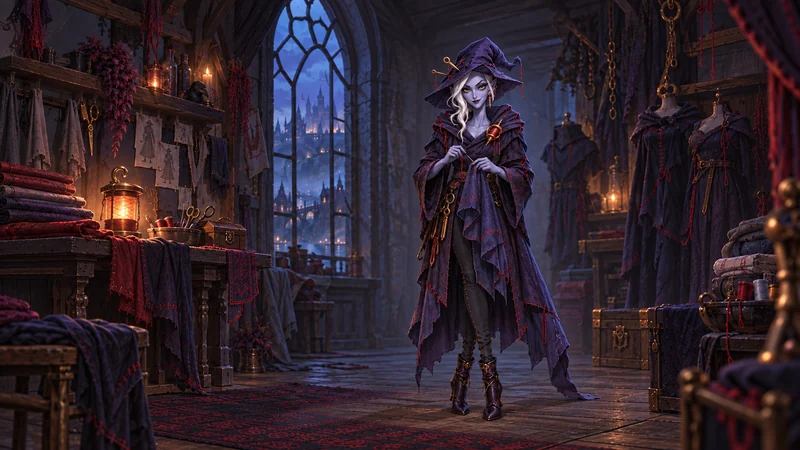 NeraFirst-generation championNera is Mira's estranged twin sister.Read this biography → began bringing garments to the workroom, often returned from the Ward with their owners missing. Edda did not ask her to explain every name sewn into the lining. She offered a table, clean needles, and the choice to speak or work in silence.
NeraNeraFirst-generation championNera is Mira's estranged twin sister.Read this biography →'s coat carried a different kind of archive from Edda's ledger. Its stitches held warnings and testimony from people who were still alive, while Edda's funeral register documented what families had chosen to preserve after death. They compared methods when it helped a repair, but neither claimed their records were interchangeable.
NeraNeraFirst-generation championNera is Mira's estranged twin sister.Read this biography → noticed the old crack in Edda's bobbin and offered to make a small wooden sleeve for it. Edda declined the replacement and asked her to bind the crack with a narrow thread instead. NeraNeraFirst-generation championNera is Mira's estranged twin sister.Read this biography → agreed, leaving the broken wood visible under the wrap so Edda could still find the loose end by touch.
The two women worked together during the aftermath of a warehouse fire. NeraNeraFirst-generation championNera is Mira's estranged twin sister.Read this biography → organized the returned coats; Edda helped families distinguish the garments that had been identified from those still unclaimed. They did not turn any unclaimed coat into proof that its owner had died. Their ledgers recorded uncertainty in different hands.
NeraNeraFirst-generation championNera is Mira's estranged twin sister.Read this biography → sometimes arrived carrying more coats than she could hang. Edda made space on the table and asked which garment needed attention first. NeraNeraFirst-generation championNera is Mira's estranged twin sister.Read this biography → would name the one with a living owner, then set aside the rest until the owner or family could be consulted.
The century of final threads
The voluntary memorial project grew slowly. Over many years, families brought final threads from funeral coats, some black, some gray, and a few in colors chosen by the person who had died. They were wound around a shared wooden frame only after each household agreed. No strand was taken from a body or garment without permission.
Edda did not live to see one hundred coats represented. She left the project with other seamworkers, who continued to add a thread when a family asked. The collection's total eventually reached one hundred, but that count marked garments, not a number of spirits inside one object.
NeraNeraFirst-generation championNera is Mira's estranged twin sister.Read this biography → later wound those last threads around Edda's cracked birthday bobbin, keeping the pale and dark grain visible between layers. The work was an act of remembrance, not an attempt to gather the dead. The threads did not merge their owners or transfer their memories into Edda.
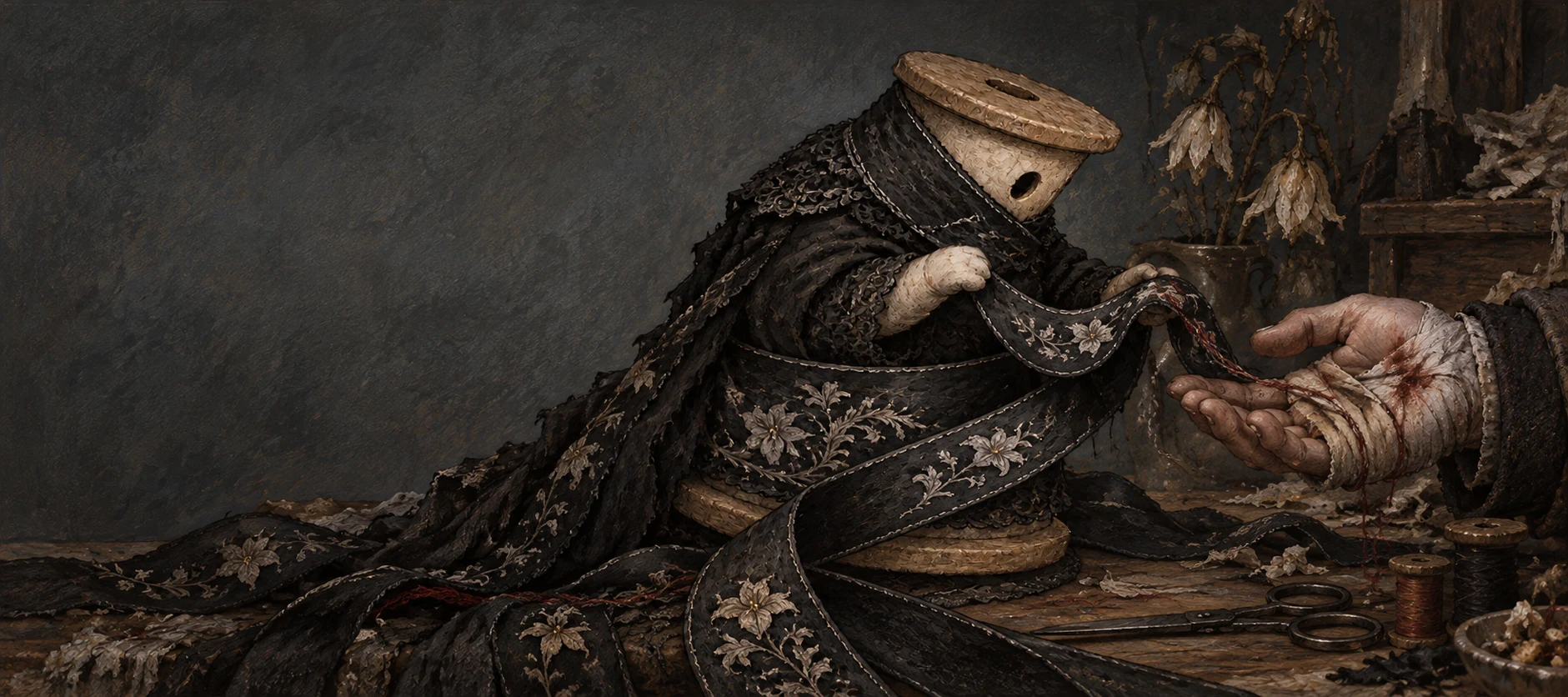
Some years after Edda's death, NeraNeraFirst-generation championNera is Mira's estranged twin sister.Read this biography →'s careful winding gave the bobbin a black floral mantle of mourning thread. The visible shape grew heavier than the original tool, and a pair of pale hands seemed to hold its bandage-like wrap. People in the workroom recognized the old posture of a seamstress bent over an unfinished hem.
The families who contributed to the memorial chose varied colors and lengths. One widow sent a short white strand because the coat had been lined in pale wool; another sent a gray thread from a sleeve she had repaired herself. The register preserved these differences instead of blending them into an anonymous black mass.
The day the runner fell
Edda's death came after a storm damaged the riverside stair. A runner carrying medicine slipped on the broken stone outside the workroom and struck their arm against an iron rail. The injury was serious but not immediately fatal. Edda brought the person inside, called for the healer, and laid out clean cloth.
The stair shifted again while Edda was lifting the runner away from the doorway. A section of the old wall gave way, dropping stone into the workroom. The apprentice escaped with the ledger; the runner crawled toward the back door. Edda stayed to hold the door frame up long enough for them to pass.
A beam struck Edda across the back. She fell beside the worktable, still holding the end of a black funeral thread she had been winding onto her birthday bobbin. The runner and apprentice were already outside. Neighbors rushed in, but the stones had pinned her under the frame.
The healer reached her before her breathing stopped. Edda asked them to keep the injured runner's bandage clean and to return the ledger to the workroom's keeper. She tried to finish the knot in the black thread, missed it with her fingers, and died with the bobbin against her palm.
The runner had come by earlier with a bundle of medicine, saying the upper shelter had run out. Edda remembered the bundle because one bottle rattled against another in the courier's satchel. When the runner fell, the medicine mattered more than the coat, so she told the apprentice to carry it outside first.
The bobbin catches the last breath
Edda's body was recovered when the neighbors braced the doorway. The runner lived and later returned with a repaired sleeve. The apprentice carried Edda's birthday bobbin to her family, unaware that the thread had tightened around it at the moment she died.
The final loop crossed three things that had been in Edda's hands: the cracked wooden bobbin, the black thread from a funeral coat, and the stained strip she had cut to cover the runner's wound. None of the materials held another person's spirit. Together, they formed the accidental tether around Edda's departing breath.
No one performed a rite or asked Edda to stay. The first sign came when the bobbin rolled uphill across the worktable and stopped beside the open ledger. A loose thread lifted at the sound of the runner's name, then fell still. The neighbors recorded the movement but did not claim it proved the person survived because of the bobbin.
The living placed the bobbin in a cloth case with Edda's sewing tools. Her body was buried with her family. The wound strip went to the runner after healing, and the black thread remained wound around the spool. The separation mattered: the spirit belonged to Edda alone, not to every garment or person remembered by the memorial project.
VessaVessaFirst-generation championVessa once played every role in the mirror theater.Read this biography → asked whether the cracked bobbin should be buried with Edda. The family decided to keep it in the workroom because it had been her tool, not a piece of her body. They left the crack visible and placed the ledger nearby, preserving both the object and the distinction between memory and possession.
A spool that will not stop
The bobbin's spirit moved through the workroom like a small figure made of wood, cloth, and steady hands. It rolled toward a person who arrived bleeding, unwound thread, and pressed clean fabric around the injury until help came. Its work eased pain and slowed blood; it did not replace a healer or close a wound instantly.
It never stitched its own cracked body. When a seam-worker tried to wrap the split in fresh linen, the thread slipped away from the damaged wood. The neighbors wondered whether Edda had refused repair or whether the old fracture was necessary to the spirit's shape. No one could ask and receive a spoken answer.
The bobbin did not return the dead, and its thread did not speak in their voices. It responded to the living who needed practical help: a hand cut on a broken bottle, a worker burned by a cooking pan, or a child who had fallen on the pump-house steps.
Edda's family learned not to summon it for every ache. When no one was injured, the bobbin rested beside the ledger and let the room belong to the living. The quiet hours were not a failure to help. It was a way for the old workroom to remain a place where a person could simply sit and breathe.
The first person the bobbin helped was a child who had cut a finger on a tin lid. It wrapped a clean strip around the hand and rolled toward the door until an adult followed it to the healer. The child later brought it a button, which the bobbin kept on its wooden ledge.
Nera winds the hundred threads
NeraNeraFirst-generation championNera is Mira's estranged twin sister.Read this biography → continued the memorial project long after Edda died. When the one hundredth funeral coat was added by consent, she wound each final thread around the bobbin, keeping its maker and garment in the separate register. The threads made a dark outer mantle with small pale floral marks from the cloth they had come from.
The bobbin did not absorb the owners of those coats. The families retained their own histories, and any surviving relatives could still ask for the record to be corrected or the thread removed from the memorial. NeraNeraFirst-generation championNera is Mira's estranged twin sister.Read this biography → kept the list outside the bobbin because an object could not grant consent on behalf of the dead.
As she worked, the bobbin rolled toward NeraNeraFirst-generation championNera is Mira's estranged twin sister.Read this biography →'s injured hand and wrapped a clean strip around her knuckle. She paused and let the thread settle. It could not decide which part of her life needed repair, and it did not tell her to stop searching for the voice missing from her coat.
The finished figure moved with a slow, careful rhythm. A thread unspooled whenever someone was hurt, but it never rewound itself into a perfect body. NeraNeraFirst-generation championNera is Mira's estranged twin sister.Read this biography → left the wooden crack visible. It reminded her that the bobbin's tenderness was not the same as being whole, and that helping another person did not erase one's own damage.
The card that heals another
A later cardmaker found the bobbin in NeraNeraFirst-generation championNera is Mira's estranged twin sister.Read this biography →'s workroom and asked whether its spirit wanted to move. NeraNeraFirst-generation championNera is Mira's estranged twin sister.Read this biography → explained the transfer and its limits; the bobbin rolled once toward the injured courier's old repaired coat. The living witnesses waited, then agreed that the motion meant yes only after it repeated when the question was asked in different words.
The transfer moved Edda's whole remaining spirit relation into one authentic Mournhand card. The hundred funeral threads served as its remembered mantle, but the people who had worn the coats were not drawn inside. The body remained buried, the family ledger stayed in the workroom, and no copy of Edda was left behind in the old spool.
At the table, the card costs 3 energy, has 1 attack and 5 health, and heals another friendly creature by 2 when it enters. It cannot heal itself with that entry effect. The small measure of care reflects Edda's practice: tend someone else's wound when you can, and do not claim that a bandage makes the injured person unchanged.
The card does not identify the injured runner as a destined companion or claim the runner was the only reason Edda died. The runner's life continued independently. The Crow placed their repaired sleeve in a cross-reference because the incident connects their records, not because one person owns the other's memory.
No afterlife release is recorded. The bobbin continues to unwind toward the wounded and refuses to mend its own crack. The empty space at the center of its spool remains visible, a place where thread passes through without becoming property. Edda's name survives in the workroom ledger and in the people who remember how carefully she asked before touching a seam.
The transfer record listed Edda's name, the date of the stair collapse, and the consent of NeraNeraFirst-generation championNera is Mira's estranged twin sister.Read this biography → and the family. It also listed every object that stayed outside the card. The care in that inventory mattered; no one wanted a memorial to become an excuse to take what another person still owned.

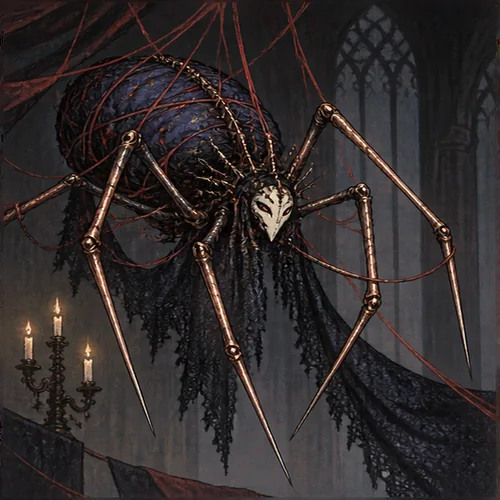 Spindle WidowC17 · 3 energy · 2/4Every widow in the Cinder Ward leaves a loose thread beneath her door.Read this folio →
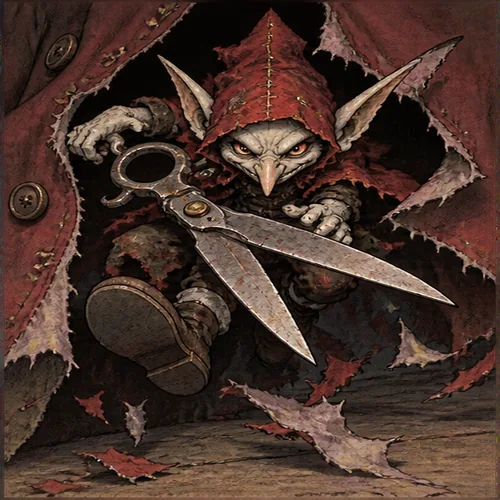 Hem-GoblinC18 · 1 energy · 2/1The goblin who lives inside Nera's coat insists he is her business partner.Read this folio →
 Needlejaw CatC20 · 4 energy · 3/4Seamstresses leave broken needles on their windowsills for the cat with the silver mouth.Read this folio →