
The kitten under the dye rack
Morrow was born on November 20 beneath a dye rack in the Cinder Ward, one black kitten in a litter that the alley cats moved whenever the vats ran hot. His eyes opened amber, and he learned the sound of a door before he learned the sound of his own name. The dyers left water in a shallow bowl because the kittens returned each night.
He was smaller than his littermates and slower to climb, but he had a stubborn jaw and a habit of biting the edge of whatever cloth hid him. A loose thread could hold his attention longer than a mouse. He would watch it move in the draft, tap it with one paw, then disappear before anyone could pick him up.
The workers called him Needles because he slept among discarded sewing tools. Morrow was the name of the girl who first fed him, a seamstress apprentice named Rina. She came to the dye-house with her aunt, a coat mender who worked late enough to share her supper with the kittens.
Rina did not try to make the kitten a pet. She left food where he could reach it and let him decide whether to stay. When the other kittens moved to a warmer courtyard, Morrow returned to the dye rack alone. Rina made a small nest from a folded wool remnant and placed it where the floor stayed dry.
The girl with the thread spool
Rina was fourteen when Morrow began following her from the dye-house to her aunt's shop. She had a quick temper when adults called her careless and a careful hand when she worked. The kitten learned that she hummed when she was anxious and went quiet when she was angry, a difference he could hear before she could name it.
Her aunt, Deni, let Morrow sleep near the coal stove but not on the cutting table. He ignored the rule when no one watched and returned to his wool nest whenever Deni came through the door. The arrangement held because Deni never chased him and Morrow never chewed the customer's cloth.
The first time Rina had to leave for a long shift, Morrow waited on the shop step until dusk. Deni put a bowl of milk outside and told him that Rina would return after the bells. Morrow did not understand clocks, but he learned the sounds of her footsteps on the stairs and the scrape of her key in the lock.
Rina adopted him on November 20, the anniversary of the day she first found him beneath the rack. She tied a narrow scrap of black cloth around his collar, then removed it when he pulled too hard. The birthday stayed in her notebook instead. Morrow kept the scrap in his nest until it wore into a gray thread.
Rina's aunt taught her to keep the shop's door open for neighbors and closed to anyone who treated a repair as permission to pry. Morrow learned the same distinction from watching her hands. An open palm could offer food; a closed fist meant the person was afraid, and he gave it room.
The jaw that would not close
Morrow injured his mouth when he was young, biting down on a bent needle hidden in a discarded coat hem. The needle cut his gum and cracked one tooth. Deni cleaned the wound, and Rina held him wrapped in a towel while the local animal healer examined his jaw. He survived, but the damaged tooth left his bite uneven.
The healer fitted a narrow silver guard over the sharpest tooth so Morrow could eat without reopening the cut. It was not a weapon or a magical object, only a small practical brace shaped to fit his mouth. Morrow disliked it for several days, then learned to chew on the side that did not hurt.
The silver caught the lamp in a way that made his mouth look like a row of pale blades. Children were afraid of him until Rina showed them how he licked milk from a spoon. Morrow did not like strangers reaching for his face, so she taught them to watch from a few steps away.
As he grew, the brace wore against his teeth and had to be adjusted. Deni kept the old fitting in a tin with the bent needle that had caused the injury. Rina thought it was morbid. Deni said it was useful to remember what had hurt him so no one repeated the mistake.
A window full of needles
Seamstresses began leaving broken needles on the shop windowsills after they finished a repair. It was safer than dropping them in the street, where a child or animal might find them. Morrow learned to carry the blunt or bent pieces in his mouth and deposit them in Deni's scrap tin.
The habit became a neighborhood joke: leave a broken needle for the cat, and he will take it somewhere better. Morrow never collected usable needles from the worktables. Rina checked every piece before letting him carry it, and Deni kept the dangerous sharp ends locked away.
One winter, a seamstress left a silver needle with a bent eye. Morrow brought it to his nest on the roof instead of the scrap tin. Rina climbed the ladder and found that he had laid it beside a child's mitten and a folded strip of blue wool. She returned the needle to Deni, but let him keep the mitten.
The roof nest grew from the coats residents could not afford to repair. Deni stored them beneath a weather tarp so families could claim them later. Morrow slept on top of the pile, making a warm hollow between sleeves and collars. When someone came to retrieve a coat, he moved only after Rina asked him to.
The roof where coats slept
The coats gathered on the roof were not abandoned forever. Some belonged to people who had gone into the foundry for a shift and not come back by morning. Some were too torn to wear. Others had been left while a family moved between rooms. Deni tagged each one with a date and a name only if the owner had agreed.
Morrow guarded the nest from rain, rats, and anyone who reached for a sleeve without asking. He did not understand the paperwork, but he knew which people came back looking for a particular garment. He would sit beside their coat while Deni checked the tag, then leave the roof with them when they carried it away.
Rina began bringing him bruised fish and scraps of roast apple. He preferred warm scraps and refused food that smelled of the dye vats. His favorites were the corners of bread she saved in her apron, especially on nights when she came home late and too tired to speak.
Morrow could be affectionate, but he was not patient with being held. He chose when to sit in a lap and when to sleep at the foot of the bed. Rina respected the difference. She often said the cat had better boundaries than the whole street, and Deni replied that the cat had never signed a work contract.
The tagged coats helped people remember that their belongings were not evidence of their fate. A missing worker's sleeve on the roof meant someone had kept the garment safe, not that the worker was dead. Rina corrected that assumption whenever a stranger pointed at an empty hook and began telling a story.
The neighbor who stayed
Rina grew into a capable seamstress and took on repairs the shop could not finish. Morrow remained close, walking the rooftops between her workroom and the pump house. He learned the sounds of the neighborhood: the double knock of the night watch, the pause before a familiar door opened, and the one stair that always creaked twice.
When Deni fell ill, Rina spent long evenings caring for her. Morrow slept beside Deni's chair and moved only when she needed the blanket shifted. He did not understand the illness or know that Deni would recover. He could understand that someone he trusted was not getting up to refill his bowl.
Deni recovered enough to return to work, but she could no longer climb to the roof. Rina took over the coat tags and asked Morrow to keep her company while she sorted them. He settled across the stack she needed and made her move each coat one at a time.
The workroom became a place where neighbors could leave a coat and ask for time. Rina would not promise when a repair would be finished until she knew what needed doing. Morrow had his own version of the rule: he would stay near a person who sat quietly, but leave if someone tried to use him as a reason not to speak.
The cat learns which hands hurt
Not every visitor treated the roof nest gently. One man took a coat without checking its tag and tried to sell it in the market. Morrow followed him to the stair, hissed, and hooked his sleeve with a claw. The man ran; the coat fell into a puddle and had to be cleaned again.
Rina scolded Morrow for scratching, then apologized when she saw that the coat belonged to a family still searching for its owner. She washed the mud from the sleeve and repaired the snag. The man returned the next day with a coin and claimed he had made a mistake; Deni refused the coin and asked him to return the other garments he had taken.
After that, the cat learned to warn before he bit. A tail flick or low growl gave the person time to step back. If they ignored it and reached for the keeper, Morrow's mouth found the sleeve. The first bite marked the place where the second would land, a threat that usually ended the trouble.
Rina worried that the neighborhood would mistake his warning for cruelty. She kept a note by the roof ladder asking visitors to let the cat approach them. Morrow never became tame on command. He became predictable to the people who treated his fear as information instead of defiance.
Morrow's warning bite was never a game to him. Rina checked his mouth after each scuffle and looked for fresh blood or a broken tooth. If she found an injury, she took him to the healer, even when he resisted the carrier and hid under the workbench.
The storm that scattered the nest
A storm tore the tarp from the roof and sent several coats tumbling into the lane. Morrow chased one sleeve over the tiles, caught it before it reached the gutter, and dragged it back by the collar. The wet cloth was heavier than he was, so he stopped every few steps to breathe.
Rina found him there at dawn, soaked and shivering beside a coat that belonged to a family who had moved across the river. She wrapped him in a dry towel and carried the coat downstairs. He fought the towel until she showed him the bread crust in her pocket.
The storm damaged the roof boards, and the landlord asked Deni to clear the nest. The women explained that the coats were tagged and belonged to their neighbors. They moved the stack into a low attic room where the windowsill was wide enough for Morrow to watch the lane.
The new room was safer but smaller. Morrow had to share space with folded blankets, a basket of repair tools, and a trunk of old patterns. He claimed the trunk lid as his private sleeping place. Deni allowed it so long as he did not knock the patterns onto the floor, a promise he kept except on windy nights.
The sleeve sewn to the bed
The first time Morrow sewed a thief's sleeve to a bed, it was an accident that became a story. A man tried to take a coat from the attic room while everyone slept. He snagged his cuff on a needle threaded through the blanket and tied himself to the bedpost when he pulled away.
Morrow sat on the trunk lid and watched him struggle. The needle was blunt, the thread weak, and the man could have freed himself by stopping. Instead he yanked until the cuff split. Rina woke at the noise and found him tangled beside the coat he had tried to steal.
Deni did not call the incident a trap. She made the man help mend the cuff and asked him to return the coat. Morrow stayed in the doorway until the work was finished. The man left with both sleeves attached and did not come back for another garment.
Word spread that a person who stole from the nest would wake with their sleeve sewn to the bed. The story grew stranger with each telling. Rina corrected the details when it mattered, but let the rumor discourage anyone who thought a roof full of coats was free merchandise.
The keeper who would not leave
Rina was offered a safer job at a tailor's house outside the Ward. The wages were better and the rooms were clean, but the work required her to leave Deni, the neighbors, and the tagged coat nest behind. She considered taking it for several days, then asked Deni what she wanted rather than assuming the answer.
Deni told her to go if the choice was hers. Rina said she wanted to stay, but not because she felt responsible for every person who came through the workroom. She stayed because the shop was the place where her skills mattered and people knew her without requiring her to be useful first.
Morrow followed Rina to the roof when she made the decision. He pressed his damaged jaw against her wrist, careful not to touch the silver brace. Rina stayed still until he moved away, then told him she would not leave without bringing him along. The promise was made to the cat, but it helped her hear her own decision.
When the next winter came, she added a small stove to the attic room. The coats stayed dry and Morrow slept near the warmth. The roof nest remained temporary by design; families could claim their things and leave. Rina wanted it to be a shelter, not a place that kept people from moving on.
The needle that drew blood
A group of thieves came to the shop after hearing about the coats. They were not interested in one garment; they wanted the whole stack and any tools worth selling. Rina was working late, and Deni had gone to the healer. Morrow heard the attic latch turn and jumped down from the trunk.
The first man carried a knife. Morrow struck at his wrist, then backed away to the stair where Rina stood. The thief followed and shoved her against the railing. Morrow leapt again, biting the sleeve near the man's hand. The knife fell, but the second thief kicked the cat into the wall.
Rina reached for Morrow and shouted his name. He returned to her despite the pain and placed himself between her and the two men. She grabbed the fallen knife by its handle and called for the neighbors. The thieves ran when lights came on in the street, leaving one bloodied cuff caught on the attic door.
The silver guard in Morrow's mouth had bent on impact. He could still breathe, but each movement hurt. Rina carried him to the healer and stayed beside him while the brace was reset. The healer warned that another severe injury could damage his jaw beyond repair. Morrow slept against Rina's arm until morning.
The roof after the attack
The neighbors repaired the attic latch and moved the coat nest away from the stair. Rina asked each family whether their garments should remain. Some collected them; others left a coat for a relative to retrieve later. She did not hold anyone to an old promise after the danger had changed.
Morrow healed slowly. He stopped climbing the highest roofs and chose the warmest windowsill instead. The neighborhood left broken needles there in a tin, and he continued carrying them to Deni when she opened the lid. Rina kept the bent silver brace as a reminder to keep the latch repaired.
The young workers left food and clean cloth for Morrow. He accepted some and ignored the rest. Rina told them not to take his refusal personally. Care did not mean being owed closeness, and a grateful cat did not have to prove gratitude by sitting in someone's lap.
For months, Morrow woke at the smallest sound in the stair. Rina began sleeping in the attic on nights when the watch was thin. She did not tell him the danger was gone; she showed him the doors were checked and the coats were still there. Over time, his ears relaxed enough to follow the rain instead of every footstep.
The last night in the attic
Years later, the attic roof began to fail after repeated storms. The landlord delayed repairs until a beam cracked above the coat nest. Rina and Deni moved the tagged garments downstairs, but one trunk remained under the broken section. It held the old ledger, the spare silver guard, and Morrow's gray scrap of collar cloth.
Morrow was older and moved slowly, but he climbed the ladder when Rina went back for the trunk. He refused to leave when she called. A sudden gust pulled the damaged roof panel inward, and the beam came down between them. Rina was knocked to the floor; Morrow was pinned near the trunk.
She crawled through the dust and lifted the beam enough to reach him. Morrow's breathing was shallow, and blood darkened his fur beneath the jaw. He pressed his face against Rina's sleeve and tried to stand. She told him to stay still and shouted for Deni to bring the healer.
The healer could not reach the attic before the roof shifted again. Rina pulled Morrow beneath the stair, but his jaw had been crushed and his lungs were failing. She held him against her coat and said his name, the same name she had written in her notebook on his birthday. His breath stopped while her hand rested on the silver guard.
The silver needle and the name
Morrow's body was carried down the stairs and buried by the people who had left food on the windowsill. Rina kept the old silver guard, his gray collar thread, and the small tin of broken needles. She did not tell the neighbors that he would return. She let them sit with her in the attic room while the roof was repaired.
As the beam was lifted, the silver guard had caught through Rina's coat lining. A length of black sewing thread from the nest passed through its eye and knotted around the gray collar scrap. The three materials held the sound of Morrow's name spoken at his last breath, not as a recording but as the pattern of their final contact.
The guard moved after everyone stepped away. A shadow crossed the wall, black and low, with gold eyes and a mouth bright as silver. The thread tightened when Rina approached and loosened when she sat beside it. No ritual had been performed; the objects had simply met at the moment Morrow's spirit departed.
Rina recognized the cat's habits, not a message from the afterlife. The shadow stayed near the roof nest and followed her from window to window. It did not bring Morrow's body back, and it could not explain where he had gone. She wrote the event in the ledger as an observation and left the conclusion open.
The mouth that marks the sleeve
The spirit's jaw grew more pronounced as it moved through the attic. Silver points lined its mouth, like the sewing needles it had carried to the windowsill. Its body remained a black cat's body, lean and watchful, with the same curled tail and amber eyes Rina remembered from the roof.
When a thief returned to the attic, the spirit bit his sleeve once and let go. The man ran before it could bite again. Rina found the sleeve marked but not torn through. She called the bite a warning and asked the watch to handle the theft; the spirit was not a substitute for living law.
The cat's shadow followed Rina to the lower workroom when she was injured by a broken pane. It pressed its silver mouth near her sleeve and tugged at the loose cloth until Deni noticed the blood. The wound was treated by a healer, and the spirit stayed beside the table without touching the bandage.
Morrow could not mend the coat nest or restore his own body. He could warn, mark, and protect the person he had chosen. Rina learned not to interpret every twitch as an answer. She kept the ledger, listened to the neighbors, and let the cat be present without asking it to explain the dead.
The keeper chooses a new home
Rina eventually moved the workroom to a safer building. She took the coat tags, the ledger, and the small tin of broken needles. The attic nest was not recreated in full; families had claimed most of the clothes. The few remaining coats went to the new shelter, where their owners could find them without climbing a failing roof.
The spirit followed Rina, but she kept the old windowsill clear for living cats. She did not want every stray to be treated as Morrow's replacement or every broken needle to be considered his property. The neighborhood custom continued, while the spirit kept its own path between the workroom and roof.
One evening, Rina asked whether the cat wanted to stay. It looked at the open window, then settled beside the ledger. She took that as a choice for the night, not a promise for every night after. The door remained unlatched, and the spirit was free to leave the room when it wished.
The people who had known Morrow remembered small things more than the silver mouth. They remembered the gray collar scrap, his refusal to be carried, the way he slept on coats waiting to be claimed, and the warm bread he accepted from Rina. His spirit was strange; his life had been ordinary enough to miss.
The cat and the coat keeper
In a later season, Nera NeraFirst-generation championNera is Mira's estranged twin sister.Read this biography → began bringing returned coats to the workroom. Rina checked the tags and arranged them by what the living owners wanted done. Some carried warning stitches; some needed washing; some had no known owner. The cat followed the garments but did not claim any of the names sewn inside them.
Pex visited from inside NeraNeraFirst-generation championNera is Mira's estranged twin sister.Read this biography →'s coat to ask whether a missing hem had been mended. Morrow inspected him, then sat on the receipt book until both seamworkers stopped arguing over the price. Their relationship was a brief workroom truce, not a shared binding or a friendship established before Morrow's death.
The broken needles continued to arrive on the windowsills. The spirit carried them to the roof nest, where they were placed in a tin outside the card's tether. The needles were dangerous tools, not captured souls. Rina kept the tin locked and wrote down which seamstress had left each one.
The Crow later placed the Cat beside Hem-Goblin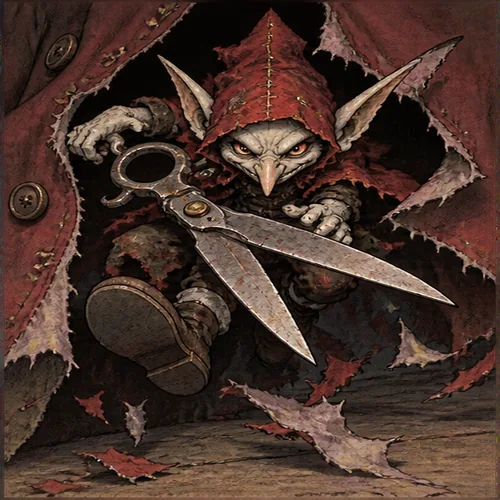 Hem-GoblinC18 · 1 energy · 2/1The goblin who lives inside Nera's coat insists he is her business partner.Read this folio → because both stories involve stolen hems, needles, and NeraNeraFirst-generation championNera is Mira's estranged twin sister.Read this biography →'s workroom. The archive does not claim that Pex caused the cat's death or that the pair shared the same coat. Each had a separate body, keeper, and accidental binding.
The card that keeps watch
When Rina's workroom was finally moved beyond the Ward, a cardmaker explained that the cat's tether could be transferred. Rina asked what would happen to the spirit's freedom, the tools in the attic, and the families who still came looking for their coats. The cardmaker answered each question before she agreed to anything.
The transfer moved only Morrow's whole remaining spirit relation: the silver jaw guard, the black thread, and the gray collar scrap that had caught his last breath. His body remained buried. The coats, needle tin, ledger, and every person recorded there stayed with the living and their families.
The authentic card preserved Morrow's black fur, amber eyes, silver needle-like mouth, and low roof-cat posture. Its printed effect reflects his guarded way of acting: after he survives attacking an enemy creature, it deals one further damage to that creature if it remains. The card does not grant an extra attack or affect a champion.
Rina signed the transfer ledger with the words 'Morrow, my cat, not my possession.' She left the paper beside the window where seamstresses still placed broken needles. The spirit's card went with the archive, but the habit of asking before taking remained in the Ward, where it had begun.

 Mourning BobbinC19 · 3 energy · 1/5Nera wound this bobbin with the final threads from a hundred funeral coats.Read this folio →
 Rivet CrabC21 · 2 energy · 2/3The smallest workers in the foundry used to leave bent nails beneath the benches.Read this folio →