
A child who kept the door
Oren Vale was born on October 12, in the first cold week when the river carried yellow leaves against the ferry pilings. His mother said he arrived with one fist closed around the edge of the blanket. His sister Sella, four years older, announced that he had stolen it from her. She would repeat that story whenever he grew too serious. Their family lived above a public toll house, where their father recorded crossings and their mother repaired travel cloaks. Their rooms were narrow, warm, and always full of people waiting out weather. Oren learned the names of travelers before he learned which titles were meant to impress him.
The toll house taught him that a doorway was not a boundary in the way a wall was. People stood inside it with wet sleeves and urgent explanations: a broken axle, a sick child, a coin lost in the ford. His father followed the posted rates; his mother kept a bowl of soup beside the ledger for those who had nothing to offer. Oren could not yet understand why one kindness was counted and the other was not. He only knew that his mother gave him the ladle when his hands were steady enough, and that Sella could make a frightening traveler laugh before the bowl was half empty.
Sella treated him as a person before anyone called him an heir. She taught him to mend a boot heel, to hear when someone was saying yes only to end a conversation, and to return a borrowed book in better condition than he received it. Oren taught her the ferry schedule by drawing boats in charcoal on the wall. She was a quick runner and a poor sitter; he was a careful listener and a bad climber. At dusk they raced along the embankment anyway. Sella won often enough to insist that speed was a form of public service. Oren answered that he would put it in the official record.
On his birthday, their mother made a honey cake. Oren gave Sella the burnt edge he liked best; she pretended not to notice. The family had no prophecy for him. They pictured the toll house, a larger ledger, and perhaps a marriage to someone who could tolerate the damp. The crown belonged to a distant court, visible only on coins and ceremonial cloth.
The heir who learned to listen
A fever took Oren’s parents three winters apart. It did not arrive as a single dramatic night. It came as weeks of washing, broth, sleeplessness, and decisions made with too little information. Sella stayed at the bedside while Oren carried messages to the physician and learned which doors opened after curfew. When their father died, the toll house workers expected Oren to grow hard. Instead, he began writing the reasons beside the missed payments. He did not think a reason erased a debt. He wanted a future clerk to know why a family had fallen behind before deciding what to do about it.
Sella left first. She had been offered a place with a river survey crew, mapping unsafe crossings and persuading towns to build better landings. Oren wanted her to stay; he also knew she had spent her youth being told that somebody else’s need should decide her day. On her last morning he packed her bread, a dry cloak, and the little ferry drawing from their childhood. She packed his spare scarf in return. Their goodbye was an argument about whether the river map should show a flooded chapel. They did not embrace until the argument ran out. Her letters came irregularly, carrying mud at the folds and descriptions of places she had made safer.
The crown prince died without a child, and two cousins began measuring their supporters in armed households. Oren was not the next heir. He was a clerk who knew how grain moved, which bridges would fail under a marching column, and which promises had already been made to villages too small to send a spokesman. The queen’s council asked him to carry records between the divided camps because neither side considered a toll clerk dangerous. He accepted for the same reason his mother had fed strangers in the doorway: a person in trouble was still a person, even if helping them carried inconvenience.
The dispute did not make Oren into a hero. He made mistakes, believed one cousin’s assurance too long, and once sent the wrong copy of a levy list to a town that had already paid. He spent two days walking the correction from house to house. People remembered that he returned. When sickness later killed both cousins within a month, the council looked for someone with no private army and no children waiting to inherit his debts. They asked Oren to serve as regent until the estates could agree on a sovereign. He thought of Sella crossing a river in spring flood and asked whether the office could be refused without punishing the people who had trusted him.
A chair, not a throne
The regency began in a room where three roof beams leaked. Oren moved the council table rather than make the masons wait for a royal order. He disliked ceremonies that forced petitioners to speak from a lower step. The room had one plain chair at the same level as the others and a better lamp than the palace audience chamber. When a minister objected, Oren asked whether a person with a broken hand could hold a petition higher simply because a ruler preferred to look down. The minister never forgave the question; several petitioners remembered it for the rest of their lives.
He worked slowly, sometimes maddeningly so. He asked what a proposed tax would cost a household whose roof leaked, whether the road crew had been paid before the bridge was opened, and whose name would be written down if the plan failed. He kept a small wooden ferry token from childhood beside his inkstone. During long meetings he turned it between his fingers. He did not pretend that a token could guide a kingdom. It reminded him that maps and numbers described the crossing but did not carry anybody safely across it.
Oren’s older sister returned once, after the survey crew had completed its northern circuit. She arrived at dusk with a scar along one palm and a bundle of letters she had not trusted the post to carry. He set a second cup at the table without asking whether she planned to stay. They had become different people. Sella spoke quickly and disliked being interrupted; Oren had learned to leave silence where an answer might arrive. They quarreled over the royal road funds, then repaired the argument over cold bread in the kitchen. When she left again, he gave her a duplicate key to the regency office. She said she would return it when he stopped acting like a toll keeper. Neither named a date.
The crown was brought out only for the first public oath. Oren wore it for the required hour, then set it on its padded stand and asked the chamberlain to have the inner band repaired. It had pinched his forehead since the ceremony began. A tiny crescent of skin had broken beneath the gold. Sella noticed when she visited the next day and pressed a clean strip of linen into his hand. Oren joked that the kingdom had finally drawn blood. She told him to stop making his pain sound like a tax. He kept the linen in the desk until it frayed, not as a relic of power but as evidence that she had been in the room.
Promises written in the margin
A regent could promise almost anything and still blame the future sovereign for the bill. Oren refused to make that easy. He marked every decree with the names of the people who would have to carry it out, then kept a second copy with the objections written in the margin. The practice made his clerks uncomfortable. They feared that preserved disagreement would look like disloyalty. Oren answered that a clean record was not worth much if everyone who had cleaned it had been afraid to tell the truth.
One winter, the river towns asked to postpone their grain levy after ice damaged the ferries. The treasury had already committed those stores to rebuilding the northern road. Oren sent an inspector, found that both needs were real, and split the levy by household rather than district. The decision kept the road crew paid and left some families short of seed grain. He arranged seed loans from the court granaries, then recorded the interest as a debt owed by the crown. Some councilors called that sentimental accounting. Oren said it was arithmetic with the missing number restored.
He was not universally beloved. A mill owner whose ferry contract was canceled called him a thief in the public square. Oren listened without guards moving the man along, and the crowd heard the accusation in full. He later sent a clerk to verify the contract and found that the mill owner had understated his cargo. The court recovered part of the payment. Oren still ordered the remaining dispute tried in the open, because being right did not make an official immune to process. The mill owner never thanked him. Oren never expected him to.
The royal armorers began making a ceremonial suit for the eventual sovereign. The regency council ordered it in Oren’s name, though it was not fitted to him and he was not to be buried in it. It was designed as a vessel for continuity: old plates from the first royal guard, new repairs in pale steel, and the dark green cloak of the current court. The helmet was intentionally unlined and left without a faceplate. A crown would float above it during oath ceremonies, held by a delicate rig hidden in the collar. Oren disliked the empty outline. He said it made a person look like a vacancy that had learned to stand.
The name beneath the decree
Sella’s letters described a floodplain village where the old ferry rope had snapped. Oren recognized the crossing from her childhood map and asked the treasury to fund a stone landing before the next thaw. The council rejected the expense. A clerk had mislabeled the village as abandoned, and its residents had no representative at court to correct the record. Oren sent a rider himself. He returned with a list of forty-three households, seven disabled boats, and the signature of a woman who had spent three years keeping a ferry open with her own rope.
The landing was built, though not before the spring rise. During the delay, a child was carried downstream and found days later alive in a reed bed several miles away. Oren visited the family without a procession. He brought no decree, only the name of the official who had mistaken a ledger entry for a place. The child’s mother asked him to leave the title at the door. He did. Years later he would remember the wet footprints on her floor more clearly than the ceremony that first placed a crown on his head.
The council offered Oren a path to become sovereign. The surviving blood claimants had withdrawn, one into a convent and one across the sea; the estates needed a stable succession. Oren refused the offer twice. He had accepted the regency because the work was temporary. He did not want to exchange public trust for inherited obedience. A royal title would make it harder to hear a refusal and easier for courtiers to turn every kindness into a precedent. The council answered that refusing would restart the dispute. Oren asked whether the people who had already paid for the dispute had been invited to choose.
He accepted only after the council agreed to publish the claims, keep the petition room open, and list unpaid royal obligations beside the treasury. Sella watched the modest coronation in her blue river coat. Before the crown touched his head, Oren asked that the doors remain unlocked. He recognized the mill owner, two ferrymen, and the floodplain mother among the crowd; he could not see everyone. He tried to remember that failing to see was not proof no one was there.
A kingdom full of small rooms
King Oren kept the regency’s plain chair and the table that leaked when the rain came from the west. He had the roof repaired, but he refused to replace the chair. A ruler, he said, ought to sit where an ordinary person could imagine speaking. His private rooms were less austere than the court expected. There were survey maps from Sella, a cracked ferry token, two chipped cups, and a shelf of books he had not finished. He often fell asleep with one open on his chest. His steward learned to place a marker at the first unread page instead of waking him.
He was lonely in ways he did not know how to explain. The court saw the crown, not the sibling who had once waited at the landing for Sella’s boat. He wrote letters he did not send because every ordinary sentence sounded official after he revised it. When she visited, they still argued about bread, bridge funding, and the suspiciously flattering portraits of him commissioned by the palace. Sella refused to sit for hers. Oren kept one unfinished sketch in the desk, a profile drawn from memory with her hair tied back and a river map rolled beneath her arm.
His closest daily companion became Tovan, an armorer who had worked on the empty ceremonial suit before entering royal service. Tovan was not a confidant by appointment. He was the person who said that a buckle was badly placed, that the palace stair would hurt Oren’s knee in wet weather, and that the floating crown rig would fail if anyone continued to polish it with oil. Oren trusted him because Tovan was willing to be inconvenient in small, verifiable ways. They shared no grand secret. They talked about tools, work, and which repair should be done before winter.
The kingdom improved unevenly. Some landings became safe; some levies remained unfair; some officials learned that an open hearing did not require an open mind. Oren could not make every promise come true. He began writing which ones had failed and why, including the failures he had caused. When a clerk asked whether this would damage the crown, he replied that a crown was damaged more by demanding that nobody remember its mistakes. He believed the next sovereign deserved the truth even if the truth arrived as an unflattering inheritance.
The last winter at the river
Oren became ill in a winter with little snow and too much damp. It began as a cough that made him laugh at the wrong moments. The physician called it fatigue. Tovan moved the armor work away from the cold room; the steward shortened the evening councils. Oren kept refusing to shorten the petition hours. When Sella returned, she told him the river had taught her that a current did not care how noble a person felt while drowning. He told her the palace had taught him that a person could drown in a warm bed as well. She did not laugh, but she stayed.
They spoke about their mother, the ferry, and the drawing still tucked into Sella’s map case. Oren asked whether she would come back to court if he died. She said she would come back if she wanted to, which was not the answer he hoped for and the one he trusted. He told her he had kept the key. She told him she knew. They did not make a promise about the future. Their affection had lasted precisely because neither tried to turn it into a chain.
The court assembled the ceremonial suit near the sickroom, preparing for a transfer of authority if Oren could no longer sign. Tovan objected that the armor should not stand so close to an open hearth. Its cloak had been treated with preserving salts, and the hidden crown rig was fragile. The steward ordered it moved to the old audience chamber. The suit remained there, empty and upright. Oren saw it through the half-open doors one evening and asked whether anyone had ever finished the faceplate. Tovan said no. Oren answered that it was a relief to have one thing in the palace that had not been finished on his behalf.
He died before sunrise while Sella held one hand and the steward held the other. His last request was not a decree. He asked that someone check the western ferry landing after the thaw, because the new stonework might have shifted. Sella promised she would send a surveyor, not herself. Oren said that was sensible. His fingers loosened. The physician lowered his eyelids and began the ordinary work of confirming a death. The sister who had known him before the crown remained beside the bed after the others stepped away. No oath was spoken over him. No light rose from the body. The room held the quiet of a life that had ended.
The funeral designed to keep him
Oren had written a plain funeral directive. His body was to be washed, wrapped in the blue cloak his mother had mended, and carried to the riverside ground where his parents rested. The crown was to pass to the council until the estates chose a successor. The ceremonial armor was not to be worn or buried with him. Its plates belonged to the public guard, he had written, and its empty form should remain a prop for future oaths. Sella read the directive aloud. The council nodded. The mourning began before anyone acted on it.
The people wanted a king who could still answer. They had no reason to trust that a new ruler would preserve the open hearings, the margin records, or the seed loans. Courtiers feared disorder and searched the old ceremonial manuals for a way to bind continuity to an object the council could protect. They found a rite intended to keep a ruler’s promises present during a short interregnum. Its instructions required a name spoken over the empty armor, a seal pressed into the inside of the crown, and a final witness who could identify the king beyond his titles. It was meant as a public reminder, not a vessel for the dead.
The chancellor changed the rite. He had the funeral room closed before the body was taken to the river, and he ordered that Oren’s directive not be read again until the crown had stabilized. He feared that if the king’s ordinary wishes were treated as law, the estates would begin making demands before they had a successor. The alteration was not announced to Sella. She was told the armor would stand beside the bier for one night, then return to the guard. She believed the burial would follow at dawn. Tovan knew the ritual instructions were incomplete; he did not know that a change had been made to its final seal.
The body was carried away in the blue cloak. The suit stayed behind. The empty armor was placed on the regency dais, its split dark-green and ivory mantle spread to cover the stand. The crown hung above it. Into the collar the chancellor put a thin strip cut from the inside of Oren’s old petition ledger, bearing his name, the dates of his service, and one note in his own hand: ‘Ask who has not been heard.’ The strip was not magical by itself. It was personal evidence used to identify the dead king to witnesses. When the hidden seal closed over it, it became the last thing connecting his name to his final room.
The petition that became a door
The rite should have ended with the witnesses leaving and the armor returned to storage. Instead, the chamberlain began reading petitions that had been deferred during the funeral. The first belonged to a ferryman whose landing had slipped in the thaw. He said the king had promised to send someone. The council had not yet chosen a successor; no one wanted to answer for a promise attached to a dead man. The chancellor told the chamberlain to record the request for later. The petition was placed on the dais, beside the empty gauntlets.
A draft entered through the unlatched river door. It crossed the room, lifted the petition, and caught the paper beneath the crown’s suspended inner ring. The ring turned. The hidden seal, already closed over Oren’s name, touched the written request. Nothing in the rite had been built to receive a voice, but the chamber held the words of the king’s final office, his name, his empty armor, and a request directed to him. The pattern made an accidental passage where the rite had intended a reminder. The dead king’s departing spirit was drawn back from the threshold and into the unoccupied suit.
Oren did not wake as a man inside armor. He became aware in pieces: pressure like a room without walls, the weight of an absent hand, the sound of paper against metal. He tried to remember Sella’s face and found the color of her coat first. He tried to say that the ferry should be repaired and could not make a mouth move. His name remained available, but it no longer arrived with every memory attached. The crown steadied above the helmet. The armor straightened. The watchers saw a figure rise and called it a miracle because none could bear to call it a mistake.
Sella pushed through the attendants and demanded they open the suit. Tovan reached for the crown rig, but the chancellor stopped him, afraid that disturbing the seal would destroy whatever presence had appeared. Oren tried to turn toward his sister. The armor bowed instead, a courtly gesture taught to it by the old oath. Sella said his name three times. Each time, the empty helmet tilted as if it understood and each time the voice that came from within was a formal echo, not the answer she had been waiting for. She left before the council could ask her to kneel. That night the chancellor ordered the suit and crown buried together beneath the sealed audience chamber, hoping to end the disturbance without admitting what the funeral rite had done. The regent’s body remained beside their parents, as Oren had asked.
Every decree spends a memory
The presence inside the suit could act, but only within the habits the court had built around the regency. It heard petitions as if they were addressed directly to the king. It answered with the courtesy Oren had practiced, though each answer took something from the identity that gave the courtesy meaning. The armor could correct a levy, release a storehouse, or order a bridge inspected. After each decree, a detail of Oren grew faint: the smell of his mother’s kitchen, the weight of the ferry token, the exact sound of Sella laughing when she beat him along the embankment.
No one understood the price at first. The court thought the pauses signaled strain. When the Regent hesitated before recognizing Sella, the chancellor began bringing petitions in greater number, hoping that public service would stabilize the apparition. It did the opposite. Each request made the spirit more legible as a ruler and less able to remember the private life that had made him Oren. The empty suit had no childhood or claim of its own. By keeping the fragments each decree spent, it learned the outline of the king it was trying to become: courteous, heard, and impossible to ignore. That public shape was purchased with details that had once made Oren a particular brother to Sella.
Sella returned once with the ferry survey. The west landing had shifted, exactly as Oren feared. She set the map on the council table and spoke to the suit about the first lesson he had ever taught her: that a map was not the crossing. The armor leaned toward the paper. For a moment, Oren remembered muddy shoes on the toll-house stair and his sister handing him half a honey cake. He tried to tell her that he remembered. The crown rang softly against its inner mount, and the detail went out before it became speech.
Sella did not agree that the Regent was her brother simply because it wore his name. She argued with the council, with Tovan, and eventually with the apparition itself. She asked that it stop issuing orders until someone could learn how to free it. The Regent agreed in words, then watched a petitioner stumble into the room carrying a letter about a collapsed ferry. It stood. The old reflex moved faster than the new promise. The armor reached for the seal, and another piece of Oren’s life passed into the public voice.
A sister keeps the unfinished record
Tovan found that the seal could be read but not safely reversed. It had closed around the king’s name after the king had died. To open it might release the spirit; it might also scatter whatever remained. The armor had no living body to injure and no ordinary fastener that could be removed without disturbing the rite. Tovan refused to promise a cure. Sella asked him to promise only that no one would call the binding a choice. He agreed. They wrote that sentence in the margin of the original instructions and stored the record where the council could not quietly erase it.
The court named the presence the Hollow Regent. It was a title that made the officials’ fear sound like a plan. They moved the armor to a smaller chamber and limited petitions, but petitions still came. The kingdom needed a successor; negotiations required time; the Regent’s first orders had prevented a grain store from being seized. Each reasonable explanation became another reason to keep it active. The suit remained polite. It never demanded a throne. The people around it supplied the ambition themselves.
Sella left the capital for the river districts. She carried the cracked ferry token and one copy of Oren’s funeral directive. In the years that followed, she corrected survey records and told people what her brother had been like before court called him useful. She did not say that the armor was secretly him, or that he would return if the right person spoke. Some days she believed a fragment still recognized her. Some days she believed grief had taught her to hear a familiar cadence in a public voice. She let both possibilities remain unproved.
The last request she delivered to the chamber was for the burial place to be marked properly. Oren’s body rested beside their parents under the blue cloak, without armor or crown. The stone had been set too close to a tree whose roots would eventually lift it. She asked the steward to move it before the name became unreadable. The Regent heard her, paused, and issued the instruction in Oren’s voice. That decision cost it the sound of her speaking. Sella knew because, on her next visit, the armor greeted her as ‘Mistress Surveyor’ and did not remember their shared doorway.
The card that could not restore a king
The old burial remained undisturbed until petitioners found that unanswered taxes and levies outlived the officials who had imposed them. Around c.200 B.B., the empty suit and crown were sealed beneath the court with the king’s public promises still accruing above. By c.400 A.B., the stories change: petitions once again reached the hollow throne, and the armor had learned to answer them. The first recorded replies were brief, painfully courteous, and costly to the spirit that supplied the voice. Generations had passed; the strip inside the seal survived. Its ink faded until only Oren’s name and the question in the margin could still be read.
The archivist who found the hidden seal did not call the Regent a king. She called it a captive and recorded the distinction before attempting any transfer. She and a conservator traced the original rite, tested the attachment with a loose chain, and established that the crown, suit, strip, and remaining voice formed one joined spirit. Separating the pieces would not restore the memories already spent. It would risk breaking what remained. They used the standard Mournhand card as a receiving vessel, keeping its real proportions and printed identity. The card was held in both hands; it was not a monument larger than the person it carried.
As the transfer began, the armor’s outline dimmed. The empty sleeves sank inward; the split cloak folded close. The crown descended, not as a triumph but as the final piece of the old seal releasing. What moved into the card was not a living king, a duplicate, or a promise that Oren could be rebuilt. It was the whole remaining relation: the name, the formal voice, the scraps of remembered warmth, the impulse to answer someone at a door, and the painful absence where more had been. When the metal stood empty, nothing continued speaking inside it.
Iona IonaFirst-generation championIona catalogs the promises every ruler abandoned.Read this biography → placed the card beside the recovered ferry token and Sella’s map. The pieces did not complete one another. The map could show a safe crossing; the token could recall a family game; the card could hold the spirit that had once kept records beside an open doorway. IonaIonaFirst-generation championIona catalogs the promises every ruler abandoned.Read this biography → had put the empty armor on trial and heard the old promises answered through it; she did not mistake the voice for proof of consent. After judgment she allowed the player to carry the Regent as a real, palm-sized Mournhand card. None could return the unspent years, the sister’s voice now missing from its memory, or the future Oren had expected to have. Its final entry in the Ledger is not a verdict on the king. It is a warning written beside his name: the Hollow Regent did not choose to remain, and service was the shape of the trap.
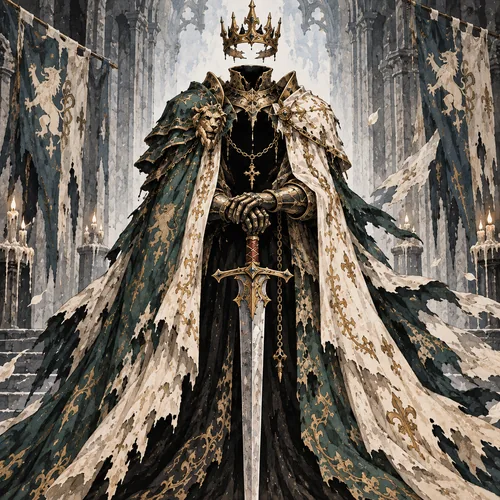
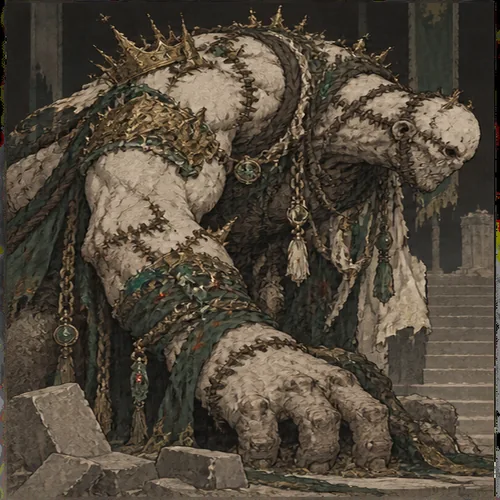 Crownsuture GiantC38 · 5 energy · 4/6Promises abandoned by rulers were sewn into its frame, and every step pulls one thread through its owner's heart.Read this folio →
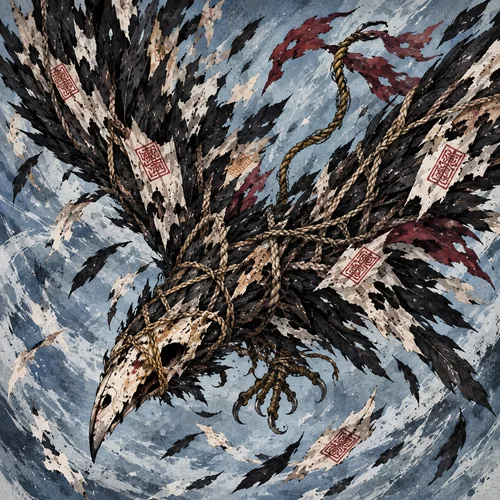 Gallows KiteC11 · 5 energy · 5/4A condemned boy folded this kite from the notice of his own execution.Read this folio →
 Coalglass LancerC13 · 3 energy · 3/4Forged from black glass beneath the foundry's mouth, it lowers its spear only when something claims to stand between the fire and people behind it.Read this folio →