The calving on May third
The animal the Crow later called Furnaceback Ox was born on May 3 beside the floodplain road, in a timber shelter built for draft animals. Its mother was a broad gray ox used to pull grain carts between the river farms and the foundry town.
Nima called him Hearth because he leaned against the warm wall whenever the weather changed. The name was not official. The farm ledger listed him as a second-year male calf, offspring of a river ox, assigned to the lower cart road. Nima wrote Hearth in the margin and drew a small flame beside it. The keeper left the drawing there.
Hearth was a patient calf, but not a tame statue. He backed away from loud carts, but came closer when Nima sang. He liked apples with bruised sides and the salt left on a bucket rim. He disliked a harness tightened too soon and would set his hooves wide until someone checked the straps.
The floodplain animals were moved before high water, and the farm's oxen knew the way to the raised road by scent and footfall. Hearth followed his mother and carried an empty wooden yoke for practice. He did not understand why everyone praised his strength.
Each year on May 3, Nima brought him a small apple and polished the brass tag on his halter. She marked his birthday in the margin of the farm ledger because she wanted the keeper to remember it. The official date was a working record; her observance made it personal.
A place in the cart line
Hearth joined the foundry cart line when he was old enough to pull a light load. The animals moved ore, coal, scrap iron, and food between the lower road and the furnace yards. Drivers were expected to keep a steady pace and leave space between carts.
Nima's family moved nearer the foundry so her father could take a permanent shift. She still visited Hearth before school and after evening chores. Her mother gave her a folded cloth with a little food in it. Nima would sit on an overturned bucket while Hearth ate his feed and tell him what had happened that day.
The foundry's lower road was built beside cooling channels that carried water away from the hot works. The water was safe most days, but it could rise suddenly after storms or sluice failures. Hearth's driver, Mera, taught him to stop at the painted white stones and wait for a signal before crossing.
When Nima grew tall enough to help with the cart list, she copied the animal names beside the loads. The clerk told her the list was for cargo, not companions. She said an ox could be responsible for a cart without being cargo. Mera backed her up.
Hearth was given a bell on his collar, not to make him festive but to let a driver know where he was in smoke. Nima tied a strip of faded red cloth beside it. She said it made the bell easier to see. The cloth was replaced when it frayed, but she saved each worn piece in a tin.
The hide that learned the heat
The first time Hearth hauled a hot load, the molten iron was kept in a sealed crucible cart. He did not carry open metal on his back. His work was to pull the cart over a causeway where the humans could not safely walk beside it. The heat came through the harness and into his shoulders.
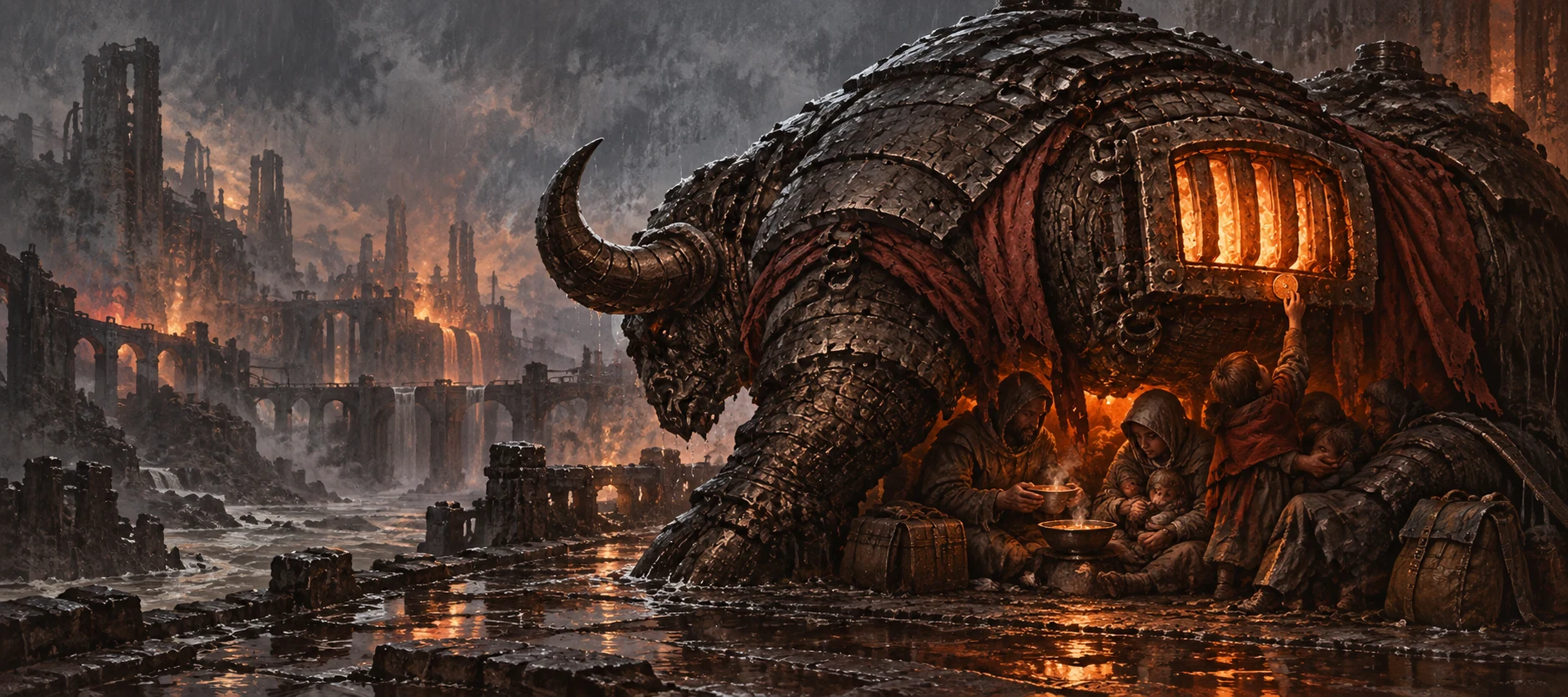
The plates formed over seasons. At first they were small hard ridges along his shoulders and spine, like the beginning of a shell. They thickened as he worked the flooded channels, where mineral water, scale, and furnace heat gathered on his skin. The veterinarian tried to scrape one patch away and stopped when Hearth flinched.
Nima called the plates his roof. She tucked a little cloth under the saddle straps when she brushed him so the edges would not rub. Hearth let her clean the seams, but he would not let the foundry blacksmith strike them with a hammer. The sound frightened him.
Small coins began appearing between the warm seams. Children left them there after Hearth carried them across a hot channel in their parents' arms. Nima collected the coins and gave them back at the gate, but the children kept returning with others. Eventually, she stopped taking them. Hearth did not shake them loose.
Hearth's work changed when the old foundries flooded. The animals were moved to the upper tracks, but heavy crucibles still had to be hauled away before water reached the furnace doors. The workers used two oxen on each cart. Hearth became the one called when another team balked at the heat. He did not pull harder than the harness allowed.
The little room under his ribs
Mera found a safer way to use Hearth's unusual warmth. She fitted a shallow iron warmer beneath the plates on his side, away from his legs and harness. It was a small chamber with a hinged grate, used to keep a kettle from cooling during a long crossing. Hearth could feel its weight, so the crew balanced it carefully.
Nima disliked the warmer at first. She worried it would turn Hearth into another furnace machine. Mera agreed that the ox was not a stove. The chamber was only for short journeys, and it could be removed at the end of a shift. Nima made the crew promise to take it off before he was led to the pasture.
One winter night, the river road closed and the foundry crew was kept in the yard. Nima and six other children slept beneath Hearth's iron ribs while their parents waited for a safe crossing. Mera set a covered pot of barley broth in the small warmer.
After that, the crew called the chamber the little room. It held a cup, a small pot, and a folded strip of cloth. Children sat close to Hearth when the weather turned and passed warm bread between them.
The last meal they shared beneath his ribs was ordinary. It was a pot of broth, two heels of bread, and an apple cut into small pieces for the children. Nima sat with her back against a warm plate and asked her mother whether they would move again if the foundry closed. Her mother said she did not know.
The first flood warning
The lower channels flooded more than once. The first warning was a crack in the western sluice, found before the water reached the cart path. The crew moved tools uphill and used Hearth to pull a small furnace cart away from the low yard.
A worker slipped on the stones. Hearth stopped without being asked. The cart behind him pressed against its brake, and Mera used the pause to get the worker back to the wall. The man had bruised his wrist but could walk. He patted Hearth's neck and apologized for making the team late. Hearth turned his head toward the high path.
After that, the crew watched Hearth when the water changed color. The ox did not predict the flood. He reacted to vibrations through the channel bed, the smell of hot scale on cold water, and the trembling of a board beneath his hooves. When he stopped, Mera checked the route. Sometimes the road was safe.
Nima kept a little tin of the children's coins. She used them to buy a new brush for Hearth and a stronger buckle for the harness. The children asked whether the coins had made him richer. She said they had made him easier to care for. Hearth licked the salt from her hand while she explained the difference.
The foundry clerks began to note the times Hearth had stopped the cart line. The entries were useful but incomplete. A pause could mean a loose stone, a tired animal, or a worker fallen behind. Mera added a second note explaining what she saw. Hearth did not know his name had become part of a safety record.
When the water reached the hot works
The final flood began upriver after a retaining wall gave way. The first reports called it a drainage problem. By the time the lower works understood the water was coming, the channel gates were already under pressure. The foundry sounded the three-note alarm and sent the crews toward the raised road.
Mera harnessed Hearth to the last cart. The load was heavy and the route narrowed at the service gate. Two workers walked alongside with poles to keep the crucible from striking the wall. Nima was in the yard with the other children. Her mother counted heads and sent the youngest toward the upper passage.
The gate stuck. Water had pushed grit into the lower hinge, and the latch would not rise. The cart could not turn around on the narrow track. Hearth put his shoulder against the beam while Mera and the workers moved the crucible past. His plates scraped the stone. One of the plates cracked, and a warm line appeared beneath it.
The workers got the cart through, then helped the children and families cross. Hearth waited until each person had passed the gate before stepping back. Nima held the copper coin tin against her chest and called his name. He turned one ear toward her but kept his shoulder against the beam.
When the last family reached the raised road, Mera called for Hearth to come through. He shifted his weight, but the gate had collapsed inward around his harness. The remaining crew cut the strap. He could have pushed free if he left the cart and the people behind him in the narrow channel.
The meal before the roof fell
The rescue crew returned for Hearth with a pole and a cutting saw. They could not reach his harness without going beneath the damaged roof. Mera called the ox from the safe side, but the channel's roar swallowed her voice. Nima tried too.
Hearth heard the whistle. He took one step toward the gate, then stopped when a child behind him began crying. The child was waiting for a parent who had not crossed. Mera saw the animal turn and follow the sound. She went back into the channel, found the parent under a tilted cart, and helped them reach the opening.
The little warmer under Hearth's ribs was still lit. A covered pot of broth had been left inside during the evacuation. Nima reached the safe side and asked Mera whether they could eat it when the ox came through. Mera did not answer. She placed a hand on Nima's shoulder and kept watching the beam.
The remaining families gathered around the iron ribs while the rescue crew tried to lift the fallen roof. The plates held the warmth through the rain. Mera opened the little chamber and passed out the last meal, one cup at a time. Nima saved the heel of bread for Hearth, though he could not eat it.
The roof fell before the saw reached the harness. The beam that Hearth had held dropped across his back and crushed the channel opening. The rescue crew pulled Mera and Nima away from the wall. The Ox's body stopped moving, but the inner furnace remained lit. The people who had eaten beneath his ribs were alive on the raised road.
The mark on the furnace hatch
The crew could not recover the Ox's body that night. Water filled the lower channel, and the roof made the route unsafe. The survey clerk marked the passage closed and listed the remaining animal as unrecovered. Nima would not let the clerk write 'lost.' She said they knew where Hearth had stopped.
Mera returned at dawn with a salvage crew. The upper plates could be reached, but the body beneath them was pinned. The small warmer had stayed closed under its iron grate. Inside were a few coals, the empty pot, and the bread heel Nima had set aside. The copper coins had fallen between the plates and the soil.
The furnace hatch had a small brass tag. Mera had asked a smith to stamp HEARTH into it after the children began using the chamber. The tag was meant to tell the next shift which warming unit belonged to the Ox, and to prevent the kettle from being assigned to another cart. It was not a spiritual seal.
While the roof was lifted, a small pocket of air moved through the furnace vent. The inner coals brightened, and the hatch clicked shut. The crew heard a low breath from under the plates. Nima stepped closer and called Hearth. The light responded with a slow pulse, then steadied. Nobody saw a full animal rise from the wreck.
The crew carried the brass tag and empty pot to the upper yard. They did not remove the furnace from the body; the animal remained beneath the collapsed roof. The warm light stayed in the channel.
The breath that stayed inside
Hearth's living body had been pinned beneath stone and iron. Its heart stopped, its breath ended, and the people who loved him believed he had died. The spirit that should have departed remained caught beneath the roof.
The binding was accidental and specific. The iron ribs had grown around the furnace warmer during years of work. The closed hatch held the last coals and the meal shared beneath the Ox's body; the named plate joined the chamber to Hearth's identity.
No worker performed a rite. Mera did not ask Hearth to stay. Nima did not hide the tag to summon him. The crew's decision to leave the plate and hatch in place was about identifying the equipment and preserving the route record.
The body was never displayed as a monument. The lower channel was later drained and the remains recovered. The plates were too damaged to be reused safely. The brass name tag was kept with the salvage record, while the spirit's warmth remained in the furnace lining.
The people who had crossed the gate kept living. Mera changed to lighter cart work. Nima grew up, left the foundry district, and returned years later to ask whether the furnace was still warm. The workers could not tell her what had happened to Hearth's body beyond the official recovery note.
A warm room in ruins
The city sealed the lower foundry after the flood. Its records alternated between 'collapsed channel,' 'unsafe furnace,' and 'closed property.' No one was assigned to check the small warm chamber beneath the roof. For a time, the place around it was empty except for the sound of water moving through the new drainage wall.
When maintenance crews returned, the furnace still held heat. It did not burn through the old meal or consume the brass tag. The light grew brighter when a familiar footstep entered the chamber and dimmer when someone brought an ordinary torch. The workers did not understand the difference, but they stopped trying to empty the furnace.
Children from the new neighborhood found the warm plates through a crack in the service wall. They left coins there, then sat on the stone ledge until the light warmed their hands. The coins accumulated beside the old coins from the flood. Some were new, some were too old to match the current mint. The furnace did not sort them.
The spirit did not speak or walk out of the ruin. When a child slipped near the wet ledge, the furnace brightened, and the iron seam warmed the child's palm before the worker pulled them up. It could be a response, an echo, or a property of the surviving chamber.
The old channel remained a place where people paused. They shared food on the raised road before going home, sometimes leaving a little portion near the furnace. The Ox's last meal was never repeated exactly. It had contained barley, bread, and apple. Each later offering was its own meal, made by living hands for people who had survived.
The ox that carried no load
A roof surveyor named Olan was the first person to see the full shape in the warm chamber. He entered with a lamp and found a massive plated ox standing beneath the broken arch. The animal's sides were layered in dark iron-like plates, its horns curved low, and a furnace glowed behind the ribs. Olan ran for help.
The figure appeared again during another flood warning. The crew had cleared the lower passage, but a handcart carrying two children had become stuck above a hot channel. The plated Ox walked out of the sealed room, lowered its shoulder against the cart, and moved it to the safe side.
The first witnesses called it a ghost, then a furnace beast. Nima, who had come back to the Ward as an adult, called it Hearth. She did not claim it had recognized her. She placed the original brass tag beside the cracked seam and waited. The furnace pulsed once.
The Ox's new body looked like its old one remembered through the plates. The mane, tail, and broad shoulders remained. The iron layers followed the paths where the living hide had hardened under heat. No human armor or harness formed around it.
It did not return to the farm or become a working animal again. It went to the crossing where the channels met and stood when the water rose. Travelers could walk beneath its ribs while the furnace kept their food warm. The shape carried no load because the people had already carried the last one away.
Coins in the warm seams
The old custom of leaving coins continued after Hearth's body was gone. Children slid coppers into the warm seams of the spirit's plates, sometimes with a word or a question. The coins were not payment. They marked that someone had crossed safely and wanted the Ox to know. The Ox never shook them free.
The spirits' new body had a deep furnace opening beneath its iron ribs. It was not a furnace built for smelting metal. It held a safe ember and a little grate where a covered bowl could stay warm. People used it on cold journeys, but the Ox never let them leave a flame unattended.
Mera visited whenever her shift brought her near the upper crossing. She sat beneath the plates and told the Ox about the repaired road and the families who had moved away. The creature lowered its head while she spoke. She did not know whether it remembered her words from life.
Nima stopped returning after she moved to another district. Her own children visited on May 3, carrying apples and two small coins. They knew the story from the ledger and from their grandmother, who refused to turn it into a story of perfect rescue. Hearth had saved many people, but he had not come out of the gate.
The Ox was patient with the children, but it never acted as if their coins were a command. It would move away when a hand reached too close to a cracked plate. A child who asked before touching could sit beside it for as long as the road remained safe. The warm seams were not a toy.
The ledger under the flank
The Cinder Ward's later search recovered a final foundry ledger from the ruined passage. The book had been wrapped in oilcloth and pushed beneath the furnace shelf before the roof fell. Its pages listed cart crews, safety warnings, and people evacuated through the gate. A water stain erased several names.
The Ox stood over the ledger when the search crew reached the chamber. It did not bare its horns or block their way. It lowered its body so the workers could see the oilcloth, then stepped aside. Kael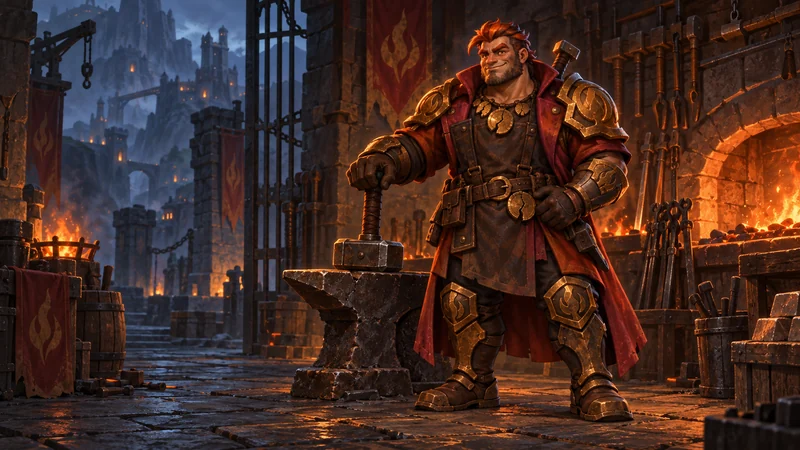 KaelFirst-generation championKael kept the foundry gates open when the city ordered its workers sealed inside.Read this biography → read the charge and said he had kept the gate open until his hands burned.
The campaign's question remains unresolved. The ledger and KaelKaelFirst-generation championKael kept the foundry gates open when the city ordered its workers sealed inside.Read this biography →'s memory disagree, and the Ox cannot tell them which line is true. It may remember some of the people it carried; it cannot provide testimony in words. KaelKaelFirst-generation championKael kept the foundry gates open when the city ordered its workers sealed inside.Read this biography → asks the player to search the other records rather than treating the Ox's presence as proof that absolves him.
The old book was not hidden inside the Ox or made part of its soul. It lay beneath the furnace shelf, protected by the shape of the plated flank when the roof fell. The Ox sheltered the ledger because it stood over the route people used to leave.
A copy of the recovered pages was placed in the Ward's public archive. The water stains and missing names remain visible. KaelKaelFirst-generation championKael kept the foundry gates open when the city ordered its workers sealed inside.Read this biography → asked the clerk not to fill them from memory. A blank space can be painful, but replacing it with a confident invention would make the living look away from the people still unaccounted for.
The Unquenched and the patient road
KaelKaelFirst-generation championKael kept the foundry gates open when the city ordered its workers sealed inside.Read this biography → invited the Ox into the Unquenched circle because it continued to shelter people after the foundry and its records had failed. The invitation did not bind the creature to the Ward. It had no contract, badge, or spoken oath. The circle marked a warm place beside the road and left the crossing clear.
The Cinder Ward's members repaired the channel wall, moved the children's coins to a safer seam, and asked before cleaning the furnace. They never tried to pry out the spirit or force it to lead them to the missing. Its silence was not a verdict on KaelKaelFirst-generation championKael kept the foundry gates open when the city ordered its workers sealed inside.Read this biography →'s guilt, nor a promise that the foundry's dead would be found.
The Coalglass Lancer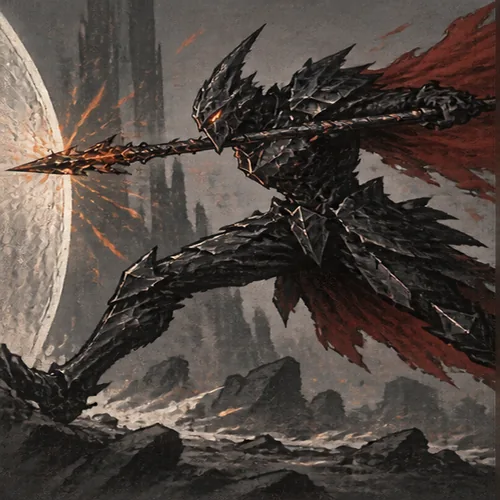 Coalglass LancerC13 · 3 energy · 3/4Forged from black glass beneath the foundry's mouth, it lowers its spear only when something claims to stand between the fire and people behind it.Read this folio → and Bellows Imp
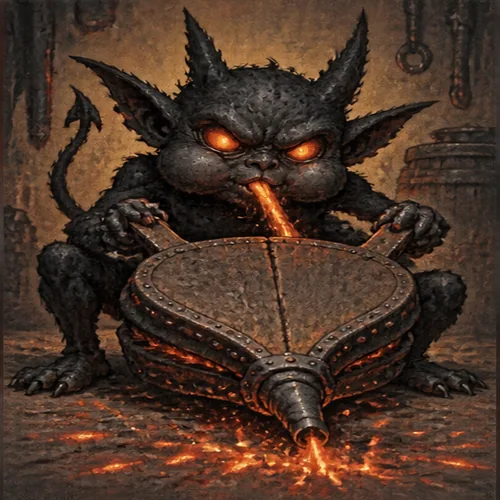 Bellows ImpC14 · 2 energy · 3/2It still believes every fight can be won by blowing harder, even as its coal-red lungs burn out.Read this folio → share the same broad history of foundry labor, but neither made the Ox. Their records touch at cooling channels and the search for the last worker names. The Imp follows the Ox when the forge goes cold; the Lancer's preserved names cannot be read as a list of everyone the Ox carried.
The Ox's pastime remained simple: carry a stranded traveler across the channel, warm a bowl, and stand until everyone found their next door. It never hurried the last person. If a child left a coin in its plates, it kept the token where it had been placed.
The circle calls it Unquenched, but the Ox's life began before the group existed. It had been a working animal, a companion to Nima, and the warm back beneath which a family ate. The faction describes the present people who care for it. It does not replace the earlier name or ownership of its past.
The body and the spirit
The Ledger separates Hearth's physical death from the spirit that remained. His original body was pinned beneath the foundry roof and later recovered by the crews who reopened the lower passage. The body did not become a living iron machine.
The spirit's plated form appeared after the old channel was reopened. It carries the shape of the living Ox and the heat of the furnace, but the Crow cannot claim it is the same body restored. No flesh was found inside the later figure, and no survivor reported a healing.
The brass tag and meal pot remained at the site. They did not become extra souls. The last meal was a memory shared by the living people who crossed; the children who ate it survived. The name Hearth remained on the tag because someone needed to identify the chamber. The singular spirit belongs to the Ox alone.
No record says the spirit was released after the old furnace was removed. The keeper's warmth could be carried from the channel, but it never gave a direction beyond the mortal world. The Crow will not claim an afterlife journey the witnesses did not see. It records the animal's presence where it can still protect a crossing.
Some children say the furnace is a second heart. The Ledger marks that as a child's explanation, not a verified anatomy. The visible ember may be a heart, a trapped breath, or the remaining warmth of the tether. The Ox is alive in the way card-souls live; the exact line between creature and memory remains unanswered.
The card that gives one armor
When the lower crossing had to be repaired again, the old chamber could not remain as the spirit's anchor. The iron had begun to split and the paper ledger was at risk of being lost in another flood. The Unquenched arranged a transfer with the Ledger Crow.
The spirit moved into one official Mournhand card. The recovered ledger stayed in the archive, and Nima's coin tin remained with her family. The empty warming pot stayed at the crossing. No duplicate Ox remained in the old chamber, and the card did not restore the physical body buried beneath the roof.
The card's illustration preserves the ox-like silhouette, curved horns, dark layered plates, red-brown cloth, and furnace glow beneath its ribs. The animal is not a generic armored beast. Its heavy body recalls the floodplain worker who waited for every cart and the shelter where people shared their last warm meal.
At the table, the Furnaceback Ox costs five energy, has three attack and seven health, and grants one champion armor when it enters. The armor is limited by the game's five-point cap. The card does not need to attack to provide the entry effect, and its body can remain after the armor is gained.
The entry armor fits the old work: a small buffer that helps someone keep moving after crossing danger. It is still only one point. The Ox cannot absorb every blow, recover the people who died, or decide whether KaelKaelFirst-generation championKael kept the foundry gates open when the city ordered its workers sealed inside.Read this biography →'s account is true. Its last warm meal remains a memory of ordinary care, not an unlimited shield.

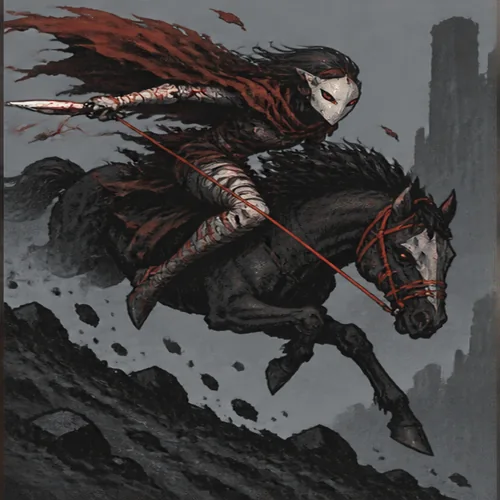 Red-Thread OutriderC15 · 2 energy · 2/2A red thread runs from her wrist to a home no map can find.Read this folio →
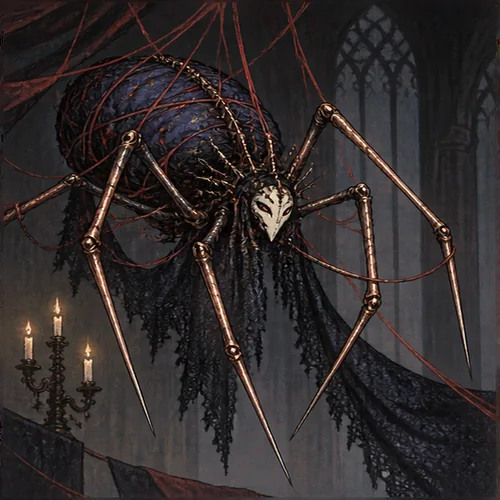 Spindle WidowC17 · 3 energy · 2/4Every widow in the Cinder Ward leaves a loose thread beneath her door.Read this folio →