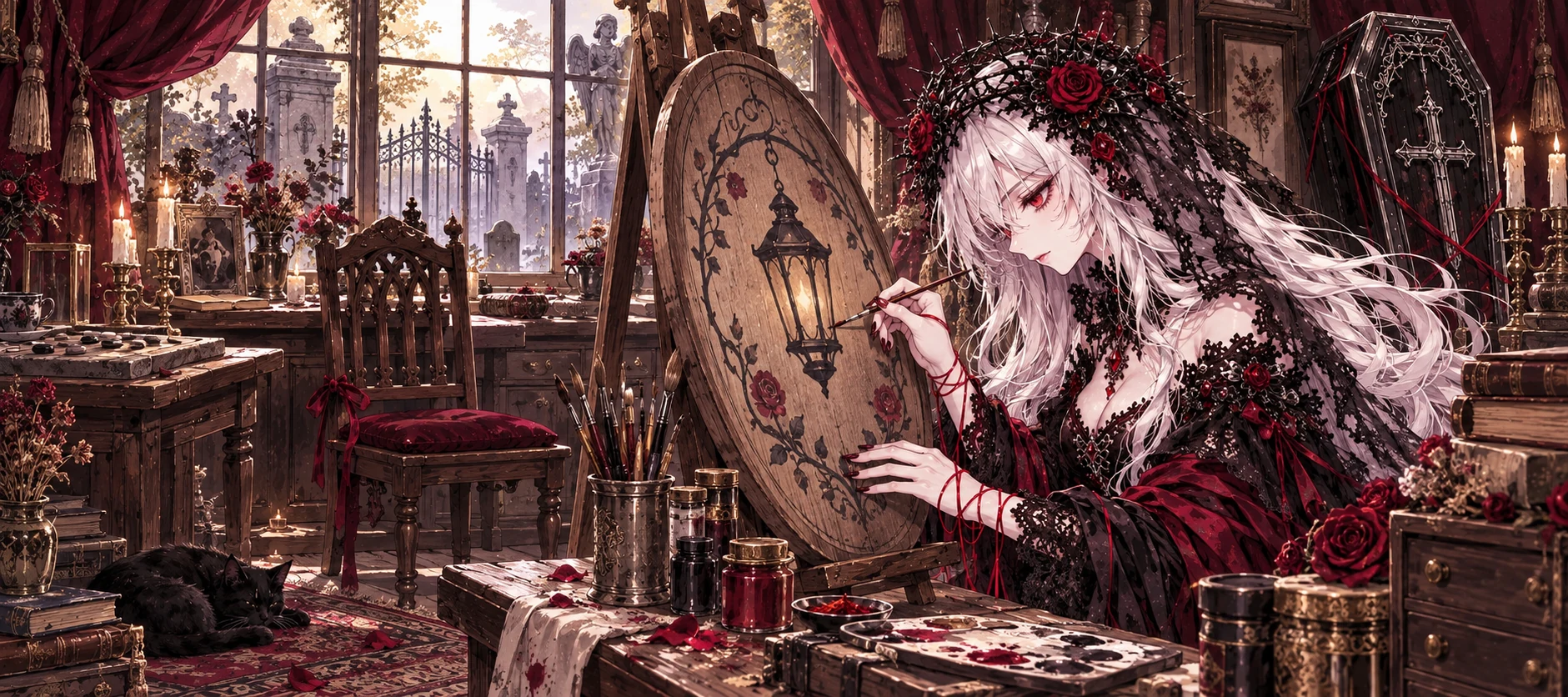
The sign above the door
Liora was born on July 14, while her father was repainting the sign above his workshop. He left the final letter unfinished when the call came from upstairs. Years later she insisted that the missing stroke had been deliberate, a useful improvement to a name that was too long already. Her mother disagreed because she had spent the following week explaining the mistake to customers. The family kept the story, including the argument, as part of Liora's birthday. She grew up with pale hair that would not stay beneath a cap, red eyes that missed very little, and a firm belief that a poorly chosen sign could make a perfectly good shop look untrustworthy.
Her father painted names, directions, and images for people who needed to be found. Her mother kept the accounts and arranged deliveries, a task requiring more tact than either painter possessed. Liora liked the workshop best before customers arrived, when brushes stood in jars and yesterday's colors had dried into strange shapes along the mixing boards. She collected those hardened scraps until her mother discovered them under a pillow. She also drew faces in the margins of bills. Her father laughed; her mother made her copy every damaged bill cleanly. Liora retained both the habit and a better understanding of where to practice it.
Their neighbor Irin taught her a board game played with pale and dark stones. Irin was a year older, apparently fearless, and willing to invent a rule whenever defeat approached. Liora preferred to win by remembering the actual rules and arguing them with exhausting precision. They remained friends because each enjoyed the other enough to survive losing. On summer birthdays they carried the board to the shade beside the cemetery wall, where the street was quiet and the keeper did not mind provided they moved when a procession passed. Death belonged to their neighborhood without making every afternoon solemn.
Liora was affectionate and easily wounded by embarrassment. If somebody laughed at a mistake, she could spend days perfecting the work and refusing the person's apology. Her mother sometimes set a cup beside her and asked whether she wanted to finish being correct before supper. It usually made Liora laugh despite herself. She learned slowly that accuracy and generosity were different skills. The lesson returned throughout her life, in business, friendship, love, and the years when strangers decided a woman waiting beside a cemetery must be too simple a creature to understand how many meanings waiting could have.
Letters meant to be read
She apprenticed under her father and then worked for a painter who disliked him. This was her mother's suggestion, offered in the belief that loving somebody should not require learning only their methods. The new teacher, Daven, made Liora paint letters large enough to be read in rain. He scraped away beautiful flourishes that confused the name. She objected until a customer praised the ornament and entered the wrong shop. Afterward she began testing a design from the far side of the street before congratulating herself on its elegance. She still liked ornament. She wanted it to help somebody arrive.
Her first independent commission was a boarding-house sign. The owner asked for something dignified and received a panel so stern that guests assumed the building housed an office. Liora repainted it at her own expense, adding a small lamp beneath the name. Irin said the lamp looked as though it expected an apology. Liora threatened to charge her for future opinions. Instead they spent the evening inventing absurdly truthful signs: a baker who rose late, a barber who loved conversation more than straight edges, a room offering excellent views of the opposite wall. Liora laughed until she spilled pigment over a shoe she could not afford to replace.
She liked earning enough to choose things without explanation. She rented a small room for work, kept a shelf of pressed leaves whose shapes suggested useful letter curves, and bought dark clothes because the colors pleased her. Black lace, deep red fabric, and bright stones did not arrive with mourning. They were preferences formed while her life was busy and hopeful. She made good soup badly on purpose when Irin came to supper, claiming its inconsistency preserved interest. In truth she forgot the pot whenever a difficult commission caught her attention. Irin learned to inspect the hearth before sitting down.
The cemetery keeper occasionally hired her to restore weathered name boards and directions. She refused to guess at missing letters merely because an invented name would look complete. If a record could not be found, she left a careful space. Families did not always thank her. Some wanted certainty more than preservation. Liora understood the desire and still would not counterfeit the answer. This work gave her a respect for ordinary incompleteness that her younger self had lacked. She did not imagine it would become the principle around which other people tried to summarize her entire life.
The man who read the small letters
Emren came to the workshop to commission a sign for a repair yard. He described every tool used there and forgot to say what the place was called. Liora let him finish before asking the obvious question. He was mortified, then laughed at himself with such uncomplicated warmth that she found her own amusement becoming kinder. He repaired carts and traveling frames, had a small scar beside one eyebrow, and read contracts all the way through. When she gave him a price, he asked how much of it covered her time. She liked that question more than his compliment about the lettering.
Their courtship grew around practical errands that became unnecessarily long. He carried a finished panel because the wind made it awkward; she stayed at the yard to watch him fit a wheel. They walked through markets without buying much, then disagreed over which stall had provided the best free sample. Emren remembered that she disliked being surprised while working and knocked before entering. Liora remembered that he forgot to eat when a repair seemed nearly finished, although she rarely admitted that she did the same thing. He enjoyed the ugly faces in her sketch margins and recognized himself in one before she confessed its subject.
He was not endlessly patient. He postponed unpleasant conversations, sometimes mistaking an intention to explain for an explanation already given. Liora could interpret a changed plan as a judgment on her importance. They hurt each other in small, repairable ways before learning the places where their habits met badly. Once he missed a supper while helping at the yard and arrived expecting to be forgiven before she had finished being angry. She handed him the cold pot. He washed it, then sat down to listen. The apology did not become romantic merely because they loved each other. It worked because he stopped trying to hurry it.
They decided to marry after an argument about whether they should share a workroom. Liora wanted one part of the day that did not belong to his tools. Emren wanted a place at the end of it where neither had to ask permission to remain. They found that these wishes could exist together. He proposed in the yard beside a dismantled cart, and she made him repeat the question because a hammer had swallowed the first attempt. Later they disagreed cheerfully about whether this ruined the story. Neither expected the unfinished part of their marriage to be the part strangers would remember.
The dress and the likeness
Liora chose a black and burgundy gown, rich in lace and comfortably familiar in color. The veil carried small red roses beneath a dark thorned circlet. Her mother objected to the weight of the fabric in summer, not to its shade, and helped find a lining that breathed. A red stone at Liora's throat had belonged to her grandmother. Irin insisted the whole arrangement required a more dignified walk than Liora normally used when she was late. Liora practiced an intolerably grand entrance, caught a chair with the skirt, and made them all laugh. The gown was finished before the letter arrived.
The cemetery stood along the route to their gathering place. Liora intended to stop there briefly with flowers for relatives who could not attend. The keeper offered the little side house as a place to leave food and rest older guests. In its ceremonial room stood an ornate black coffin, empty of any body, used for keeping written remembrances during processions. It was older than the house's present use. A silvered lining beneath its lacquer had once supported a rare funerary practice: a temporary likeness could stand for a missing body while relatives sought its return. Nobody had performed that work there for years.
Liora restored a small section of the damaged lining as payment for using the room. Among the keeper's supplies she found its original transfer ground, marked for that specific coffin. Daven had shown her similar materials used to preserve the outline of a death mask after the person had already departed. She understood the craft better than the forgotten rite beneath it. For the wedding, she made a small painted likeness of herself in the veil, expecting Emren to add his beside it when he arrived. The keeper helped seat it in the prepared lining. Her red wrist cord was passed through the portrait's backing and around the coffin's fastening as a ceremonial link between the living guest and the place kept for her.
The mistake required that particular combination: an old substitute-body vessel, its active transfer ground, a likeness made while its subject still lived, and a thread establishing her as the person to whom the image should return. Ordinary portraits did not possess that hold. The coffin quietly accepted a second outline of Liora without showing what it had done. She later cut the exposed cord to move freely, leaving the fastened portion in place. The dried impression retained the connection. Nothing hurt, nothing died, and the room looked exactly as it had a moment before. She went back to arranging chairs.
The letter in the empty coffin
Emren's letter arrived after the dress was ready and before the procession set out. Liora read it twice. He wrote that he had been delayed on the approach to the city and asked her to keep his place if he missed the first gathering. He expected to explain in person. The letter gave no account sufficient to establish where he was or what had delayed him. Its hand was familiar, including a cramped correction he usually made when he wrote too quickly. Liora was irritated rather than afraid. She had already asked him to allow more time for the journey. Irin reminded her that annoyance and concern could wait until they possessed more information.
Liora sent the letter ahead with the keeper's assistant so it could be protected with the written remembrances. By the time the wedding procession reached the cemetery, it had been sealed inside the empty coffin. This was not a burial notice and no body lay beneath the lid. The fastening was opened that afternoon, the paper read again, and inquiries sent out along the approach roads. Nobody had to preserve the mystery by refusing to examine a letter addressed to the bride. Its words were available. The answer they wanted was not among them.
The food was eaten slowly. Older guests went home. A searcher returned with news of a damaged cart that proved to belong to somebody else. Liora removed the heavy circlet, then put it back on when she heard steps near the door and disliked herself for the speed of that hope. Emren did not arrive. Neither did proof of his death, his departure by choice, or an order that had prevented him coming. People offered explanations because explanations made it easier to decide what expression to wear around her. She accepted practical help and rejected certainty that had no witness behind it.
The gathering ended without the ceremony. Liora stayed in the side house that night because leaving felt too much like directing a late arrival toward an empty street. In the following days she continued the inquiries herself. Names, routes and dates were compared; one lead contradicted another, and some generous strangers turned out to enjoy being important to a search more than being accurate. She did not discover what had happened to him. When the immediate search exhausted what could actually be checked, she took a longer tenancy in the cemetery house and kept one place clear. She also sent word to her customers that work would resume the following week.
The years that were still hers
She was not a young woman sitting motionless through every season. She painted shop signs, argued over unpaid bills, visited Irin, and learned to make the soup reliably enough that its failures stopped being a family joke. The cemetery house had light suitable for fine lettering, and her workshop filled one room while the ceremonial coffin remained in another. She kept Emren's letter dry, reread it when a new question made rereading useful, and did not pretend the paper supplied fresh evidence merely because another year had passed. The empty place stayed his. The rest of the house could still contain her.
People disagreed with this arrangement. Some praised her fidelity in language that made it sound as though they would be disappointed if she enjoyed herself. Others insisted that accepting another invitation would cure whatever they thought was wrong. Liora grew impatient with both. She danced at a neighbor's celebration and spent an entire evening losing a board game to Irin. She refused one person's courtship kindly and another's less kindly when he treated Emren's absence as an argument to be won. She did not promise never to change. She insisted that changing her life would be her decision, not proof somebody else had finally understood it better.
Every year she stitched a new red line through the veil. At first the stitches marked the anniversary she did not know how to name. Later they also recorded the work of hands growing older: one line uneven after an illness, another unusually small during a season when she could afford better light. The veil itself did not fade. She noticed this, compared it with fabric stored nearby, and asked people who understood old materials. None yet recognized that the coffin's kept likeness was maintaining the appearance attached to it. Liora did not interpret the unfading cloth as proof that Emren was alive. It was an unanswered property of an object, not a message from a missing person.
She could be difficult. She kept useful things long after their usefulness had become a story she told to avoid clearing a shelf. She sometimes made visitors defend an innocent question as though they had arrived to judge her. Irin called her out on this and occasionally left angry. They apologized with the honesty of people who expected to meet again. At each July birthday, Liora still demanded the board game and accused Irin of remembering rules selectively. Her laughter did not cancel her grief. Her grief did not own every sound she made.
The last household
Liora lived into old age. Her white hair had always been white; changes appeared instead in her hands, her balance, and the distance from which she could make a fine line accurately. She trained an apprentice, then watched that apprentice take on work she once would have refused to delegate. Irin grew old alongside her and died after a short illness, leaving behind a board with two pieces replaced by conspicuously wrong stones. Liora kept using it. Winning against a younger opponent never felt quite as satisfying as proving Irin had moved a piece she should not have moved.
The household changed without becoming empty. Neighbors brought food, apprentices became colleagues, and the keeper's family knew which chair should remain available and which chairs were free to be used. Liora still asked about credible news. Most years there was none. She had ceased expecting an explanation to restore all the life that would have passed while it was missing. If Emren came, they would have years to speak about, including hers. She hoped she would let him finish before making the first accusation. She knew herself well enough not to promise this too confidently.
Her final illness arrived in a cold season after her strength had been declining for some time. It was the end of an old mortal body, not a punishment for loving somebody or a sudden death from disappointment. The people caring for her knew she might not recover. She dictated instructions about unfinished commissions, gave the best brushes to the former apprentice who would use them, and asked that nobody burn the ordinary papers merely because some were untidy. For her own burial she chose a plain coffin and her family's plot. The ceremonial black coffin was to remain empty of a body, with its letter and kept likeness undisturbed until somebody understood them.
She died in her bed with a hand resting on the old game board. For a moment she felt the loosening that belonged to departure. Then another shape answered her: a young wrist inside red cord, lace against a shoulder, hair moving beneath a veil. The substitute likeness in the black coffin recognized the person it had been charged to receive. Instead of letting her departing spirit pass beyond the mortal world, it drew her into the outline stored decades earlier. Liora opened her eyes in the ceremonial room with the face she had worn on the wedding day. Her old body remained upstairs. The years she had lived were still in her mind, and she understood at once that looking young again was not the same thing as being given those years back.
The body that was not a body
The people who found her did not immediately understand what they were seeing. One thought a distant relation had arrived for the funeral. Liora told him where he had misplaced a receipt the previous week, and his expression changed. Her actual body was buried according to her instructions in the plain coffin. The ornate black vessel still held no corpse. It held the old letter and a preserved likeness that had become an involuntary second body for her spirit. The black lace, roses, red stone and wrist threads were no longer merely clothes she could set aside. They belonged to the outline through which the old funerary work kept recognizing her.
She tried to leave with the funeral procession. Beyond the cemetery gate, she felt herself becoming thin, then found herself standing beside the black coffin again. The connection allowed movement around the house and its immediate grounds but always returned her to the likeness when she attempted a final departure. She also tried saying aloud that the wedding was over and that no promise required her to remain. Nothing changed. Whatever tenderness she still felt for Emren, it was not the lock. She could alter an intention. She could not undo a substituted body merely by deciding the feelings attached to it ought to be finished.
A restorer examined the lining and identified the old transfer ground. Properly used after a person's death, it had held a memorial outline when no living spirit remained to answer it. Liora's living likeness and identifying thread had created a return path instead. Cutting more cord did not remove the connection already dried into the impression. Opening the lid did not open the retained shape. When the restorer lifted one painted edge, Liora lost sensation in a hand and could not remember how to shape a familiar letter. The edge was returned immediately. Destroying the likeness now would destroy part of the self housed through it, not reliably deliver her to the passage she had missed.
She was angry at herself for the original work and angry at the keeper for having trusted it. She was angrier still when a visitor called the captivity a beautiful expression of devotion. She asked him to spend one night unable to cross a threshold and then choose his adjectives again. Yet blame could not do the restorer's work, and she would not turn every later kindness into another opportunity for accusation. She resumed painting in the room where light still fell well. The living could carry a finished sign beyond the gate even when its maker could not follow it.
The vows people heard
Time gave her the name the Coffin Bride. Liora used it when it helped visitors find the right house, and gave her own name when she wanted them to remember a person. The younger face made people speak to her as though she had experienced very little. She sometimes let them finish before correcting this assumption. The habit amused her more than it should have. She continued repairing the veil with fresh red thread each year. The work no longer measured only a missing wedding. It gave her a task whose small decisions were hers, within an appearance the old vessel otherwise refused to allow to age.
Visitors heard different vows beneath her breath. One heard a promise to wait; another, a promise to speak honestly; a third, a refusal to mistake possession for care. The old likeness carried the wedding's intended words, but it also answered the person who had lived beyond that day. Liora did not always know which sentence another visitor would hear. She refused to treat these echoes as instructions about what she must feel. Some words belonged to vows she once planned to say to Emren. Others sounded like commitments she had learned through work, friendship, and the long practice of allowing another person's life to remain their own.
The empty place beside her remained meant for one. She protected it without asking every visitor to become a witness to the same grief. They could sit elsewhere, bring work, challenge her to a game, or speak about somebody she had never met. She disliked sentimental stories in which loyalty made a person pure. She had waited faithfully and still been petty about a borrowed brush. She had suffered and still hurt a friend with an unnecessary remark. Remembering the whole of herself was one way of resisting the narrow likeness that had caught her. It could hold her shape. She would not let it become the only account of her life.
Near the present the Shroud Moth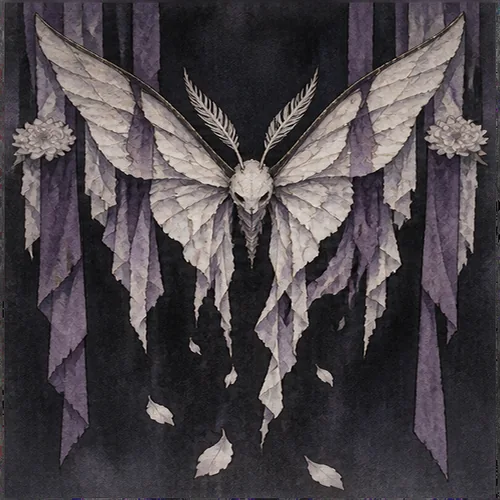 Shroud MothC29 · 2 energy · 2/2It carries torn obituary ribbons between doors that no longer have houses.Read this folio → passed the cemetery gate with mourning ribbons. Liora watched its approaches and kept a dry landing place beneath the eave. It could come and go; the coffin's return path belonged specifically to her, not to every spirit entering the grounds. Sometimes it left a scrap for someone who had moved away. She protected what could be read and allowed living visitors to carry it onward. She never asked the moth to bring a message from Emren. Delivering what survived was its own work. Turning it into an answer to her missing person would have required knowledge neither of them claimed to possess.
A space that could travel
By the present, the house had outlived several families of keepers. Records had been recopied, streets renamed, and old inquiries filed beside later ones that contradicted them. The letter survived because it had been cared for, not because it had become more informative. The Ledger Crow called the absence unanswered. Liora preferred the word to abandoned, which pretended to know an intention she had never established. She also refused the comfortable opposite: certainty that Emren would arrive if she waited with sufficient virtue. The place remained his without becoming a wager she expected the world to pay.
The old restorer's notes eventually reached someone familiar with soul vessels. Their proposal did not involve burning the coffin, finishing the vows for her, or pretending the groom had been found. A prepared card might become a new receiving surface for the complete kept likeness. The transfer would have to preserve the whole image and its connection to her spirit while removing its return path to the coffin. A copy painted beside the first would only make another picture. Liora needed to move the living relation, not produce a better portrait. For the first time, the work resembled a difficult commission she might be able to direct herself.
She insisted on learning every stage. Painting had taught her that a beautiful result could conceal a careless join. She tested harmless pigment on separate boards, practiced with a brush whose handle fit her renewed hand, and asked what would happen if she stopped midway. The prepared surface could wait. Nobody's willingness to help entitled them to hurry her. The current keeper arranged the ceremonial room as she requested: a clear table, protected light, the original portrait exposed without lifting it, and the letter set safely aside where its condition would not be confused with the fate of the spell.
The hardest decision concerned the house. Liora had spent a mortal lifetime choosing to live there and a much longer existence unable to leave. She could not tell where preference ended and familiarity born of confinement began. She did not have to settle the question before gaining a way to ask it freely. The keeper offered to retain her room and the reserved place, without turning either into a shrine from which she was expected never to depart. Liora accepted. She was not replacing one person with a vessel or declaring the story closed. She was preparing a space in which the unfinished part would no longer occupy every possible road.
The line she chose to draw
She began while daylight lay evenly across the worktable. The keeper supported one thin prepared soul card on an open palm beside the black coffin's lining. Liora laid the first surviving red cord against the portrait's edge, then dipped her brush into the transfer medium mixed for that old ground. She did not pull the painted image free. Instead she followed its continuous outer line, gathering the held outline onto the brush as the new receiving surface answered. Her hand grew translucent at the wrist. She stopped, felt the relation remain whole, and continued when she was ready.
The thread passed across the card's unfilled face without being cut. Each line she drew brought another part of the retained likeness with it: white hair, thorned circlet, red roses, the weight of lace, the hands that had once grown old and learned their trade. The keeper held the vessel at ordinary hand height, close enough that Liora could work without reaching. Her spirit followed the whole likeness into the new enclosure, including the years no young portrait could have shown. The old lining became paint again. It did not hold a second bride waiting to be damaged or called back.
The completed card rested on the keeper's palm, small and light, its reverse black beneath aged gold ornament and fine teal rings, with a flat red seal image bearing a skeletal hand. The prepared vessel had taken the trapped likeness as a whole, not merely the appearance she had painted for a wedding. Liora remained in the mortal world, held in card form instead of returned repeatedly to a black coffin. No afterlife door opened, and the missing guest did not enter the room. The letter lay where it had been placed, an old piece of evidence with exactly as much to say as before.
The keeper set the card beside the game board while the transfer settled. Beyond it the reserved chair remained clear, and two other chairs stood ready for anybody who wished to use them. Within the small vessel Liora remembered the workshop sign, Irin's crooked rules, Emren reading a contract to its final line, and the ordinary days she had refused to surrender merely because their ending was uncertain. The veil's red thread rested against her hands. When she chose to take it up again, it would be her work. The unanswered place remained. So did the rest of her life.

 MiraFirst-generation championMira is Nera's estranged twin sister, the softer of the two.Read this biography →
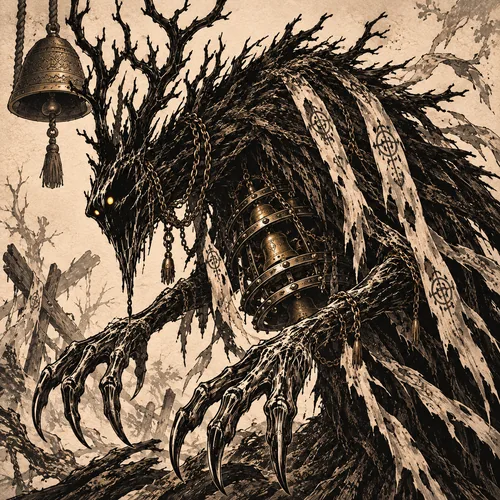 The Bell-EaterC08 · 4 energy · 3/5When the plague bells stopped, something beneath the cathedral began to starve.Read this folio →
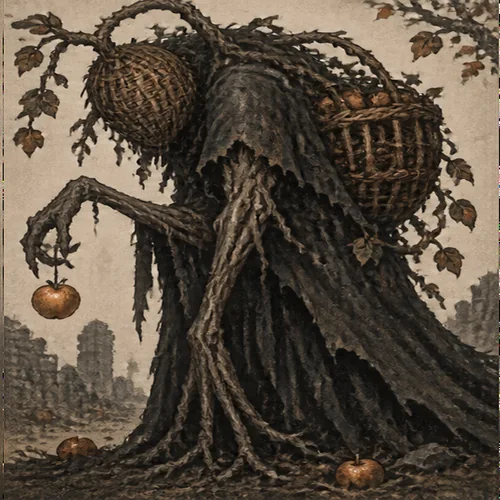 Orchard WretchC27 · 4 energy · 4/4Built from burned stakes and evacuation coats, it brings dark fruit to doorsteps and listens below the oldest tree for a name the roots will not return.Read this folio →
 Thimble KnightC02 · 2 energy · 1/4A seamstress fashioned his armor from her last thimble and asked him to guard the nursery door.Read this folio →
 Waxwork MatronC10 · 4 energy · 2/6She casts a new face for every child the winter takes, setting them around a supper that never cools.Read this folio →