
November beneath the floor
On November 12, something beneath the cathedral floor began answering the bells. It had grown slowly in the damp seam between an old root and a foundation stone: a warm knot of dark fibers, nourished by the vibration passing through the masonry. For months it had folded inward whenever a footstep approached. That morning it unfolded two crooked limbs, lifted a pointed head, and made a small rasp when the noon peal ended. The first breath belonged to a creature, not a piece of timber. Its amber eyes opened upon a ceiling of stone, and it reached toward the place where the sound had gone.
The apprentice who found it was called Talla. She had been sent to inspect a drain and discovered fresh scratches beside a loose slab. She was deaf, so she did not hear the rasp; she saw the dust tremble and felt the little shape strike the back of her hand. She withdrew, fetched a lamp, and waited. The creature emerged far enough to reveal a narrow chest, long curved claws, and two twiglike prongs above its head. Talla had expected a rat. She looked disappointed by the amount of trouble this alternative might cause, then moved her tool bag so it could stand without falling into the drain.
She wrote the date beside the repair she had not completed. Later, when it became clear that the creature had a life worth marking, November 12 became its birthday. Talla called it Rusk after the dry scraping noise she felt through its throat when it settled against a sounding stone. It did not answer to the word at first. It answered to her approach, the regular double knock she gave before moving the slab, and the warmth of a lamp left beyond the reach of its claws. Other workers called it less generous things. Talla would point to its small, unmistakable face until they remembered they were discussing someone standing there.
Rusk's first world was narrow but sufficient. It knew the arch under which rainwater gathered, the warm pipe that never tasted interesting, and the hollow where the bells left their deepest vibration. It slept curled around that hollow, breathing slowly through the fibers at its throat. When the ringing returned, nourishment moved through its body like warmth through a hand. Silence between peals was pleasant then. Silence meant a full chest, a safe stone, and enough time to investigate whatever Talla had carelessly left where a curious claw might find it.
The language of two knocks
Talla taught it boundaries before she taught it many words. Two knocks meant she was about to touch the space beside it. A flat palm meant stop. Fingers spread and lowered slowly meant wait without following. Rusk understood the last instruction and disliked it. It wanted to accompany her everywhere, including places reached by ladders that could not bear it. She refused to make affection an excuse for a broken neck. When it sulked beneath a workbench, she finished the job above and returned at the time she had indicated, even if it continued pretending not to see her.
Her deafness was not a hidden kind of hearing. She could feel a strong bell through a floor, but that did not tell her which words somebody had spoken behind her. She used a shared language of hands with the workers who learned it, written notes with those who did not, and a sharply raised eyebrow with anyone who expected guessing to replace attention. Rusk's hands were badly shaped for many signs. Together they adapted the useful ones to curved claws and long knuckles. It learned to face her when communicating. Sometimes it forgot and began again when she pointed out that the back of its head remained a poor conversational partner.
The bell crew gave Rusk a place in their routines. It could reach a dropped tool inside a narrow housing and find a loose timber by the unpleasant way it carried vibration. Those skills did not make it a willing servant. If someone ordered it about without greeting it, the tool usually remained where it had fallen. Talla defended its choice while also explaining that hiding a man's entire lunch because he had been rude was excessive. Rusk returned the lunch. It kept the spoon until the man asked properly, which Talla considered a partial improvement.
It acquired pleasures that had little to do with usefulness. It sorted bent nails by the tiny sounds they made against stone, though it never swallowed them. It liked the uneven practice peals played by novices more than the grand sequences visitors praised. The mistakes arrived like unexpected corners in a familiar passage. It also liked watching laundry shake above the service courtyard. Talla said this was because loose cloth resembled bell ropes. Rusk disagreed by turning its face toward the laundry and ignoring the actual rope beside it. She accepted the correction. Being understood did not require every preference to have an explanation another person found sensible.
A place beside the workbench
As Rusk grew, its sleeping hollow became too small. Talla and an older mason opened an unused chamber beside the undercroft, leaving one wall bare so the evening peal would reach it clearly. Rusk carried its treasured scraps there one at a time. Among them were a cracked wooden pulley, a crooked spoon, and a round stone polished by years of water. The mason offered to remove what he called rubbish. Rusk stood over the collection until he revised the description. Talla fitted a shallow shelf low enough for it to reach and very firmly explained that the shelf was not another object to be collected.
Talla was becoming a skilled maintenance worker with ambitions beyond the cathedral. She liked building things that moved across water rather than merely admitting rain through a roof. On free days she repaired small boats with her brother. Rusk watched from the quay, careful to keep its claws away from the thin hulls. She married a bookbinder whose hands moved fluently when he spoke to her, and later brought their daughter to the work courtyard. Rusk found the infant alarming. It could be trusted beside immense ringing bronze, but the girl's tiny fingers required a restraint that made it hold perfectly still until she had finished investigating one knuckle.
It resented the changes before it learned to enjoy them. Talla no longer spent every spare hour under the cathedral. Sometimes her brother came in her place, sometimes nobody came because there was nothing that needed repairing. Rusk dragged the crooked spoon to the entrance and left it where she would have to see it. Talla recognized the accusation. She sat beside it and explained, with hands and notes and patient repetition, that having a family did not mean she had traded one affection for another. It could miss her without making her absence an offense. Rusk pushed the spoon back into its room, then offered it to her daughter on the next visit.
Their November custom was simple. Talla brought a new piece of wood, and Rusk chose a place on it for three taps with her mallet. She could feel the taps through the board; it could hear and feel their differences. The third was always slightly impatient because she disliked ceremonies that delayed lunch. Rusk grew to expect that impatience. It had no need for cake, could not digest bread, and never wanted a crowd around its chamber. A board, three taps, and somebody who knew when to stop were sufficient reasons to mark another year.
The sound it took too soon
A bell did not have to vanish for Rusk to feed upon it. The creature took the lingering vibration after a peal had done its work, drawing it through the listening hollows beneath its ribs. The outward sound belonged to the people being summoned; what remained in stone and timber was usually enough. Talla learned this by watching when it relaxed. She arranged maintenance so its chamber kept a clear path to the sounding wall. Rusk learned that hunger had a schedule, and that most requests could wait until the appointed hour. It did not always remember the second lesson when something desirable happened unexpectedly.
One evening a novice began a practice sequence while Rusk was already restless. The creature climbed close to the bell and drew upon the vibration before the note had traveled through the tower. The outward stroke weakened. People waiting for a service in the lower yard did not hear it and went away. Rusk was pleased with the richness of what it had taken until it saw the novice being reprimanded for failing to ring. It could have remained hidden. Instead it emerged, placed one long claw on the bell's rim, and looked toward the sounding chamber. The novice stopped defending himself because the explanation had become visible.
Talla was furious. Not because it was hungry, but because another person had nearly been punished for the way it satisfied that hunger. She showed it the difference between receiving an echo and taking a call before anyone else could hear. Rusk understood more quickly than it admitted. It had felt the difference in the bell. Apologizing required returning to the novice in daylight, when hiding beneath the roof would have been more comfortable. It offered him its favorite resonant stone. He accepted the apology and returned the stone after using it to weigh down a practice sheet. They remained wary of each other for a while, which was an honest consequence.
From then on, Rusk waited beyond the first strong stroke. It enjoyed knowing exactly what it was restraining. Its kindness was not the effortless innocence some people began attributing to it. It wanted things; it could be possessive, impatient, and clever about concealing a mistake. Talla trusted it more after it learned to admit this than when it merely looked small beneath the workbench. As its antlers branched and its back rose into a dark ridge, the ability to stop itself mattered increasingly. A creature with claws that size could not depend upon everybody finding its intentions obvious.
When the plague bells stopped
The plague changed the cathedral's hours before it changed the city around it. Calls came at unfamiliar times. Workers missed shifts; people who had always hurried through the yard began sitting down between steps. Rusk could not catch the sickness as its human neighbors did, but it felt the disorder through the stone. The bells carried urgency rather than celebration. It fed upon their last vibrations and listened to the names spoken afterward, gradually learning which absences would not end when a shift changed. Talla kept working where she could, then spent more of her time helping her household and the neighbors who could no longer manage repairs.
The crew dwindled. Rusk grew hungry between uncertain peals and ashamed of noticing hunger while so many other creatures were suffering. It had no useful way to pretend the need away. A keeper named Sorn allowed it nearer the tower floor, where even a weak stroke could reach it. Sorn also began shortening the alarms. Constant bells frightened the city, he said; exhausted people needed rest. He was not the only person asking for quiet. The mistake lay in treating quiet as evidence that the danger had diminished. Reports from the plague ward still arrived, and some lay unopened while the remaining workers dealt with the most visible emergencies.
The warning bell was the largest of the lower tower's bronze voices. One night a novice drew its rope after a message arrived from the ward. Sorn stopped the sequence before the first note could travel freely. The clapper was wrapped, the rope secured, and a notice announced that ordinary calls were suspended until the crew could restore order. The note began as a trapped shudder in bronze and never completed its outward ringing. Rusk felt that beginning through the floor. Then even the shudder ceased. The city did not receive the warning it should have heard, and the creature beneath the cathedral waited for a continuation that did not come.
Talla found it beside the sounding wall, scratching the same place until a claw split. She brought written messages, moved the slab so it could reach a less muffled arch, and tried the small external handbells available to her. They could soothe it briefly; they could not provide what the great daily peals had sustained. She would not leave her sick brother alone for whole nights, and Rusk, painfully, did not ask her to. Its living fibers tightened around an increasingly hollow chest. It began to believe the sound must still exist inside the silent bronze. If the tower would not let the note out, perhaps a starving creature could bring it in.
The first bronze
Around 1900 A.B., Rusk climbed the tower. It moved at night because fewer people would be there to stop it, though later it could never decide how much of that choice belonged to shame. Its long claws found the stone joints Talla had repaired. The familiar route should have been comforting. Instead every landing felt like another delay between its empty body and the thing it believed would fill it. At the top, the great warning bell hung motionless. Rusk pressed its pointed face against the bronze and heard the smallest answering murmur. It mistook the murmur for a meal waiting behind a closed door.
It unfastened what it could and broke what it could not. The bell tilted, heavy enough to pull the creature against the timber. Rusk opened the fibrous folds beneath its jaw far beyond their ordinary shape and drew the bronze whole into the living cavity that had always held vibration. This was the first bell it ever swallowed. Metal had never been food for it. The body tried to treat the immense object as it treated a dying note: bring it inward, hold it, take what could sustain life, let the remainder fade. The bronze did not fade. It crushed the warm channels that kept the creature alive.
Rusk died on the tower floor with the bell inside it. Its last living reflex was still drawing inward. The departing spirit moved through the same listening hollows that had carried nourishment all its life, struck the enclosed bronze, and was pulled back into the tightening ring of its own feeding. The note within the metal returned to the creature; the creature's dissolving awareness returned to the metal. The last impulse sealed them into one repeating resonance. There was no outward path left between the being and the object it had taken into itself. It had not chosen to remain immortal. It had made a terrible attempt to survive, and the attempt had caught the self that should have been able to depart.
The cold remains rose after the living warmth had gone. Dark fibers stretched around bronze that now occupied the whole chest. Bands and broken support metal formed a cage where its ribs had listened freely. Its amber eyes opened, but the familiar satisfaction of a completed peal never arrived. What it heard inside the swallowed bell were the prayers spoken around it after the alarms stopped: requests for help, angry promises, names repeated by people waiting for a warning. The missing note was absent. Rusk put both long hands against its new chest and waited. Dawn found it still listening, unable to digest the bronze, silence the prayers, or go where the dead should go.
What Talla could feel
Talla recognized it by the way it moved one hand away when she approached. The changed size and terrible chest did not make the familiar courtesy disappear. She gave the old double knock against a timber before coming closer. Rusk lowered its head until she could reach the side of its neck. She found no living warmth there. She could feel a continuous trembling through the bronze, but not the changing pulse that had once followed a meal. The creature tried to tell her that it was still hungry. Its hands shook so badly that she asked it to begin again, and waited until it could.
They tried to remove the bell. Talla and a metalworker loosened a band at the lower rim while Rusk held still. The moment the metal shifted away from the body, its sense of itself thinned; the creature could no longer distinguish Talla's hands from tools moving through an empty room. Replacing the band returned the distinction. The spirit was no longer simply sitting beside an unwanted object. The swallowed bronze had become the returning surface of its own awareness. Pulling the two apart would scatter that awareness with the vibration. Talla stopped before the experiment could turn rescue into destruction, and Rusk understood her refusal even while hating the necessity of it.
It tried a different escape alone. At the edge of a burial ground, where a quiet passage opened for another departing presence, Rusk followed the movement beyond the last grave. For an instant it could feel something wider than the bell. Then the inward ring caught, and every attempted step away arrived back inside its own chest. It stood in the same patch of earth, claws sunk deep, while the other presence was gone. No keeper ordered it back. No unanswered favor held it there. The trap was the dead creature's own completed swallowing, repeating after the life capable of changing that reflex had ended.
Talla could not hear the prayers inside it, and Rusk could not explain them all through signs. This difference did not make her company incomplete. She sat beside it with a repair balanced across her knees, letting the vibration pass through a board under her hand. Her brother recovered. Her daughter grew taller. Work resumed in some streets while others remained changed beyond recognition. Talla had grief, obligations, jokes and bad days that did not concern the bell. Rusk listened when she chose to share them. In a life that had become an endless demand from the hollow in its chest, being allowed to attend to somebody else's ordinary afternoon was a form of rest.
Three taps before lunch
The following November, Talla brought a board. She did not pretend the old birthday meal would nourish it as before. She only asked whether it still wanted the taps. Rusk placed one curved finger against the wood, and she struck it three times. The third was impatient because her daughter had made lunch and neither intended to let it grow cold. Rusk felt the separate beats enter the bell and vanish among the prayers. They did not cure anything. Yet it knew they had happened, and knew that Talla had expected it to want a pleasure that did not solve its suffering. It kept the board in the dry part of its old chamber.
It could no longer remain entirely beneath the cathedral. The new cage followed distant sounds, especially those carrying a strong intention. A promise pulled one way, a curse another; prayers entered the bronze like little bells struck close to the ear. Listening eased the worst hunger for a time, though no voice supplied the missing note. Rusk began walking through sleeping wards, careful to stop where its shadow would not block a whole window. It learned that a frightened whisper was not an invitation. When a household shut its curtains, it moved on rather than demanding gratitude for its own restraint.
Talla helped repair what the walks damaged. She hung loose chains clear of its claws and secured scraps people had offered so they would not snag its eyes. Some strips bore requests; others carried thanks or warnings. Rusk could not eat the paper. It tried once, embarrassed by hope, and carefully set the wet strip back down when it gave nothing. Talla laughed without cruelty, then showed it how to carry the offering instead. Its dark body accumulated pale streamers and small pendants. They did not make it harmless. They showed that people had stood near enough to leave something and had been allowed to go.
Talla grew old within the ordinary span of a human life. She worked fewer stairs, built a boat she was immensely pleased with, and developed a habit of declaring younger carpenters insufficiently stubborn. Rusk met her at ground level. On their last birthday visit she asked her grown daughter to make the taps because her own wrist hurt. The rhythm differed. Rusk accepted it. When Talla died, the creature stood outside the small farewell gathering and left the crooked spoon where her family could recognize it. It did not swallow the bell rung for her. Hunger was present, and love was present, and for that evening it allowed them to remain different things.
A thousand uneasy nights
Centuries gave the Bell-Eater many towers and no answer. It climbed toward tones that resembled the unfinished warning, sometimes finding only a different bell behind a familiar overtone. It swallowed other bronze when desperation overcame judgment, but the later metal did not become the lost first sound. It entered the same inward cage and brought more human intent with it. Rusk learned that an appetite could become larger without becoming more accurate. This knowledge did not always prevent another mistake. There were towers it avoided afterward because the people below had needed the call it took from them.
The cathedral changed. Its old sleeping chamber became a store, then a sealed recess, then part of a foundation nobody on the work crew could name. The birthday board eventually split with age. Rusk kept a short piece that still carried three shallow marks. It no longer expected every living person to understand why a frightening creature might value that scrap more than a handful of bright metal. Sometimes it found someone who did understand. A night worker might leave space beside a brazier; a tired parent might continue a story aloud after noticing the amber eyes beyond the lane. Such encounters never made the world kind in general. They made one night less empty.
It remained capable of frightening people badly. Its antlers scraped roofs, its claws left scores in stone, and the bronze in its chest could magnify a prayer until it sounded like accusation. Rusk began approaching from open spaces rather than appearing at a window. It waited for an acknowledgment before coming nearer. It gave the double knock upon a wall when touch was possible, although most people did not know who had taught it. These were small disciplines, repeatedly chosen. They mattered more than a reputation for hidden gentleness that would have required everyone else to ignore what its body could do.
The missing note acquired many possible explanations. Perhaps the wrapped clapper had spoiled it before Rusk arrived. Perhaps hunger had taught the creature to hear a beginning that never possessed an end. Perhaps some trace had left the tower with a person whose prayer it had not yet encountered. Rusk could not prove any of these. It followed the promise of an answer while distrusting the people who offered certainty too quickly. Every new tower began with the same hope: this time the sound might finish. Most nights ended with its long head bent toward another sleeping ward, listening to the smaller bells people carried within themselves.
The procession without a note
Near the present day, Rusk encountered a procession whose silence did not resemble an interrupted peal. The Quietpaper Golem Quietpaper GolemC35 · 3 energy · 2/4Folded funeral notices pack its chest so tightly that no bell can make it speak.Read this folio → carried folded funeral notices through the street. Nothing in its chest offered the bronze a tone to seize. Rusk circled at a distance, confused by an absence that had shape and purpose. It could not swallow the paper, and could not decide whether the unbroken quiet was a feast it did not yet understand or something entirely outside hunger. The Golem continued its work. It did not owe the creature an explanation merely because the creature had spent centuries needing one.
Accounts associated that procession with Odrik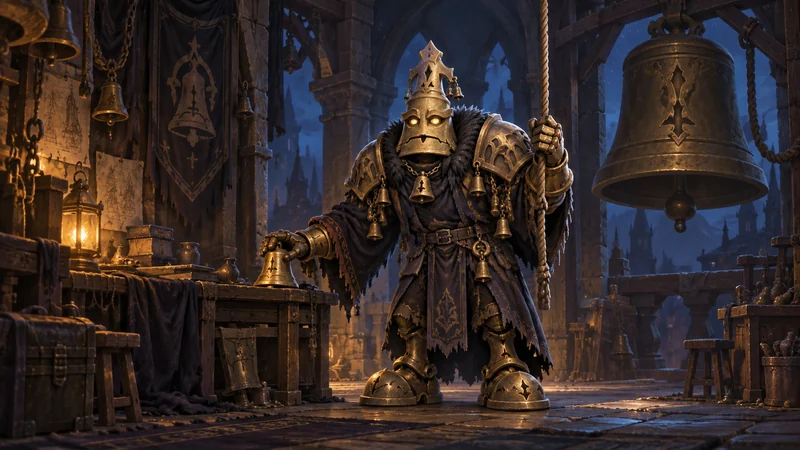 OdrikFirst-generation championOdrik rang the funeral bells until something began answering between their notes.Read this biography →, a name belonging to the present city's troubles. No surviving record proved its silence came from Rusk's cathedral or from the warning bell it had swallowed long ago. The creature listened without converting resemblance into evidence. It remembered Talla resting a hand on a board, present beside a sound she could not hear. The memory did not solve the Golem. It made room for a different question: could Rusk remain itself in a place where nothing was being taken in? It had known brief rest with a friend. It had almost forgotten to seek that kind of rest on its own behalf.
It began spending part of each night in an abandoned workshop, practicing a pause between hearing a strong intention and following it. A worker who repaired old reliquaries noticed the double knock on the doorframe and answered it. Her name was Dema. She did not promise a note hidden in the bronze, and Rusk stayed because of that restraint. Through signs, sketches and long demonstrations, they established what separation had done before. The bell could not be cut from the spirit. A new enclosure might receive their complete relation, leaving the swallowed cage intact within a smaller vessel. It would offer rest and movement, not an invented cure.
Dema prepared one soul card and let Rusk examine it before any attempt. It brought the card toward its mouth, remembered the wet prayer strip, and lowered its hand. Eating was not the only way to make something part of its existence. Dema placed the card on a clean board and asked it to show how it waited between the birthday taps. Rusk could do this without discovering the missing note. It could know that a sound had ended without consuming its source. The practice was slow. For once, the slowness did not mean somebody had forgotten to come back.
The pause it could carry
They chose an evening when the workshop was closed and no promised meeting would be interrupted. The card lay on Dema's open palm above the board, a thin rectangle small enough for an ordinary hand to hold. Rusk set the remaining piece of its birthday wood beside it. Dema gave the double knock and waited for its acknowledgment before moving closer. The creature hooked one claw gently beneath the lowest bronze band, not to tear it away but to feel the complete inward ring. Another long finger rested against the board. It could still hear prayers in the cage. None of them was the note it had sought.
Dema tapped three times. Rusk let each beat enter and end without reaching for another source. The prepared card received the quiet interval after the third, a bounded space in which the inward vibration could continue without spreading through the whole towering body. Rusk leaned its awareness toward that space while keeping bell and self together. At the first attempt it became frightened and withdrew; Dema stopped. At the second it recognized the same pause it had once shared with Talla before lunch. The memory was not a secret key. It was a practiced way of remaining present when nothing new was being demanded of it.
The bronze cage gathered first as an impression within the card's small depth. Rusk followed the entire returning ring rather than pulling a piece loose. Its dark shoulders, branched antlers, amber eyes, immense claws, chains and pale streamers drew inward with the body its spirit remembered. No separate bell or abandoned awareness remained on the workshop floor. The completed vessel rested lightly on Dema's palm, black beneath aged gold ornament and fine teal circles, its reverse carrying a flat red seal image marked with a skeletal hand. The last outward scrape of a claw ceased. Dema did not hurry to fill the quiet with congratulations.
Rusk remained bound to the swallowed bell within the card, and to the mortal world through that new enclosure. Hunger and prayer had not been erased. The missing warning had not finally rung. But the creature could rest without every troubled voice in the street dragging an enormous body toward it. Dema set the small vessel beside the old piece of board and waited. Within the card, Rusk felt the difference between a silence imposed upon people who needed a warning and a pause somebody had left for it to choose. It stayed in that pause for a little while. Then, without demanding an answer, it listened.
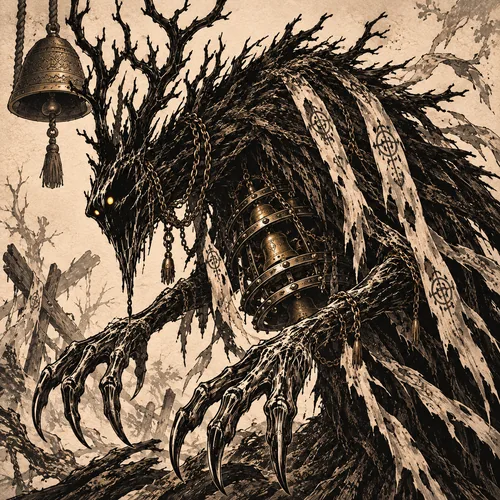
 Thimble KnightC02 · 2 energy · 1/4A seamstress fashioned his armor from her last thimble and asked him to guard the nursery door.Read this folio →
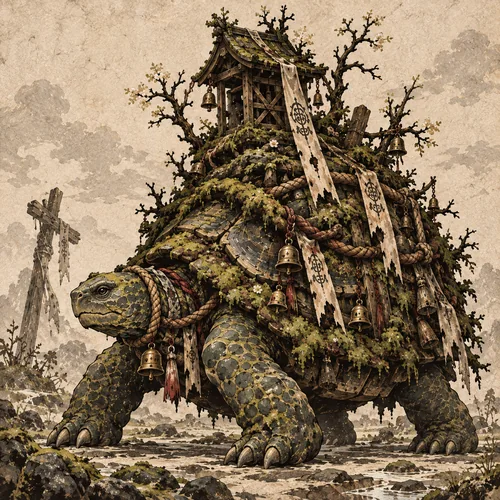 Thornback PilgrimC06 · 3 energy · 2/4The pilgrim planted a thorn in his back for every village that denied him shelter.Read this folio →
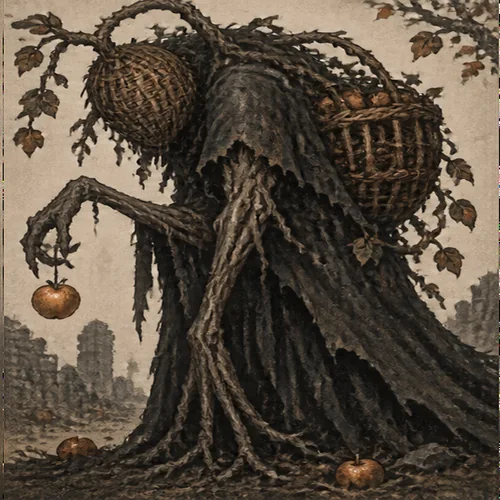 Orchard WretchC27 · 4 energy · 4/4Built from burned stakes and evacuation coats, it brings dark fruit to doorsteps and listens below the oldest tree for a name the roots will not return.Read this folio →
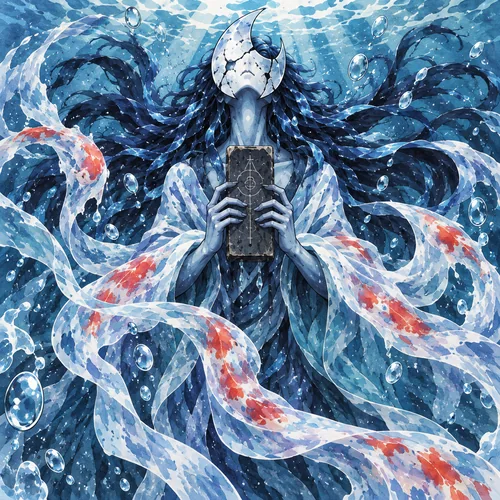 The Drowned OracleC07 · 3 energy · 2/4They lowered her into the reservoir to silence a prophecy.Read this folio →
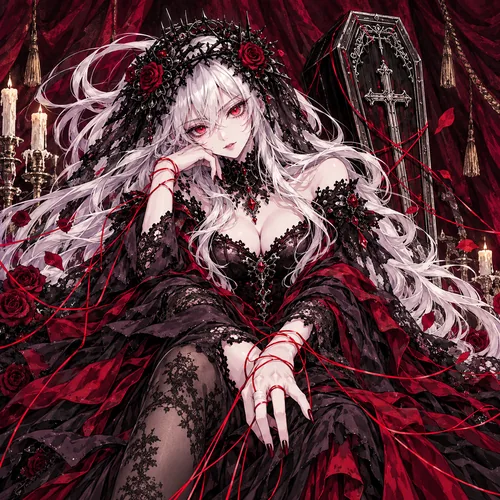 The Coffin BrideC09 · 4 energy · 3/4The wedding procession reached the cemetery before the groom arrived.Read this folio →