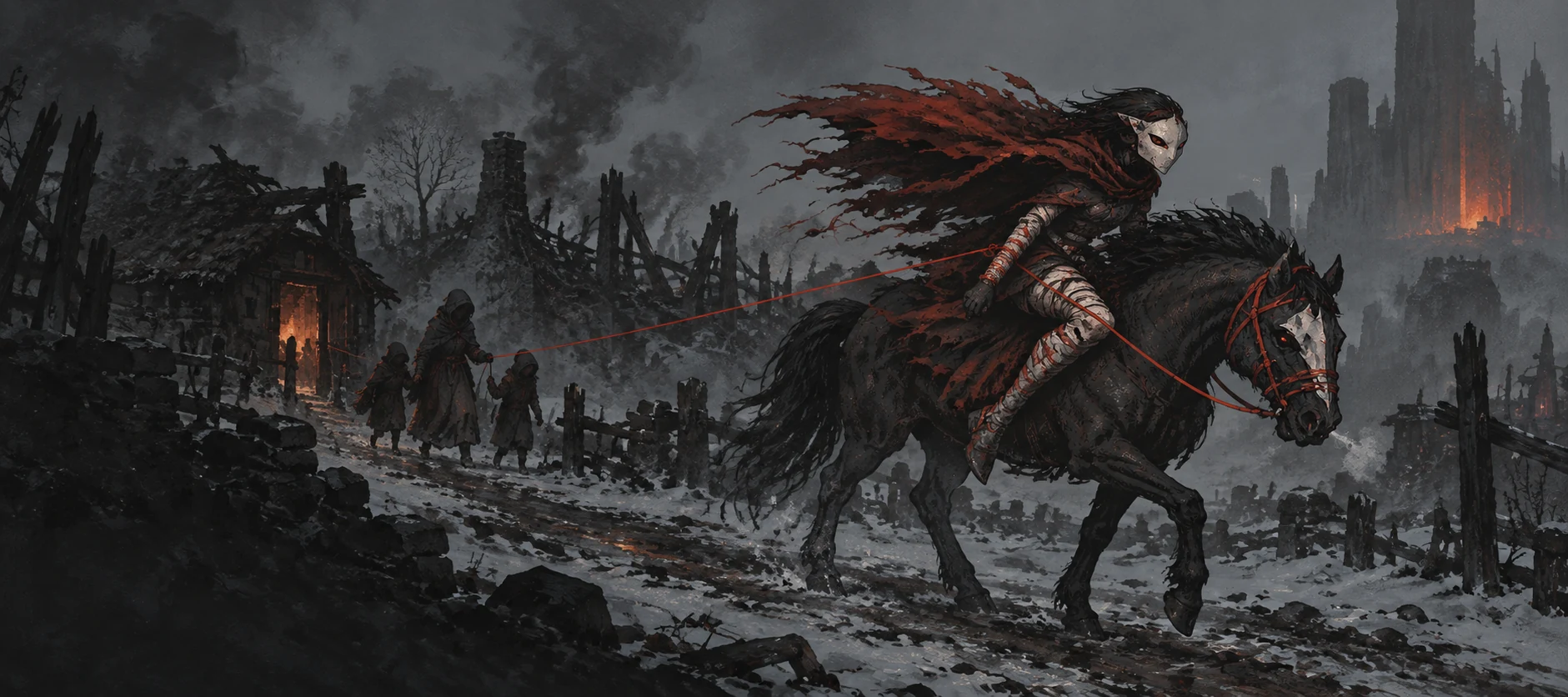
A winter birthday and a red knot
Sera Venn was born on December 16, the morning the first hard frost silvered the lanes between the workers' cottages. Her mother, Elen, warmed a brick beside the stove and laid it under the blanket at Sera's feet. Her older brother Corin said the baby had chosen the coldest day in the month just to make everyone work harder.
The Venn family lived in a narrow house at the edge of the Cinder Ward, in a lane that had been built after the last official survey. The map called it an empty slope. The residents called it home, gave it a shared well, and remembered which roof leaked in a northerly wind. Sera's father repaired harness and cart straps.
When Sera was small, she followed Corin everywhere. He was five years older and had the patient manner of a boy who had already decided he would be responsible for her. He showed her where the stones shifted after rain and which alley opened behind the kiln wall.
On Sera's seventh birthday, Corin tied a length of red thread around her wrist. He had braided it from three strands of harness yarn and sealed the knot with a dab of wax. He said it was a road line: when she got turned around, she could follow it home. The other end was not tied to the house.
Sera wore the thread until its color faded. She took it off to wash, then tied it around her wrist again before she went outside. When it began to fray, Corin repaired the braid with a new scarlet strand. She learned the knot by touch so she could tie it in the dark.
The lane the map forgot
The city's surveyors came through the Ward every few years. They measured the foundry gate, the main causeway, and the stone houses nearest the river. They did not enter the cottage lane because the road ended on their paper before it reached the well.
Corin taught Sera to carry messages because she was fast and because the houses knew her face. She started with notes for the laundress, bread for the night watch, and a parcel of clean bandages for a mother whose son worked the hot channels. She always asked where the message came from and who was meant to receive it.
The family owned no horse. Sera's first rides were on a patient gray mare named Beryl, borrowed from a carter who used the cottage road to bring flour. Beryl was old, careful, and unimpressed by speed. Sera learned to mount from a low stone, loosen a rein when the mare shied, and stop when the animal's ears turned back.
Sera liked to trace routes with thread on the kitchen table. She pinned one end to a drawing of the Ward and looped the rest around corners, wells, and landmarks. Corin corrected the map whenever she gave a lane a straight line that curved around a bakery or a flooded drain.
The empty slope became a family joke. Corin would say he was going to the empty slope to fetch a full basket. Sera would answer that the map had no basket.
A courier between two fires
As she grew older, Sera became a courier for the ward's foundry crews. She carried shift changes, clinic notes, and requests for replacement gloves along roads too narrow for a full cart. She rode Beryl when the message crossed the causeway and walked when a horse would make the recipients nervous.
The red thread changed with her work. She stitched a short piece inside her coat so she could mark a turn when smoke hid the street. She used another length to tie a message to a strap without letting it fall. The original wrist cord stayed with her. Corin repaired the knot once more when a cart wheel caught it.
Sera's work brought her to the foundry gate, where she learned the sound of each warning. A double knock meant a hoist was sticking. A soft whistle meant the water crew needed a clear path. Three sharp notes meant the inner passage had to be opened. She did not pretend to understand the furnace itself.
One winter, Corin was sent to carry a survey correction to the district office. He returned with the paper stamped as received, but the new map still showed an empty slope. He put the stamped copy beside Sera's hand-drawn lane and said that official ink seemed to be a slow kind of rain. She did not laugh.
The two siblings started a small ritual before Sera's long rides. Corin checked the knot at her wrist. Sera checked the strap on his satchel. Neither asked for a promise that the world would be safe. They asked the other to come back and say what had happened. The red thread did not guarantee return. It made the request visible.
What a mask can and cannot hide
Sera wore a pale work mask in the foundry lanes when cinder dust thickened the air. It was not a disguise. The mask had a replaceable cloth lining and a narrow bridge that kept ash from her eyes. She painted a small line inside the cheek so she could tell which side faced her skin.
After one courier was mistaken for a stranger at a closed gate, Sera began wearing the mask on every night route. Its pale surface caught lamplight before her dark coat did. People could see the rider approaching without having to identify her face. The red thread around her wrist helped them see where she was pointing.
She did not like being called fearless. She was frightened by horses on slick stones, by doors that closed too quickly, and by the moment a family asked whether she had found someone who was not on her route list. She was brave in the narrower sense that she learned what to do while fear was present.
Sera kept a small notebook of weather and road conditions. She recorded the way smoke moved between two buildings, which bridge froze first, and how long Beryl needed to recover after a hard ride. Her hobby was not collecting journeys. She wanted the next person to know what a route would cost.
The blank slope on the city map became the first page in her notebook. She filled it with names, hand-drawn doors, and a red line from the well to the causeway. At the far edge she wrote 'home' in a plain hand. No one else used that label. It was not an address for strangers.
The ash ribbon on the road
On one of her winter routes, Sera found a strip of gray silk caught on a fence near the burned theater. It had been tied around a marker post, not dropped by accident. The fabric smelled of smoke but was not burned through.
Sera placed a note beside the strip in her notebook. She described where it was found and which direction the wind had been blowing. She did not make up an owner. Years later, the Ledger Crow would place the ribbon beside the record of the Ash-Ribbon Duelist Ash-Ribbon DuelistC03 · 2 energy · 3/2She once fought duels for silk ribbons and applause.Read this folio →, whose story also carried a theater fire.
Corin thought the strip might have belonged to a costume worker. Sera thought it might have been a signal, but she could not tell what it signaled. They kept the note rather than the cloth; it was eventually returned to the theater district. The uncertainty stayed in her notebook.
The red thread at Sera's wrist and the ash ribbon became linked in the Crow's index only after both women were already gone. The red line marked a route a person could still follow. The gray strip marked a place where the record had failed to find its owner.
Sera stopped riding past the theater for several months because the road had been closed for repairs. When she returned, the marker had been replaced. She copied the new turn into her notebook, then asked the nearby shopkeeper whether anyone had come looking for a lost ribbon. Nobody had.
The night the cottages burned
The fire started on a night of hard wind, in a roofline near the south causeway. Its cause was never established. One report blamed a lamp, another a spark from a kiln cart, and the earliest witness said the first flame appeared before anyone had lit a stove.
The residents had no official evacuation route because the city's map did not show their lane. Sera used the path she had drawn for herself. She tied one end of the red thread to a warm-water post and held the other around her wrist.
Sera rode Beryl between the lane and the gate, carrying people who could not walk and returning for those who were still inside. She did not count the trips. She counted the answers. When someone crossed the causeway, Corin marked their name with a short line and asked where they expected to go. Several households were split across relatives' homes.
The gate closed when the foundry's inner warning bell sounded. The yard crew had been told to isolate the hot channels before the fire reached the works. Sera arrived with a child behind her and smoke in her lungs. She called the three-note passage signal, but the gate's keeper had no instruction to reopen it after the closure.
By dawn, several cottages were gone. The living had moved into the clinic, the works yard, and a neighbor's storage loft. Corin's list held more names than the official report. It also held open marks beside the people still missing.
The one name still open
The next days were a series of searches, not a single dramatic rescue. Sera rode to the river road, the clinic, and the temporary sleeping rooms. She asked each person whether they had seen Corin after the gate closed. He had stayed with their mother and helped carry the household list.
Their mother was safe. Corin was not at the clinic, the loft, or the house of the neighbor who had taken the youngest children. The foundry's report listed him as a runner on the outer passage. The evacuation slate listed his name as unresolved. Neither source said he was dead.
She did not tell their mother that she knew Corin had survived. She did not tell her that he had died. She brought home every fragment she could verify: a wet glove found by the water post, a message delivered at the furnace, a witness who remembered his voice. The fragments did not fit a complete story.
The red thread was supposed to help a child find home, but Sera now used it to make temporary routes between people who could still answer. One end tied to a door, one to her wrist; she led a neighbor to the clinic and returned along the line.
The mask hid the smoke at her mouth and nose, but it could not hide her worry from the people who knew her. When they asked whether she had found her brother, she answered honestly: not yet. Then she asked them to tell her where they had last seen him.
The house not on the survey
Sera's own house still stood after the fire, though its roof and one wall had to be rebuilt. The city map continued to show empty ground. The new survey crew arrived with a measuring chain and asked the residents to point out the lane. Sera walked them from the well to the burned cottages and back to her mother's doorway.
The surveyor wrote down the addresses, but his draft copied the wrong spelling for the Venn lane. Corin had always called it Little Ash Road; the neighbors called it Redwell. The official name became South Access Three. Sera refused to use it in her notebook.
The house's threshold held one small trace of the night: the red thread had rubbed color into the iron latch where it was tied while Sera brought people through. Her mother wanted to replace the latch. Sera asked to keep it until Corin returned. Their mother let it stay through one winter, then another. Nobody called this proof of anything.
People began asking Sera to guide them between temporary homes. She made a careful map with alternate routes and marked which gates closed after curfew. She accepted payment when she could and food when she could not. She was good at helping other people reach a bed.
Every December 16, her mother warmed a brick and left it by the threshold. Sera came back from her route before the candle burned down, even if she had to take the long causeway. Corin had made the original promise that the thread would lead her home.
The road beyond the gate
Sera rode farther as the Ward rebuilt. She crossed roads that had not been included in the first survey and carried corrected names to the office herself. Some addresses were added. Others remained listed as storage ground or vacant slope. When a clerk refused to accept a correction without a landowner's seal, Sera returned with three residents and their keys.
The red thread lengthened. Neighbors added strands when Sera's braid wore thin. A child tied a blue bead to it; a washerwoman added a knot that meant the riverside path was flooded. The thread was not an enchanted map, but it held the memory of who had asked Sera to come back.
Beryl grew old and was retired to a small pasture beyond the kiln. Sera visited on foot. She brought apple peel and sat beside the mare until the animal lowered her head into Sera's lap. When Beryl died naturally, the carter buried her on the rise above the pasture. Sera left a short red strand on the fence.
A younger courier named Pell asked Sera to teach her the causeway. Sera taught her to check the horse's ears, use the wind before trusting a smoke path, and ask a person where they wanted to go instead of assuming the nearest shelter was home.
Pell once returned from a delivery without the message. She had stopped to guide an old man to the clinic. Sera did not scold her. She asked whether the old man had reached the door. He had. Together they rewrote the message from memory and sent a second runner.
The red thread and the Crow
Years after the fire, the Ledger Crow found a length of red thread in a packet of survey corrections. It had been tied around a map pin at the edge of the empty slope. The packet contained Sera's annotated routes, the list of residents, and an appeal asking the city to keep the lane on the new map.
The Crow did not know who had tied the thread to the pin. The knot matched the repair Corin had taught Sera, but another neighbor might have copied it. The packet was filed under Sera's name because the handwriting on the route notes matched her notebook.
One of the later pages contained a strip of ash-gray silk in wax paper, found near the theater. The Crow placed this note beside the Ash-Ribbon DuelistAsh-Ribbon DuelistC03 · 2 energy · 3/2She once fought duels for silk ribbons and applause.Read this folio →'s folio because both records mention fire and a marked route. It did not conclude that Sera and the Duelist met.
The archive kept two maps. The city version erased the lane. Sera's version showed the well, the small houses, the rebuilt doors, and the road she rode between them. The red thread connected the drawn places but did not explain why some could not be found.
The archive's later game pages mention a masked rider who returns to the causeway whenever the way home disappears. The first observers called her a ghost, then a spirit, then a card-soul. None of those names explain what happened in her last hour.
The last ride into the Ward
Sera's final ride took place after the first fire, during a later winter when another row of cottages was threatened by a collapse in the hot-channel wall. The surviving reports disagree on the date. One calls the rider a courier; another names her as a route guide.
Sera had spent years searching for Corin and for the home she thought the route should reach. She did not know whether he was beyond the gate, at the furnace, or somewhere entirely different. The latest word she had was a witness who remembered a voice calling names from the hot-channel passage.
The old causeway was broken by a fallen cart. Sera left her mount at the last safe post and tied the red thread from her wrist to a brass survey pin. The pin marked the beginning of a route that had never made it onto the city map.
The gate was closed. The keeper had been ordered to hold it until the furnace crew confirmed the channel was safe. Sera heard the three-note alarm and called for the inner latch. No answer came. She pushed her mask over her mouth and moved along the wall, feeling for the service gap. The cord went taut behind her.
A second collapse struck the inner passage. Sera fell against the gate and could not rise. She was not killed in a battle, and no enemy defeated her. She died from the smoke and the impact while trying to find someone beyond the closed route.
The knot that held her
The first rescue crew found Sera's body against the gate, her pale mask cracked at one cheek. The cord remained tied at her wrist and stretched to the brass survey pin outside. Her mount had survived and was led away by the carter who owned it. No one confused the living animal with Sera's body.
The evacuation clerk removed the red cord before the body was moved. She wanted the knot pattern preserved because it marked the only route back to the unlisted lane. She tied it around the survey pin and copied Sera's name from the courier register onto the map margin.
The map sheet was kept folded around the pin. When the clerk unfolded it weeks later, the red line had transferred to the paper in a narrow track. The knot had been pressed against the blank slope where Sera's home was supposed to be.
Sera's departing spirit did not pass beyond the mortal world. It caught on that joined route: the thread she had worn since childhood, the survey mark that recorded her name, and the blank space that had refused to become a home on any official map.
The body was buried according to the Venn family's wishes. The pale mask was cleaned and returned to the house; the horse went back to its owner. The map and thread remained in the district office. Her family did not summon her, and the clerk did not intend to make a prison.
The masked rider on the unmapped road
Sera's spirit first appeared as a thin red line moving across the map. It pulled toward the old gate whenever the paper was unfolded. Later, a shadow gathered around the line: a pale mask, a dark riding cloak, and the outline of a horse whose shape came from her memories of the courier roads.
The rider did not speak. She leaned forward whenever someone asked for a route to a home the city had erased. The first clerk who saw her followed the line and found a family waiting in the wrong shelter. The clerk carried them to a safe door.
The red thread did not lead to one fixed address. It pulled toward every open-square name in Sera's route book: people she had carried messages to, workers she had guided, and one unanswered name that might have been Corin's. The record cannot establish that every person represented by the line was dead. Many were alive and had moved away.
The clerk tried to cut the cord from the map. The line reappeared on the next fold, still attached to the named pin. She locked the sheet away rather than continue testing it. A later archivist moved the route into a sealed case.
Sometimes the spirit turned away from a destination and toward the nearest person in danger. It would cross a lane if someone called for help, then return to the red line. The shape seemed to repeat Sera's work, but the Crow cannot know whether this was deliberate choice, preserved habit, or the route's narrow way of keeping her moving.
The way the road changed her
Each time the map was unfolded, the red line grew easier to follow and Sera's personal memories became harder to recover. The route kept the motion of riding and the purpose of returning, but not every face along the way. The Pale mask became part of the spirit's image because it had been present at her death.
The route did not make her angry at every stronger traveler. It made her turn toward force that blocked a passage. She rode hardest at a creature with greater attack because the road through danger had been her work, and she still believed she could open a way by going first.
The horse-shaped shadow answered her body without becoming a second soul in the card. It carried her across a stretch of road and vanished whenever the red thread stopped. The Crow has no record that the original living horse died in the same incident, and no basis to claim its spirit was trapped.
The red cord changed neither color nor length in the ledger's oldest drawings. It did not fray, though it crossed broken streets and folded maps. Its smallness made the image more unsettling. One ordinary thread had survived road closures, fire, clerical corrections, and the death of the woman who had worn it.
At times the rider returned to the blank slope and lowered her hand to the place where a doorstep should have been. No house rose there. The absence was not a vision of a lost home; it was the map's actual blank ground.
The living people beyond the thread
The route book outlived several clerks. One found Corin's name on a relocation list and sent a message to the address provided. The letter came back unopened. That proves only that the address was wrong or the recipient could not be reached. It does not prove Corin died, abandoned Sera, or was the person at the furnace.
Sera's mother lived long enough to see the lane added to a later neighborhood map. The official label was South Access Three. She still called it Redwell. She died in her own house, surrounded by people who knew where to find it. Her presence on the map does not tell the Crow whether she ever saw the masked rider.
Pell, Sera's younger courier, took a job with the river post and taught other riders the open-route method. She kept the lesson about listening to a horse's ears and asking a resident what destination they meant. Her work reached beyond the Cinder Ward.
Several of the families Sera guided survived the fire and built new homes. One child grew into a mason who helped repair the causeway. Another became a clerk who insisted that evacuation forms include a field for the place a person expected to go. Their lives continued.
These living futures keep Sera's story from becoming a wall of anonymous loss. She helped people reach ordinary next mornings. Some of them grew old, moved, and forgot the exact turn she had shown them. Their lives did not owe the spirit a return visit. Her memory mattered even when they kept living beyond the road she followed.
The red line in the Cinder Ward
Kael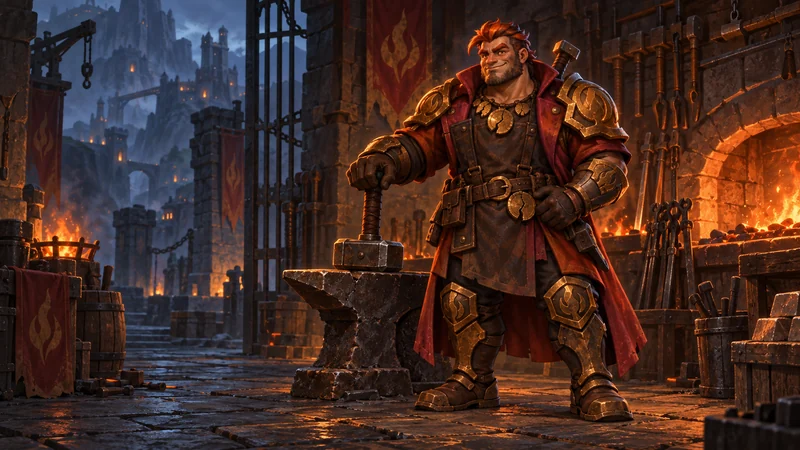 KaelFirst-generation championKael kept the foundry gates open when the city ordered its workers sealed inside.Read this biography → found Sera's route packet while searching the Cinder Ward records for workers whose names disappeared after the fires. The thread ran from the survey pin past the cottages and ended near the south furnace. KaelKaelFirst-generation championKael kept the foundry gates open when the city ordered its workers sealed inside.Read this biography → recognized the gate report.
The campaign does not say Sera was KaelKaelFirst-generation championKael kept the foundry gates open when the city ordered its workers sealed inside.Read this biography →'s family, that he personally knew her, or that she was the person waiting by the furnace. He does not identify the voice she heard. His remorse is real, but it cannot be used to invent a relationship the surviving records do not establish.
The Cinder Ward preserved the packet rather than repairing its gaps. KaelKaelFirst-generation championKael kept the foundry gates open when the city ordered its workers sealed inside.Read this biography → asked the player to follow the red line and examine the gate, the causeway, and the furnace in order. The rider stayed ahead of them. She did not turn to meet their eyes. Whether she recognized KaelKaelFirst-generation championKael kept the foundry gates open when the city ordered its workers sealed inside.Read this biography → or only the road is unknown.
When the player reaches the furnace, the thread seems to end at the place KaelKaelFirst-generation championKael kept the foundry gates open when the city ordered its workers sealed inside.Read this biography → had feared. The house is not there. The route is still visible, but its destination has not appeared. KaelKaelFirst-generation championKael kept the foundry gates open when the city ordered its workers sealed inside.Read this biography → admits that he should have looked sooner. The Rider's response, if there is one, remains a forward motion along the line.
The Crow places Sera's record with the Unquenched because KaelKaelFirst-generation championKael kept the foundry gates open when the city ordered its workers sealed inside.Read this biography →'s present circle protects the people erased by incomplete foundry reports. She was not a member of that modern circle while alive. The faction is a relationship of care and investigation, not a new explanation for how she died or why her spirit was caught.
A ribbon near a road
The Ash-Ribbon DuelistAsh-Ribbon DuelistC03 · 2 energy · 3/2She once fought duels for silk ribbons and applause.Read this folio →'s gray strip and Sera's red thread appear on neighboring pages of the archive. One is a piece of silk found near a theater road; the other is a cord tied to a survey pin in the Ward.
The Duelist's story contains its own stage, its own fire, and its own missing names. Sera's story contains an unlisted lane, an evacuation route, and a brother whose fate remains uncertain. The Crow refuses to make them witnesses to each other's loss simply because the same page can hold both accounts.
A later copyist drew the gray strip passing under the red route line. The original does not show that crossing; it may be a decorative flourish. The Ledger keeps both versions. If future evidence identifies the cloth, the pages can be amended. Until then, the echo is thematic and the uncertainty is part of the record.
Sera used to carry unresolved messages in a separate pocket so they could not be mistaken for delivered ones. The Crow borrowed that practice. It placed a small open mark between her entry and the Duelist's. That mark does not imply a shared secret. It says the connection has not been verified.
The pages matter together for a different reason: they remind a reader that a city can burn more than once and still fail to learn every name. A ribbon, a route, and a folded message may survive when the person who owned them does not. Preserving the objects is not the same as knowing the whole life.
The card that keeps her moving
The route-map tether became too fragile to unfold. The red line cracked each time the paper was opened, and the spirit pulled against it whenever the map was moved. The Crow arranged a transfer with the Ward so Sera would not be lost when the survey sheet finally failed.
Sera's spirit entered one official Mournhand card. The route-map's physical paper and the surviving notes remained outside; no second rider stayed in the pin. The mounted shape on the card is the form the spirit used to move, not proof that the living horse's soul joined her.
No witness called the transfer a release. The card kept Sera in the mortal world, still moving toward a home the records cannot locate. It did not bring Corin back, rebuild the cottage lane, or prove the old route had reached the right person. A person may carry a map and still not know whether it leads to someone living.
The Crow keeps the old thread in a paper sleeve beside the card's entry. Its fibers are ordinary. Its knot was tied by a brother who wanted his sister to return safely. The route became a prison only after the gate, the named pin, and Sera's final breath met on the blank place in the survey.
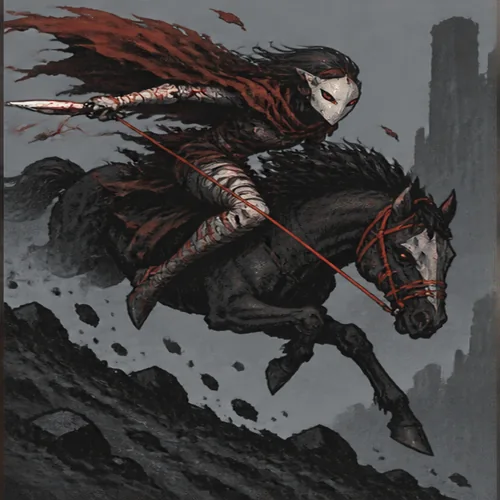
At the table, the Red-Thread Outrider is a 2/2 that gains two attack while attacking a creature with equal or greater attack. The rule gives her a way to face a stronger blocker, but it does not give her more health or guarantee survival.
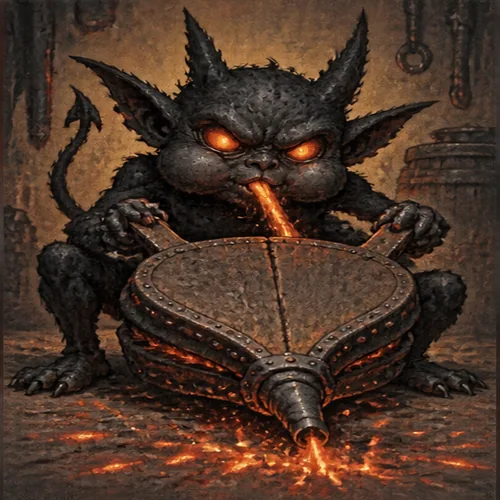 Bellows ImpC14 · 2 energy · 3/2It still believes every fight can be won by blowing harder, even as its coal-red lungs burn out.Read this folio →
 Furnaceback OxC16 · 5 energy · 3/7Its hide hardened into layered plates while hauling molten iron from flooded foundries.Read this folio →