March 4 at the river inn
Edran was born on March 4 in an inn beside a canal that smelled better in winter than summer. His father kept the rooms; his mother managed a kitchen whose demands defeated every attempt to keep regular hours. His birthdays fell in the unreliable part of the year when thawing water might promise spring or flood the pantry. The family marked the day by letting him choose supper. He usually chose the thick onion dish his mother made for herself after the guests had eaten. She complained that he could have asked for something special, then put an extra browned crust on his portion.
Funeral parties often stopped at the inn because the burial ground lay beyond the next bridge. Edran carried hot water, cleared dishes, and learned not to ask why someone wanted a second cup they never drank. Grieving people were not uniformly gentle. A man who had buried his wife accused the boy of stealing a spoon, found it in his own bag, and left without apologizing. Another guest spent a whole evening making Edran laugh with terrible imitations of the ferrymen. His mother explained afterward that the guest's brother had died that morning. Edran found this difficult to fit beside the laughter, then gradually stopped demanding that one feeling replace the other.
He liked maps, particularly the unofficial ones guests drew to explain where they had gone wrong. He saved scraps showing a bridge from three different directions and compared them against the actual street. His father called the collection a plan for getting lost by every available method. Edran was slow at sums but patient with distances. He could remember where a cart would fit through an alley and which step outside the kitchen remained slippery after rain. As a child he repeatedly guided strangers to doors, sometimes far beyond what they had asked, because he enjoyed being trusted with an arrival.
His younger sister wanted him to invent adventures in distant places. Instead, he made up adventures about the guests' misplaced luggage. She accused him of having no imagination, which injured him more than he admitted. He had imagination enough to fear a stranger might be lonely and not enough confidence to know whether offering company would help. He sometimes hovered until people had to send him away. The habit followed him into adulthood. So did a quieter skill learned at the inn: placing a warm cup within reach, then allowing the person beside it to decide whether to speak.
The measured oil
He entered the municipal lamp service because the wages were steady and the work kept him outdoors. His first supervisor, Dorn, taught him to trim a wick square, clean a chimney without cracking it, and carry an oil can so its weight rested against the hip. The burial route suited a young man who listened more readily than he spoke. Each evening he received an official list and a measured allotment of oil. The list identified approved lamps by numbered posts. Where families had paid for a plate, a name appeared as well. The work seemed fair because every instruction could be completed and checked.
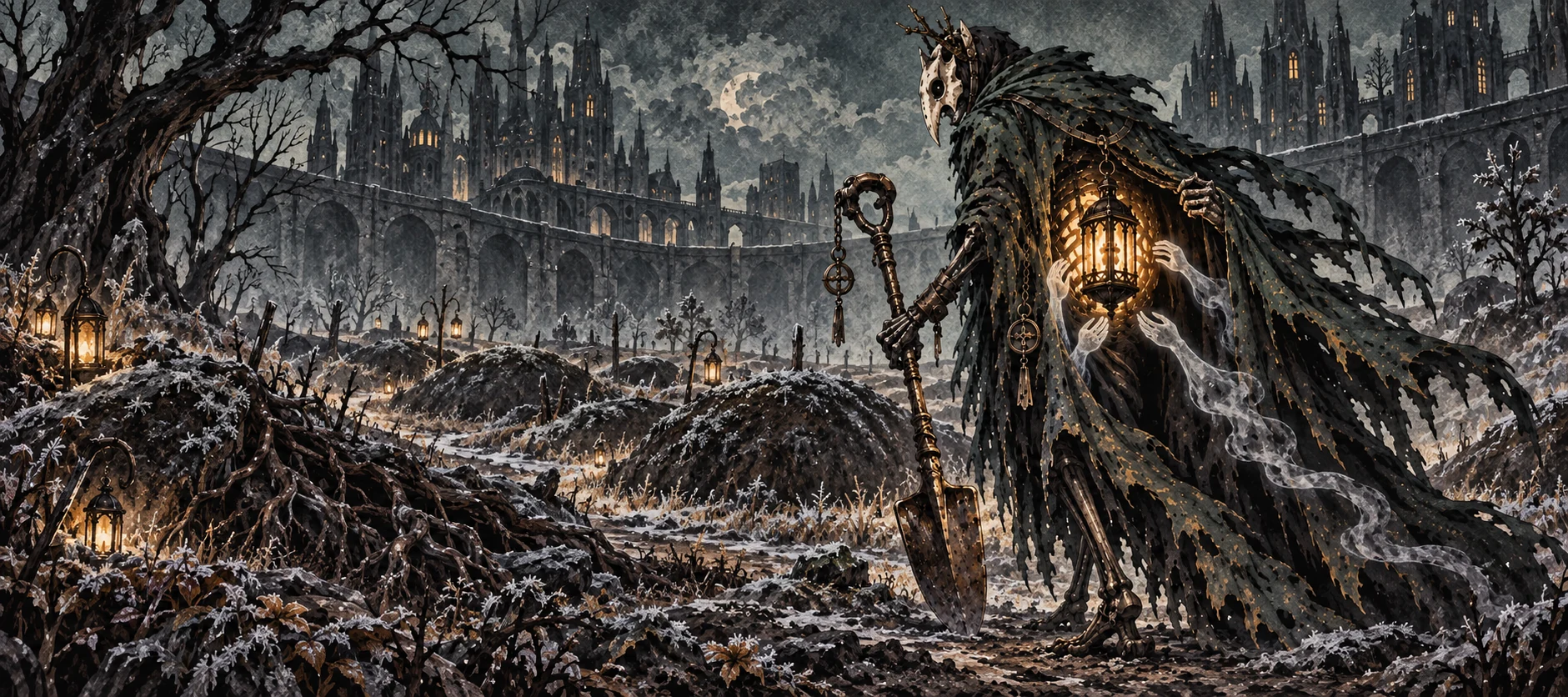
Dorn made him rehearse lifting a fallen lamp with a long grave spade instead of bending over unstable ground. Its open loop handle allowed a firm grip in wet gloves; its rounded rectangular blade could clear mud or lift a stone without cutting deeply into what lay beneath. The service gave Edran an old one with a bronze-colored shaft and several small fittings for keys. He enjoyed maintaining it. His lantern had a faceted metal cage and a warm yellow glass panel that changed the apparent color of his hands. He repaired its hinge so neatly that Dorn inspected the work twice, looking for the mistake he expected from an apprentice.
Keepers on the outer ground wore pale long-beaked masks, shaped after the crows that found the paths in fog. The masks identified a worker without requiring a grieving visitor to approach and inspect a badge. Edran's was ivory-colored wood, spotted where old rain had lifted the finish. He disliked it at first. People addressed the beak rather than his face, and children either laughed or hid behind an adult. Then a visitor thanked him for being difficult to recognize: she could cry without fearing that a familiar neighbor had seen. He began carrying the mask even when the regulations did not require it.
Not all his early work was admirable. When a lamp lacked a number on the current list, he extinguished it, reasoning that someone else would sort out the account. Dorn did the same. They spoke about theft and waste because those were the explanations their forms supplied. Edran once removed a handmade candle from a mound and put it in the discarded-wax box without considering who might return for it. He would remember the act much later. At the time, he was pleased that his oil totals agreed perfectly and that his supervisor had started letting him close the route alone.
The woman who fixed his hinge
Ysol met him when the lantern hinge finally broke beyond his careful repairs. She worked metal in a small shop near the canal and refused his suggestion that the damage was mostly decorative. Edran protested that he had kept it working for years. She replied that this made the wear greater rather than imaginary. He liked her immediately and spent the rest of the visit trying to sound less defensive. Ysol repaired the hinge, strengthened the hanging chain, and charged him the ordinary price. He returned a week later with a spade fitting that needed very little attention. She asked whether he had another reason for coming.
Their courtship took place between work shifts. They ate bread on the canal steps and competed at skipping flat stones. Edran had the greater reach and almost no technique. Ysol could make a stone cross the water in a long series of light touches; his generally sank after two. He continued announcing that he had nearly mastered it, and she continued requesting a demonstration. They enjoyed each other's company without sharing every interest. She found his maps useful but his habit of explaining alternative routes exhausting. He found her willingness to end an argument before it was settled almost physically uncomfortable. Learning when to leave a disagreement overnight required practice.
They married without an elaborate procession and rented rooms above her workshop. Edran liked repairing the little things customers had decided were not worth repairing: a crooked cup handle, a box catch, a lid that would not close. Ysol liked hearing him complain about these customers while treating their objects with great delicacy. They had no children. They were close to nieces, apprentices, and neighbors, but did not describe those relationships as compensation for a household that other people considered incomplete. On his March 4 birthday, Ysol tried making the inn's onion dish and burnt the top. They ate around it and disagreed cheerfully over whose mother had been worse at explaining a recipe.
One summer, she made him a ridiculous crown from hedge twigs after he spent an afternoon mapping every hollow in a neglected part of the burial ground. She called him mayor of the dips and puddles. He wore it over his mask on the way home, then kept it beside the workbench. The original twigs dried and broke, and Ysol replaced them until the joke became an ordinary household object. Edran was capable of solemnity that made him difficult to live beside. She did not cure it. She gave him someone before whom he could remove it without feeling he had abandoned the seriousness of his work.
The row missing from the list
The change began with a row of graves disappearing from his evening sheet. The ground had not moved. He could still see the mounds, and several held flowers no older than a day. At the office he learned that the burials had been reclassified because their fees remained unpaid or their occupants had no accepted identifying record. The revised route saved oil. He asked where those families were supposed to go after dark. The clerk answered that a person without an approved grave could not be issued directions to one. Edran recognized the logic. He had used smaller versions of it himself.
He first kept the extra lamps burning by trimming his other allotments more closely. This was discovered, and he repaid the difference. Afterward he bought oil from his wages and carried it in a separate can. Accounts place the beginning of these unauthorized lights around 1500 A.B., though the work was then the stubborn habit of one living keeper rather than an ancient legend. He mapped the poorer ground by its shape: a low stone, a bend in a root, a ridge that retained frost. He did not know the names of most people buried there. He knew where a body had been put and where a person had stood beside it.
A visitor once asked whether he would light a grave if its occupant had harmed someone. Edran began answering too quickly, then stopped. He did not want to turn care into a speech that pretended injury had never happened. He told her he could not judge a life from an unpaid burial, a rumor, or a clerk's refusal to record it. A lamp offered a place to stand in the dark. It did not issue forgiveness or declare the person beneath it innocent. The woman stayed for a while without telling him why she had asked. He let the silence remain hers.
The extra expense entered his home. He concealed the full amount from Ysol because he feared she would ask him to reduce it. She was furious when she discovered their rent money had quietly become oil. He tried explaining the graves, as if she had misunderstood the purpose rather than the deception. She made him stop. They agreed on what they could afford, and he began asking others to contribute instead of treating private sacrifice as proof that only he cared enough. Some neighbors gave nothing. Others gave a surprising amount. Learning to accept both answers made the work less lonely and exposed how much pride he had mistaken for responsibility.
The wall around the poor ground
As the city expanded, builders wanted houses beside the older burial plots. Residents complained about figures moving between the unmarked mounds at night. The municipal answer was a retaining wall with a closed spirit ward laid through its foundations. Living people could cross its gates. A disembodied soul within the enclosed ground could not cross the ring once its final stone was sealed. The ward was a local construction, commissioned to keep the dead away from the new streets; it was not a law of death itself. Edran attended the public explanation and understood that the proposed convenience for future residents would become confinement for people already buried there.
He objected. His objections were recorded accurately and rejected. The poorer ground had been designated a place of final containment, and lamps there were judged to encourage visitors to remain where officials preferred nobody to linger. His oil allowance ended. He continued carrying the same repaired lantern, purchasing what he could and placing small lights beside the unmarked graves. Younger workers sometimes helped him after finishing their paid rounds. Others avoided him because they feared losing their posts. He did not always show them the patience he should have. Ysol reminded him that his courage did not entitle him to spend another person's livelihood.
By the winter the ring was completed, Edran had grown old. He climbed the canal steps slowly and hid how often he stopped for breath. Ysol urged him to shorten the night route. They argued, then compromised on alternate evenings, an arrangement he broke whenever another keeper failed to arrive. One cold night he went out after a shared supper, leaving half an apple on a plate because he intended to finish it when he returned. He checked his lantern's hinge, settled the crow mask, and put Ysol's dry twig crown over its hood without noticing the old joke had become part of how he dressed.
He died on that route. There was a pain in his chest, a sudden weakness, and the unmarked mound against which he sat because he could no longer remain standing. He tried to signal with the lantern and managed only to set it upright between his knees. The flame continued while his breath stopped. No collapsing roof, murderer, or heroic struggle made the moment more legible. He was an old man who had pushed his body beyond what it could carry that evening. Beyond the grave field, his rooms remained lit. Ysol left the apple where it was for several hours before admitting that he should already have been home.
The road that returned him
For a little while after death, Edran heard the canal beside the inn of his childhood. A clear path ran away from the mound, and the weight of his cold limbs no longer mattered. He followed it toward an opening between the wall's new stones. At the boundary, the path bent beneath him and delivered him back to his body. He tried another direction. The same circle closed. The ward did not distinguish a paid official from an unrecorded stranger once both were dead inside it. His soul had been caught by the ring he had protested, and wanting to follow the departing road could not make an opening in it.
Morning workers found his body and carried it through the gate. He followed until the ward pulled him apart from the stretcher and threw him back among the graves. The body crossed; the spirit could not. This was the moment he understood the practical cruelty of the construction. It restrained what could still suffer without hindering the ordinary movement of material. He watched Ysol arrive at the mound with his recovered lantern. She felt unusual warmth near its handle, but could not see him clearly. He wanted to tell her about the apple. He had no voice she could hear through the cold air.
Ysol left the lantern on a stone, and his first enduring shape gathered around its cage. The pale crow mask lengthened into a spotted bone beak above empty dark eyeholes. Under a ragged forest-colored cloak, a skeletal frame lifted the old lantern into the hollow of its ribs, suspended on Ysol's repaired chain. It was his actual familiar lamp, now carried within the spirit's remembered body rather than in a living hand. His remains had been buried elsewhere. The long spade, its keys and hanging fittings, the twig crown, and the stooped way he walked all stayed with him. His feet ended in taloned bones that found purchase on frost where ordinary boots had slipped.
He did not choose that shape, and at first it frightened him. He kept the cloak closed when visitors passed. Then he saw the unmarked dead approaching the warmth from his ribs. They did not arrive as a list of stories he could suddenly read. A hand appeared, a shoulder, the shape of someone holding another person's weight. They gathered near the lamp and spread their fingers toward it. Edran opened his cloak enough to make room. The act did not release either him or them from the wall. For a short while, it let people imprisoned in cold ground remember what it had felt like to be warm.
What Ysol could still repair
Ysol returned with the lantern's spare hinge pin, though she could not explain why she had brought it. Edran managed to make the old hanging ring tap against the metal spade. She knew the sound from years of objects being set down badly in her workshop. Their first conversation required an entire afternoon and consisted mostly of establishing that he was there. She wept, laughed once in disbelief, and then told him precisely what she thought of his broken agreement about the night route. He had imagined reunion as a thing that would resolve his grief. Being scolded by the person he most wanted to hear was a more complicated relief.
She investigated the wall while her strength allowed. Removing an upper stone made no difference; the ward had been laid through the connected foundations below the visible masonry. A city worker showed her the plan and explained that opening the completed ring without a prepared passage could scatter the confined spirits into the structures built over them. The authorities would not finance a careful dismantling. Ysol lacked the knowledge and means to attempt one alone. She told Edran the truth each time she returned. Neither of them improved it by pretending she had failed only because she had not tried hard enough.
They found ordinary ways to visit. She brought maps of streets he could no longer walk and described which shops had changed owners. He showed her where a grave had sunk after rain so she could arrange a safer path for living visitors. On March 4 she brought the onion dish in a covered bowl. He could not eat it. She ate her portion and his while sitting on a low wall, talking between mouthfuls, and complained afterward that his birthday was ruining her appetite for supper. He opened the cloak around the lantern a little wider when her fingers grew stiff. The conversation lasted until a living keeper came to guide her home.
Ysol died years later, in a bed far outside the enclosing ward. Edran never saw her spirit approach and did not take that absence as proof she had stopped caring. He hoped the road had remained open for her. A younger worker brought her tools to the burial ground and asked which he wanted kept there. Edran indicated the small file she had used on his lantern hinge and left the rest for people who could use them. He could not cure grief by collecting her entire life around him. The file hung from his spade thereafter, an ordinary thing she had held, making its small familiar sound when he walked.
The ground beneath new streets
The next centuries altered the burial ground more than they altered him. Walls rose above older walls. Parts of the visible retaining ring disappeared into cellars, yet its buried course continued to turn his steps inward. Paths he had mapped became floors under workshops. A line of graves survived beneath a road that received a different name every few generations. He learned to recognize the ground through the changes imposed upon it. He could tell where a hollow had been filled and where builders had left a void, but the earth did not whisper a biography merely because he touched it with his spade.
Living visitors repeatedly mistook him for someone who could answer every question about the dead. They offered names, portraits, descriptions of rings, confessions they had never dared speak in daylight. Sometimes they offered money. He could point out an older burial layer or illuminate the place a surviving record described. He could not tell whether a particular skull belonged to the person they loved, whether that person forgave them, or what sins a stranger carried into the earth. When the answer was unknown, he kept it unknown. He had spent part of his living career accepting officials' confident inventions. He would not replace them with kinder inventions of his own.
The shape of his work widened within the boundary. He cleared a safe place where laborers could rest on night shifts. He warmed a lost dog until someone found the animal's home. He held the lamp beside a mason's injured hand while the man waited for help, offering comfort rather than claiming the light could mend everything it touched. The same lantern that had once been counted against a city's oil allowance continued shining in his ribcage. Its spirit flame followed his presence now; it did not consume stolen names or feed upon those who approached it. He guarded its hinge with a care that would have made Ysol both amused and exasperated.
There were intervals when nobody living came. He spent them redrawing his route on scraps, stones, or the ground itself. Sometimes he arranged flat pebbles beside a puddle and tried to recall Ysol's explanation of a good throwing angle. A skeletal hand could not reproduce all the pleasures of the old one. He continued the experiment anyway, occasionally achieving three skips and taking absurd satisfaction in an improvement fifteen centuries too late to show her. The dead nearest the lantern stirred when he laughed. He did not know whether they remembered laughter or merely welcomed a sound that did not ask them to account for themselves.
What the Shroud Moth brought
The Shroud Moth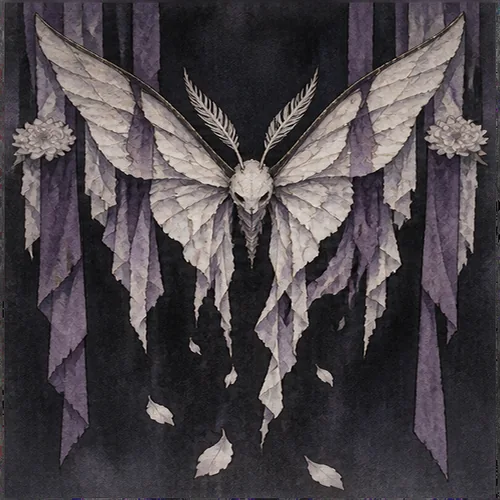 Shroud MothC29 · 2 energy · 2/2It carries torn obituary ribbons between doors that no longer have houses.Read this folio → arrived much later than the people who had known Edran alive. It carried a strip of obituary paper torn through a sentence, addressed to a house that no longer stood. It landed on the outer face of a boundary stone and remained outside the ring. Edran stayed within it, opening his cloak so the lantern's light reached across the threshold. A passing night worker noticed his gesture and weighted the released paper on a flat stone beneath the light. Only part of a name remained. The worker could carry ordinary paper through the gate; the moth never needed to enter the confinement that held the Keeper.
More scraps followed. Some preserved a trade, a mourning relative, a date, or a request that flowers be left at a particular door. None by itself proved who lay beneath the nearest mound. Edran kept the pieces sheltered by his lamps, separating readable details from the guesses visitors wanted to make. He did not assign an obituary to a grave because the pairing would make a moving story. The moth's work and his own met at that refusal to discard an incomplete life. One brought words from places the city had erased. The other offered enough light to read what survived.
He learned the moth's approaches by the small movement of paper before its wings came into view. He lifted the cloak so light fell on its landing place outside the boundary stone. Sometimes it arrived carrying nothing but ash, its previous shape spent after tending a living wound. He waited rather than demanding that every visit produce another useful fragment. Once it left a strip that mentioned a metalworker's shop. For a painful moment he thought of Ysol. The remaining address was wrong, and the date belonged to a different century. He protected the paper with the same care after discovering it was not hers.
Visitors began bringing clean covers and shallow boxes. A reading place developed outside the gate, with living helpers carrying papers across the threshold whenever the Keeper needed to inspect them. They could not agree about every history, but agreed that rain should not destroy what remained. From inside the boundary, he watched them argue, make tea, and correct each other's transcriptions. Their company pleased him. It also confronted an old habit: he kept trying to continue their work after they asked him to leave something for the morning. He was learning, long after his own mornings ceased to require sleep, that helping the living included allowing them to set a limit on being helped.
Beyond the ring of stone
A woman called Renet came to study the closed boundary, having read accounts of similar wards in other districts. She worked with vessels that could carry individual spirits, including soul cards whose histories extended far before Edran's own life. She did not promise to demolish the ring or escort every imprisoned dead person beyond it. Both tasks required knowledge and resources she did not possess. She believed she could carry one consenting spirit through the boundary in a properly completed vessel. The distinction mattered: it would be movement within the mortal world, not release into the passage the ward had interrupted.
Edran's first answer was refusal. He looked toward the unmarked mounds and considered leaving a betrayal. Renet asked whether he had asked the living people who maintained the reading place what they were prepared to keep doing. He had not. The question sounded enough like Ysol to make him turn away. The others offered no grand replacement for his centuries. They could arrange lamp rounds, preserve the maps, and keep shelter over the moth's scraps. Some agreed to one evening a week; one could only bring oil. Their commitments were finite and therefore more believable than a promise that nothing would ever be neglected again.
Beyond the wall were other burial grounds without lights. He could see a newer row from the limit of his path and had spent years unable to reach it. A card would not solve the old field's imprisonment. It might allow him to carry the same undemanding warmth somewhere his spade had never touched. He tested the ward once more, walking toward the unlit ground until it returned him to the boundary stone. The failure had not softened with time. He did not interpret the return as the dead asking him to stay. It was still the work of a wall commissioned by officials who had been gone for more than a thousand years.
He told Renet to explain every stage before beginning. She showed him the prepared card stock and binding tray. His own lamp gave his coherent spirit one continuous shadow; this offered a safe edge she could trace. The scattered appearances around the graves supplied no such reliable separation, and she would not risk gathering several people into one vessel. He would bring his own form, memory, spade, and lantern. The warmth others had borrowed remained their experience, not his property. He asked for time to put the obituary scraps in order. Renet waited while he and the volunteers did it together, allowing other hands to finish tasks he had too often believed only his own could complete.
The light that could be carried
Renet prepared the vessel beside the boundary stone, well inside the ring. She placed the stock upright in a narrow slot in the tray so Edran could see both faces. He set his spade down, opened the tattered cloak, and let the lantern inside his ribs cast his shadow across the card. Renet worked the binding around that single outline, drawing its edges inward without touching the gathering dead or the papers beneath the nearby lamps. At her instruction, Edran lifted Ysol's file and made it strike the spade once. The recognizable sound steadied his sense of himself while the shadow deepened.
The ward pulled when his outline began leaving the ground, attempting to restore him to its familiar circuit. Renet held the unfinished vessel within the boundary and told him to stop if his memories began to scatter. They did not. He remembered the inn's stairs, a broken lantern hinge, two hopeless stone skips, the taste of browned onion. The card was containing the same individual who had lived them, not cutting away an inconvenient part. He took the final step into his own shadow. The tall skeletal figure gathered through the paper's face; the lamp's golden light remained visible at the center of the newly formed image.
The completed vessel became a tall, narrow soul card. Its reverse held black textured darkness, aged gold ornament, fine teal circles, and a central red wax seal bearing a skeletal hand. The front contained the Keeper with his crow-skull mask, twig crown, grave spade, and ribcage lantern within its narrow frame. Renet lifted it and crossed the gate. The old ward moved against the boundary but found the spirit entirely enclosed in a finished vessel it could not separate from its material surface. For the first time since dying, Edran passed beyond the ring. He remained a bound soul in the mortal world; the road beyond death had not reopened.
They stopped at the newer unmarked graves before going anywhere else. Renet placed the card where its light could fall across a bare patch of earth. Behind them, the reading-place volunteers began their first agreed round, their small ordinary lanterns marking the old field. Edran could not promise they would never miss a night. He could not name the person beneath the new mound or explain what that person had deserved in life. When a cold shape gathered near his glow, he made room without asking. Inside the card, Ysol's file sounded gently against the spade. The Keeper's continuing work had acquired a different route, and the light still offered the same thing.

 Ash-Ribbon DuelistC03 · 2 energy · 3/2She once fought duels for silk ribbons and applause.Read this folio →
 Thimble KnightC02 · 2 energy · 1/4A seamstress fashioned his armor from her last thimble and asked him to guard the nursery door.Read this folio →
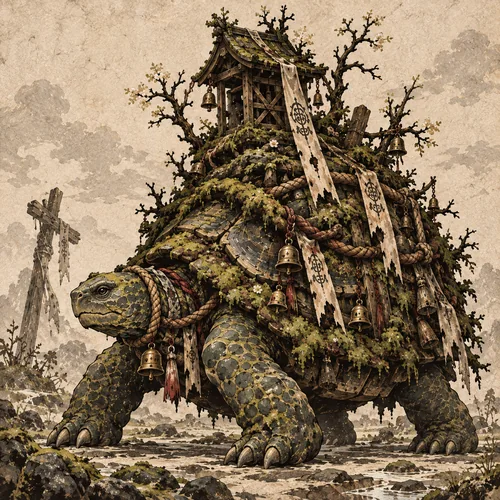 Thornback PilgrimC06 · 3 energy · 2/4The pilgrim planted a thorn in his back for every village that denied him shelter.Read this folio →
 Mirror-Fang DancerC05 · 3 energy · 3/3Her reflection learned the final step before she did.Read this folio →