
The bat above the stage
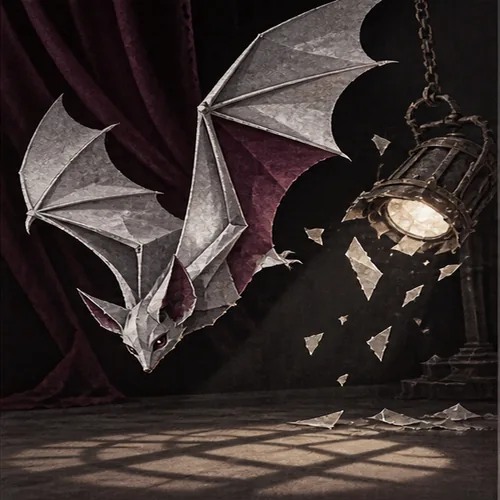
The silver bat first appeared in the rafters during a rehearsal with no audience. Its wings looked folded from thin hammered metal, though they bent like skin when it flew. Deep wine-colored membranes showed between the pale panels. It circled the stage lantern without touching the flame and landed upside down above the curtain line, where it listened to the actors repeat the same argument until the words lost meaning.
Olan, the theater’s sound keeper, noticed that the bat turned toward noises after they ended. A dropped hammer struck the floor; only when the ring faded did the creature lift its head. An actor clapped, and the bat answered the empty space that followed. Olan had lost much of his hearing in one ear after a boiler accident. He understood that hearing late was still hearing, and he forbade anyone from chasing the animal out.
Olan’s daughter Ren carried cue cards and repaired the small mechanisms that made thunder, rain and door knocks. She was sixteen and impatient with silence. She whistled at the bat every evening. It never responded to the whistle itself. A moment later it tapped one claw against the beam in the same rhythm, as if sound reached it by traveling the whole room before returning.
They called it Silver-Echo because light flashed across its wing panels and because it seemed to live inside the residue of noise. The bat did not belong to Olan or Ren. They left water near the fly loft and kept one window unlatched. It left before dawn and returned after the first rehearsal bell, always choosing the theater after traveling elsewhere.
Vessa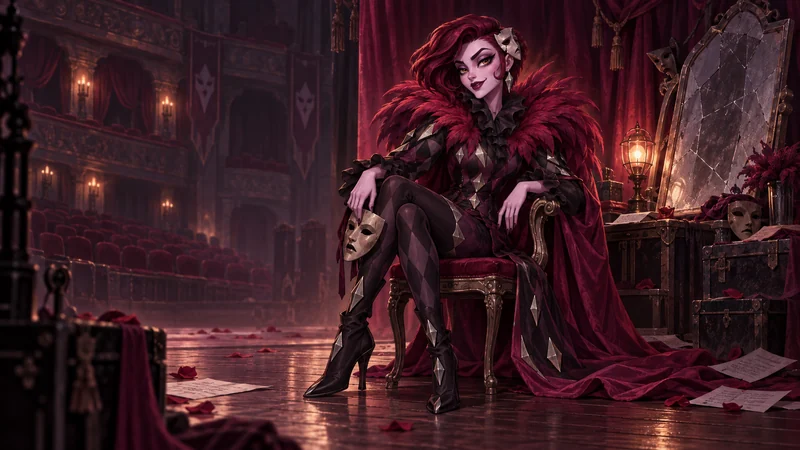 VessaFirst-generation championVessa once played every role in the mirror theater.Read this biography → watched the bat while practicing the voice of an old queen. When she stopped, the creature tilted toward the place where her words had been. She wondered whether a performed voice continued after the speaker removed the mask. Olan said every room held a little of what happened inside it. The question was how much the living should demand that a room repeat.
Olan and Ren
Olan had raised Ren behind the stage after her other father, Mat, died during a winter fever. Mat designed the echo lantern: a caged glass light with silver plates that sent sound toward hidden corners. He built it for actors who could not project, not for magic. Olan kept the lantern wrapped because every test reminded him of the man who had known how to tune it.
Ren wanted to finish Mat’s work. She had inherited his notebooks but not the patience to read every correction. Olan feared the lantern would amplify dangerous stage spells, which some companies used for illusions. Their arguments ended with both of them pretending the project did not matter. Silver-Echo landed on the wrapped cage whenever they avoided the subject.
The bat never imitated Mat’s voice. It repeated the pitch of his tuning fork, which remained in Olan’s tool chest. Ren found comfort in the note and then felt guilty for wanting more. Olan told her that grief could ask for impossible things without making the asker cruel. They could listen to the tone without claiming it was a message from the dead.
Together they opened the notebooks. Ren read aloud while Olan checked each diagram against the lantern. Silver-Echo answered every sound after it faded: the scrape of a hinge, the hum of glass, the soft click of a silver plate. Its delayed reactions revealed which parts of the device held resonance longer than they should. The bat became a witness to testing, not a substitute for measurements.
They restored the lantern with a shutter that could close if magical feedback grew unsafe. Ren wrote the procedure on a board beside the control rope. Olan made every actor rehearse the shutdown before using an illusion. The rule annoyed performers who wanted spectacle. It also meant a frightened apprentice could stop the effect without waiting for permission from someone important.
The first spell echo
The first true spell echo came from a visiting magician named Sel, hired to fill the stage with silver rain. The illusion ended cleanly, and the audience applauded. Ten breaths later Silver-Echo screamed from the rafters. The echo lantern flashed though its wick was cold. A second rain appeared behind the scenery, where no one stood to guide it.
Ren closed the shutter. Olan rang the evacuation bell, and the actors left through the side doors. The delayed spell struck a painted wall and covered it in sharp frost. Had anyone been changing scenery, the cold might have injured them. Sel insisted his casting had ended. Olan believed him and still required an investigation. Intent did not erase the echo.
The bat flew the path of the residual magic only after each flash. Ren mapped its turns in chalk on the stage floor. The line led to a cracked mirror plate that had stored part of the spell and released it late. Salvi, the mirror maker, removed the plate and sealed it in a padded case. The theater paid her to inspect every reflective surface before the next performance.
Sel apologized to the stage crew and canceled the rain effect until the system was safe. He did not blame the bat for embarrassing him. The incident changed his practice: he began counting a full minute after every casting before declaring a space clear. Other magicians mocked the delay until the story of the frozen scenery spread.
Silver-Echo had not predicted the danger. It heard what the spell left behind and gave the living time to respond. Ren wrote that sentence at the top of the echo map. The distinction became central to the theater’s safety: delayed knowledge could not prevent the first mistake, but it could keep an unnoticed remainder from becoming a second one.
The map of quiet places
Ren began mapping places where sound behaved strangely. The costume stair swallowed footsteps. The west balcony returned whispers from the opposite wall. Beneath the stage, one storage room held a note for nearly an hour. Silver-Echo guided her only by reacting after each test. She marked the route in silver chalk and wrote the time between sound and response.
Olan insisted they map ordinary noises before magic. A theater full of tricks could make people blame every loose board on a spell. They tested doors, pipes, pulleys and audience seats. Most echoes had physical causes. One persistent voice beneath the orchestra pit came from two speaking tubes that workers had forgotten to disconnect.
The tubes carried private conversations from the dressing rooms. Ren wanted to expose the manager who had ordered them installed. Olan first asked the actors what they wanted. Some wished the tubes destroyed; others wanted evidence preserved for a hearing. They sealed both ends, documented the route and let the affected people decide what testimony to give.
Silver-Echo landed beside the sealed openings and listened to the absence. It did not repeat the stolen conversations. Ren was relieved and disappointed, then ashamed of the disappointment. Curiosity did not entitle her to another person’s private words. The bat’s life among echoes taught her that the ability to hear something was not the same as permission to keep it.
The final map included safe quiet rooms where no stage effect was permitted. Anyone overwhelmed by rehearsal could rest there without being observed. VessaVessaFirst-generation championVessa once played every role in the mirror theater.Read this biography → used one after a mask exercise left her unable to recognize her own voice. Silver-Echo never entered unless the door stayed open. The creature seemed to understand boundaries through routes rather than rules, choosing not to cross where silence had been intentionally made.
The stolen voice
An actor named Leth lost his voice after performing with a borrowed mask. He could breathe and swallow, but every attempt to speak produced only air. The mask seller had vanished. VessaVessaFirst-generation championVessa once played every role in the mirror theater.Read this biography → recognized the technique: a binding meant to store a voice for later imitation. Olan refused to let the company treat Leth as a curiosity. They closed rehearsals and sent for a healer.
Silver-Echo reacted to Leth’s silent mouth several seconds after he tried to speak. The bat flew toward the prop vault, then waited as though listening to a sound no human could hear. Ren followed with Leth’s permission. Behind the mask shelf, the echo lantern plates hummed at a pitch Olan felt through the wood more than heard.
The stolen voice had collected inside a silver panel when Leth rehearsed near the open lantern. Ren wanted to release it immediately. VessaVessaFirst-generation championVessa once played every role in the mirror theater.Read this biography → warned that a sudden discharge could copy the voice into every reflective object nearby. They moved the panel to the empty stage, covered mirrors and asked Leth to choose who could be present. He selected Olan, Ren, VessaVessaFirst-generation championVessa once played every role in the mirror theater.Read this biography → and the healer.
They opened the shutter one notch at a time. Silver-Echo traced the escaping sound after each pulse. Leth’s first returned word was stop. Ren closed the lantern. The healer checked him, and they waited until he asked to continue. By dawn he could speak softly. The voice belonged to him; nobody recorded the sound or asked him to repeat a famous line.
The company banned borrowed masks without provenance. VessaVessaFirst-generation championVessa once played every role in the mirror theater.Read this biography → began labeling every mask with maker, wearer and known effect. Leth recovered over several weeks and chose not to perform that season. The bat continued to turn toward him after each sentence, a delayed acknowledgement that never demanded he become the person he had been before the theft.
The note after the bell
Olan’s remaining hearing worsened. High notes disappeared first, then quiet speech in crowded rooms. He taught Ren hand signs for cues and installed lights beside the bell ropes. Silver-Echo adapted by tapping beams where he could feel vibration through the stage floor. The bat did not cure his hearing or return what illness and years of noise had taken.
Ren sometimes answered for Olan before he asked. He told her that help which erased his choices was another kind of silence. They agreed on signals: a touch to the wrist before repeating someone, two fingers raised if he wanted the room quieter, an open palm when he preferred to handle a conversation himself. Their relationship improved because assistance became something they negotiated.
During performances, Olan watched light cues and felt bass notes through the control rail. He remained the sound keeper because his knowledge exceeded simple hearing. He knew how wood carried a footstep, how fabric softened applause and how fear changed the speed of an actor’s breath. Ren stopped measuring his worth by what his ear could no longer do.
Silver-Echo began leaving tiny scratches on the silver map at places where magical sounds lingered. Olan read them by touch. He and the bat shared no secret language; the marks were consistent enough to compare with Ren’s measurements. Together, three different ways of sensing the room made the theater safer than any one of them could alone.
On Mat’s birthday, they rang the tuning fork once and waited for the bat’s delayed tap. Olan did not hear the fork, but felt the answer beneath his hand. Ren cried. They honored Mat without claiming his spirit had returned through metal or animal. The ritual belonged to the living people who remembered him and the creature that had learned their chosen rhythm.
The magician who would not wait
A celebrated illusionist named Corren rented the theater for a single performance. He dismissed the one-minute echo rule as superstition and refused to demonstrate his spells before opening. The owner wanted the fee and ordered Olan to cooperate. Ren placed the written safety procedure beside the lantern and asked Corren to sign that he had read it. He tore the page in half.
VessaVessaFirst-generation championVessa once played every role in the mirror theater.Read this biography → withdrew from the performance. Leth spoke at the company meeting and described losing his voice. Several stagehands refused their cues. Corren hired temporary workers who did not know the exits. Olan faced a choice between abandoning them and helping a show he believed unsafe. He stayed only long enough to train the workers in evacuation, then locked the echo lantern so it could not amplify the spells.
Corren performed with his own equipment. The first illusion ended without incident. Silver-Echo screamed after the second and flew toward a curtain pulley. Ren stopped the show by lowering the safety curtain. A delayed arc of light cut through the empty space where a worker would have stood during the next change. The audience complained until they saw the scorched rope.
Corren accused the theater of sabotage. The inspection found his focusing stone had cracked before the performance. The torn procedure, worker testimony and scorch path established what happened. Silver-Echo’s movement prompted the stop but was not offered as legal proof. Corren paid for repairs and lost permission to cast in public halls until retraining.
The incident made the one-minute wait a city rule. Ren disliked that authorities praised the rule only after a famous man broke it, while stagehands had warned them for years. She kept the original map and Leth’s testimony in the archive, naming the people whose labor produced the policy. The bat’s silhouette appeared on the seal, but the text credited the whole company.
The lantern room
Ren rebuilt the lantern room with open shelving and no hidden speaking tubes. The silver panels hung separately so a cracked one could be removed without dismantling the device. She installed a second shutter reachable from the stage and labeled every control with both words and raised shapes. Olan tested the layout with his eyes closed and found three places where the path needed clearing.
Silver-Echo nested behind the largest panel. The company left that space empty. When the bat returned from night flights, it brought bits of reflective material: foil, mirror dust and once a silver button from VessaVessaFirst-generation championVessa once played every role in the mirror theater.Read this biography →’s costume. VessaVessaFirst-generation championVessa once played every role in the mirror theater.Read this biography → recognized the button and asked for it back. The bat dropped it after she offered a plain metal disc in exchange.
Ren mapped the objects but did not turn the nest into an exhibit. Visitors wanted to see the famous animal that detected spells. She limited access because constant demonstrations would make the bat perform on demand. The creature joined public safety talks only when it chose to remain in the room after the doors opened.
Olan retired from nightly control but continued teaching. He told apprentices to listen for what happened after applause: the groan of rigging, the breath of workers, the complaints audiences did not hear. Silver-Echo tapped from the rafters after each sentence. Students laughed at first and then learned to wait for the answer.
Ren inherited the tuning fork and the original map. She added a new symbol for consent withdrawn, because Leth had taught them that a person could stop an experiment after it began. The symbol looked like an open shutter closing. Silver-Echo scratched the same shape near its nest, though Ren never decided whether the resemblance was imitation or coincidence.
The night of broken silver
The concealed spell that ended Silver-Echo’s living route entered the theater inside a donated costume trunk. A rival company had stored illusion stones in the lining and forgotten them. No one knew they were there. When stage heat warmed the trunk, a spell meant to multiply applause began repeating every sound in the room, each echo louder than the last.
Silver-Echo reacted after the first unseen pulse. It flew to the lantern room and struck the emergency shutter. Ren heard the second echo and started evacuation. Olan, visiting for rehearsal, felt the floor vibrate and helped guide apprentices to the quiet rooms. The repeated applause became a physical pressure that cracked windows and bent the lantern cage.
Ren opened the vent toward the empty stage so the sound would not build behind the walls. The bat circled each returning echo, mapping a spiral toward the costume trunk. VessaVessaFirst-generation championVessa once played every role in the mirror theater.Read this biography → pulled the trunk into the open with a hook. A silver panel shattered above Silver-Echo. The bat fell, recovered and turned back toward the last note still trapped inside the lantern.
The final echo broke the largest panel. Shards crossed the stage like pale wings. Ren closed the main shutter, cutting off the spell. When the room became quiet, Silver-Echo was gone. They found its bent tuning disc, a few wine-colored membrane fragments and scratches leading across the broken panel. No complete body remained.
Investigators opened the trunk and confirmed the forgotten stones. Nobody had intended the disaster, but neglect still carried responsibility. The donating company paid repairs and changed its storage rules. Ren recorded Silver-Echo as missing after containing the echo, not as a heroic sacrifice it had chosen. The bat had followed a familiar sound into danger; people had failed to identify the hidden source.
The echo that returned
For weeks the theater remained quiet. Ren could not bear to test the repaired lantern. Olan sat beside her without asking for progress. VessaVessaFirst-generation championVessa once played every role in the mirror theater.Read this biography → covered the mirrors so every flash would not resemble a silver wing. Leth brought food and spoke about ordinary things. Grief did not need every conversation to circle the missing bat.
The first sign of return came after Ren dropped Mat’s tuning fork. No one struck it, but the metal hit the floor and rang once. Several breaths later, a tap answered from inside the broken silver panel stored in the archive. Ren waited, then rang the fork deliberately. The same delayed rhythm returned. She did not open the case alone.
Olan, Salvi and the city inspector joined her. They documented the panel before moving it. A bat-shaped reflection appeared only after sound had faded. It traveled from shard to shard but could not cross the cloth between them. The spirit seemed caught in the route its body had followed during the last spell echo.
Ren wanted to fit the shards together. Salvi warned that forcing the original arrangement might trap the spirit more tightly or cut away part of its path. They mounted each piece separately on soft supports, leaving gaps aligned with the scratches. The reflected bat gained enough space to spread its wings, but it still could not leave the silver.
The return brought comfort and anger. Silver-Echo was present, yet confined by the equipment it had helped make safe. Ren apologized for the hidden trunk even though she had not known. Olan said responsibility could lead to better practice without becoming a claim that one person caused every accident. They kept searching for release without making the spirit endure repeated tests.
The binding of the last note
Mira MiraFirst-generation championMira is Nera's estranged twin sister, the softer of the two.Read this biography → and VessaVessaFirst-generation championVessa once played every role in the mirror theater.Read this biography → examined the shards together. MiraMiraFirst-generation championMira is Nera's estranged twin sister, the softer of the two.Read this biography → understood spirits held at thresholds; VessaVessaFirst-generation championVessa once played every role in the mirror theater.Read this biography → knew the theater’s mirrors and masks. They agreed that the bat’s binding formed from three anchors: the broken echo lantern, Mat’s tuning frequency and the concealed spell’s last returning note. The bat had not chosen to remain, and no human voice was trapped with it.
The spirit could travel across reflective panels near the tuning disc. When a spell was cast, it reacted only after the magic ended, following residual traces as it had in life. Its behavior did not make it omniscient or able to identify every enchantment. Plain attached magic still created enough residue for the bat to notice during a creature attack, which later informed the card’s conditional combat effect.
MiraMiraFirst-generation championMira is Nera's estranged twin sister, the softer of the two.Read this biography → proposed moving the panel array to a room with an open exterior window. The bat reached the last shard and stopped at its edge. The path beyond had no silver surface. They tested a loose mirror outside, but the spirit did not cross. Rather than surround the building with reflective plates, they preserved its familiar room and continued studying safe transitions.
VessaVessaFirst-generation championVessa once played every role in the mirror theater.Read this biography → placed Silver-Echo in A Thousand False Faces because it had lived among performed voices, stolen sound and magic that returned after appearing finished. The circle did not own it. Its February 6 birthday and Aquarius sign reflected its unusual perception, independent routes and habit of building maps that challenged accepted timing.
Ren’s pastime entry for the bat read: mapping magical echoes inside the theater. Its trivia remained: it hears a spell only after that spell has passed. She added a private line beneath both: late does not mean useless. The phrase honored Olan as much as the creature, while keeping their lives separate.
The card and the magic target
The Ledger Crow recorded Silver-Echo Bat in the official Mournhand form: a sharp silver body, broad pale panelled wings with wine-red membranes, shattered reflective fragments and the hanging echo lantern. The card holds the bat’s one spirit. It does not contain Mat, Olan’s hearing, Leth’s stolen voice or any actor whose sound once passed through the theater.
In the game, Silver-Echo Bat costs 2 energy and enters as a 3/1. While it attacks a creature that has magic, it gains +1 attack for that combat, becoming a 4-power attacker before other modifiers. Magic includes an attached spell or trap, even if the opponent cannot see a concealed trap’s identity. A plain creature does not activate the bonus.
The bonus applies only while attacking a creature with magic. It does not increase damage to the enemy champion, does not apply while the Bat defends, and does not reveal or remove the target’s magic. With only one health, ordinary retaliation can destroy it even when the extra attack defeats the target. Calculate both sides of combat.
For example, attacking a 1/4 creature carrying magic gives the Bat four attack. It destroys the target and takes one retaliation, so an unprotected 3/1 Bat is also destroyed. Against a zero-attack magical creature, it may survive. The choice is often whether a favorable removal is worth losing the fragile body.
Its story does not grant foresight. The Bat hears the trace after magic is present and turns that residue into one extra attack during the creature combat. The mechanic preserves its identity without pretending delayed perception prevents every harm. The player still chooses the target, and the outcome still depends on health, retaliation and other effects.
What the theater hears now
Ren became the theater’s chief sound keeper and kept Olan’s safety board above the lantern controls. Every caster waited after a spell. Every worker could close the shutter. The quiet rooms remained free of effects. Apprentices studied the frozen scenery, torn procedure and hidden costume stones as examples of systems that failed, not legends about one miraculous animal.
Olan visited until climbing the stairs became difficult. He sat near the control rail and felt performances through the wood. Silver-Echo’s spirit tapped the silver panels after strong notes. Sometimes Olan matched the rhythm with two fingers. Neither needed the audience to understand the exchange. It was enough that both had adapted to a world that delivered sound differently.
Leth eventually returned to the stage in roles with fewer spoken lines. He designed a performance using gesture, projected captions and percussion felt through the floor. The company credited every performer and access worker. Silver-Echo answered the final drumbeat after the applause ended, and Leth bowed toward the panel array without claiming the bat had judged the show.
VessaVessaFirst-generation championVessa once played every role in the mirror theater.Read this biography → kept the borrowed mask that stole Leth’s voice locked in a documented case. She refused collectors who wanted it for its danger. The label described what happened and named Leth only with his consent. The bat’s reflection appeared on the case after magical residue passed through the room, reminding curators to check the seals rather than assume an artifact stayed harmless because it was quiet.
The open window in the lantern room remains unlatched. Silver-Echo cannot yet cross it, but Ren refuses to wall over the possibility. At night, ordinary bats fly through and leave again. The trapped spirit watches their shadows only after they have passed. Its folio ends there: not with release falsely promised, but with a theater still learning to listen to what remains.
Once each year, Ren removes dust from the mounted shards while Olan’s students inspect every support. They work without ringing the tuning fork unless the spirit has already begun tapping. The maintenance is not a ritual designed to summon it; it is care for the physical anchors and for the people who share the room. When the bat does answer, they wait until the final tap has faded before closing the archive. The long silence afterward belongs to the creature now too.
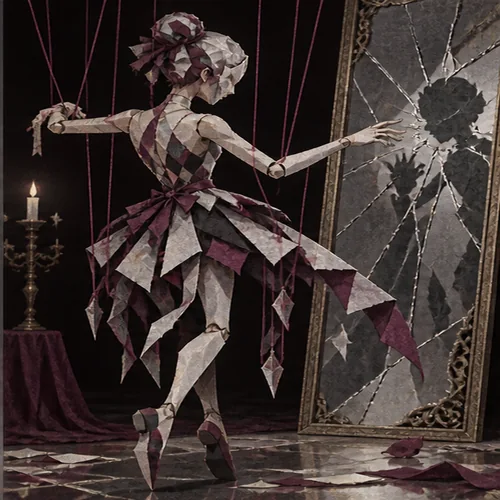 Facet MarionetteC34 · 3 energy · 2/4It learned to bow after every injury because its strings tighten when it survives.Read this folio →
 Prism CraneC32 · 2 energy · 1/3Folded from the program of a play that never ended, it lands on the wrong page whenever somebody lies.Read this folio →