
The cygnet in the reed bed
Mara Venn found the black cygnet tangled in fishing line beneath the eastern ferry stairs. She was twenty-two, newly licensed to carry the dead across the river, and already accustomed to people treating her work as a bad omen. The bird hissed when she approached. She cut the line without holding its neck, set a shallow bowl of water beside it, and waited until it chose to stand.
The cygnet’s left wing had been scraped raw, but no bone was broken. Mara carried it in the empty compartment of her barge, away from the hooks and oil kept near the prow. Her younger brother Tommen argued that they should name it at once. Mara said a name given too early could become a claim. They called it the river bird until it began answering to the bell above the ferry door.
Their mother, Edda, had run the ferry before illness weakened her hands. She taught Mara to wrap the dead as carefully as the living and to ask families which name should be spoken at the landing. Some people wanted full titles. Others wanted a childhood name that had never appeared in any civic record. Edda wrote exactly what they chose on a narrow paper tag and tied it to the shroud cord.
The cygnet recovered near the boat shed, sleeping among folded sailcloth. When Mara opened the river gate each morning, it followed her to the water but never climbed into the barge unless invited by an open plank. She understood the choice. The bird had survived one kind of entanglement. She would not reward that survival by making another cage around it.
Mara Venn’s crossing
The Venn ferry served the burial island where the city planted white river lilies over graves. The trip was short in calm weather and dangerous after rain. Mara studied the current by watching floating leaves and the way foam gathered around the bridge piers. The growing swan learned those signs beside her. It waited at the safest launch point and moved away whenever the current began carrying branches.
Families often feared the final crossing more than the burial. Mara gave them work they could choose: holding a flower, reading the name tag, or sitting silently near the covered bier. Nobody had to look at the body. Nobody had to say a prayer. The swan floated alongside the ferry, close enough to be seen and far enough that frightened hands could not grab its feathers.
Tommen carved a small shelf beneath the bell for returned possessions. Rings, buttons and letters rested there until relatives came for them. He kept careful notes because grief made memory unreliable. The swan sometimes brought objects found in the reeds: a ribbon, a wooden bead, a tag loosened by rain. Mara never assumed an object belonged to the nearest funeral. She asked, recorded and waited.
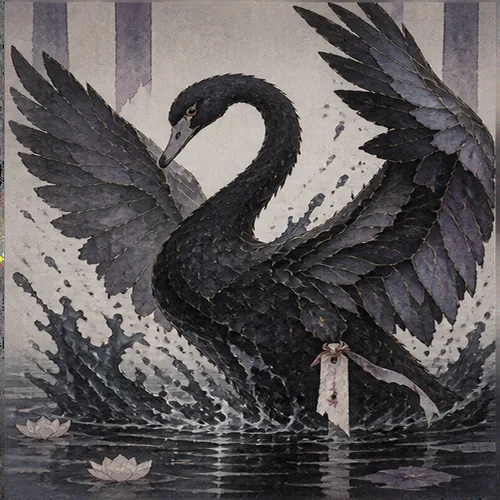
By its second spring, the bird had grown into a broad black swan with violet shadows in its flight feathers. It washed its beak after every return from the island, but never before the barge reached the home landing. Tommen joked that it understood the work was unfinished until the living were safely ashore. Mara did not claim the swan understood funerals. She respected the pattern it had chosen.
The tags on the feathers
During a crowded summer, three paper name-tags blew from the ferry shelf. The swan caught one against its breast and carried it to shore. Tommen found another in the rope coil. The third was lost until the following morning, when the swan returned from the reeds with the damp strip held in its beak. The ink had blurred, but a red stitch identified the family that made it.
After that day, Mara tied duplicate tags to a loose ribbon around the swan’s leg only when the bird remained beside the barge. She never pierced a feather or tightened the ribbon enough to restrain it. The tags were not trophies. They were backups for names vulnerable to wind and water. If the swan flew away before a crossing, Mara removed the duplicates and stored them in the ledger.
Children began calling the bird the Undertaker’s Swan. Some adults used the name cruelly, warning that a black wing over a house meant death would follow. Mara corrected them whenever she heard it. The swan did not choose who died. It followed a ferry route because the people there had fed it, freed it, and left a safe space near the water. Fear did not make superstition true.
The swan carried no soul except its own. Names touched its feathers because Mara needed a way to keep them dry, not because the dead lived inside the paper. This distinction mattered to her. Families could find comfort in seeing a loved one’s name cross the river, but Mara refused to sell certainty about what waited beyond the island. Her work concerned dignity, evidence and safe passage.
The boy who missed the barge
A boy named Els arrived after the afternoon ferry had left with his father’s body. He had run from the mill and reached the landing barefoot, one shoe in his hand. The burial could not begin without the family’s chosen witness, but the river was too rough for Mara to turn the loaded barge. Tommen rang the shore bell three times, the signal to wait on the island.
The swan was already following the ferry. At the bell, it turned before the boat did and crossed toward Els. The boy mistook its approach for permission to jump into the water. Mara shouted from midstream. Tommen caught him by the coat and held him on the stairs. The swan did not rescue Els; the bell, Tommen’s hands and a rule against rushing the current kept him alive.
Mara completed the turn at the wide bend and came back for him. Els sat beside the bier with his bare feet wrapped in sailcloth. He chose to read his father’s nickname, not the formal name written by the mill. Mara added both to the ledger. The swan’s duplicate tag carried the nickname in the boy’s uneven handwriting.
After the burial, the swan washed its beak near the home landing. Els knelt at a respectful distance and placed the missing shoe on the step to dry. Years later, he became a ferry carpenter and always built a low rail beside the waiting bench. He remembered what panic had nearly made him do and designed the landing for the next frightened child.
Mornings won back
The swan’s reputation changed after it began finding people stranded by the river. At dawn it struck the ferry door with its beak until Mara followed it upstream. A washerwoman named Kess had slipped between two stones and injured her ankle. She had spent the night above the waterline, unable to climb. Mara brought rope, Tommen fetched neighbors, and together they lifted her from the bank.
Kess later said the bird had won her another morning. Mara insisted that the swan had noticed her; people with rope had done the rescue, and Kess had kept herself awake through the cold. Kess agreed, then embroidered a small sunrise on a cloth tag for the swan’s ribbon. The bird carried it for one crossing before pulling it free and dropping it beside the washhouse.
Other incidents followed. A fisherman collapsed with fever under the bridge. A child hid in reeds after an argument at home. The swan returned to the ferry and made enough noise that someone looked. It could not diagnose illness or settle families. Its persistence opened a moment in which the living could act. Mara began keeping a rescue coil near the name shelf and teaching every apprentice how to use it.
The phrase ‘another morning’ entered the ferry ledger beside rescues, never funerals. Mara wrote what happened, who helped and what remained uncertain. She refused to claim the swan knew whether someone would survive. It found bodies in the water too, and no amount of attention could undo those deaths. The record honored small successes without turning every loss into a failure of care.
The sister’s name
A seamstress named Pela brought her sister’s body to the ferry under a plain wool cover. The registry called the dead woman Helene, but Pela asked Mara to write Neri, the name used at home. Their parents had rejected it years earlier. Pela feared the burial clerk would refuse a name that did not match the document. Mara wrote both, placing Neri first on the tag and Helene beneath as a reference.
The clerk objected at the island gate. Mara showed the ferry ledger and explained who had requested the name. The argument grew loud enough that the swan lifted its wings between them. Mara lowered her voice. The bird was not deciding the dispute. Pela was the witness, and the ledger documented her request. The clerk finally copied both names into the burial record.
Pela tied a violet thread around the duplicate tag before it went onto the swan’s ribbon. After the crossing, rain loosened the knot. The swan caught the tag before it fell into the river and carried it to Pela at the landing. She kept the paper in a sewing box for the rest of her life. She never called the moment a message from Neri; it was enough that the chosen name came home.
Mara added a permanent field to the ledger: name used by the people who loved them. It did not erase legal records or settle every disagreement. It gave families a place to state who had stood before them in life. Tommen carved the same question onto the underside of the name shelf, where every apprentice saw it before preparing a tag.
The winter of thin ice
The river froze unevenly the winter Edda died. Pale ice covered the quiet coves while the central current remained black. Mara had carried hundreds of families to the island, yet found herself unable to prepare her mother’s tag. Tommen wrote Edda Venn in the steady block letters she had taught him. Beneath it he added Mother and First Ferrier of the East Landing.
The swan stayed near Edda’s covered bier throughout the night. Mara did not interpret its presence as knowledge of death. Edda had fed the bird during recovery and spoken to it while mending nets. The swan returned to a familiar person who no longer moved. That simple behavior hurt more than any omen because it belonged to the life they had actually shared.
Ice made the burial crossing unsafe. Mara waited three days despite relatives who wanted the ceremony finished. She tested the channel with a pole and watched the swan avoid a patch near the bridge. A sheet of ice broke there an hour later. Waiting did not make grief cleaner, but it kept the mourners from joining the dead through impatience.
On the safe morning, Tommen rang Edda’s bell and Mara guided the ferry. The swan carried the duplicate tag on its ribbon. At the home landing, it washed its beak and left one black feather on the stair. Mara stored the feather beside the ledger. She did not say her mother had sent it. She kept it because the bird had been there.
What the swan refused
A wealthy councilor offered Mara money to have the swan attend his family’s funerals as a symbol of status. He wanted its wings spread beside the bier and the name tags arranged for guests to see. Mara refused. The bird was not part of the ferry fee, and no family could reserve it. If it followed a crossing, it did so by choice. The councilor threatened to review her license.
Tommen found the old licensing rule Edda had kept: ferriers controlled the safe loading of their vessels and could reject anything that endangered passengers. A staged animal display would crowd the deck and require restraint. Mara copied the rule into her reply. Pela and Els signed as witnesses to the ferry’s ordinary practice. The license remained in force.
The councilor arrived on the burial day with a handler and a cage. The swan saw the enclosure and flew to the opposite bank. Mara would not delay the family’s crossing to coax it back. The funeral proceeded without black wings. The councilor’s mother was buried under her chosen name, with a small gardening knife laid beside her because that was what her grandchildren remembered.
When the ferry returned, the swan met it downstream and washed its beak. Mara took the sight as confirmation of nothing except that the cage was gone. She wrote a new rule on the wall: no living creature is part of the ceremony without its freedom. The sentence later protected working dogs, children’s pets and mourners themselves from being used as decoration.
The barge in the storm
The final storm arrived during an empty return from the island. Mara, Tommen and the swan were aboard. A funeral had ended early because thunder rolled over the western bank. They had delivered the family home and gone back for the flower baskets, name book and Edda’s brass bell. The river rose faster than the forecast, driving logs against the barge hull.
A branch shattered the steering oar. Tommen crawled forward to release the emergency anchor while Mara held the remaining tiller. The swan lifted from the deck but rain forced it low. A second impact split the flower rack. Paper tags flew across the water, each bearing a name copied for the season’s burials. The swan turned after them instead of flying to shore.
Mara shouted and threw the rescue coil. The rope landed short. The swan caught one strip, then another, tucking the wet papers against its breast as waves pushed it toward the bridge pier. Tommen secured the anchor around a stone tooth. The barge swung hard, pinning Mara against the rail. She saw the swan disappear behind a sheet of black water and could not follow.
The anchor held until shore crews reached the barge. Mara and Tommen survived with bruises and a broken wrist. Searchers found feathers, paper pulp and the bent brass bell in reeds below the pier. They found no body. Mara recorded the swan as missing in the storm, last seen carrying names. She did not write that it had died, because evidence ended at the water.
The feather at the door
For months after the storm, black feathers appeared at houses whose names had been on the lost tags. Some were ordinary swan feathers carried by wind. Others bore faint ink marks like blurred letters. Mara collected none without permission. She asked each household what it wanted done. Most kept the feather; two asked her to return it to the river, and one family burned theirs because it frightened a child.
A woman named Yara found a feather beside her injured husband’s bed before dawn. The man had developed a fever overnight. She said the feather made her check him sooner. A healer came, treated the infection and credited Yara’s attention. Mara wrote that sequence exactly. She would not claim the swan healed him, but she also would not dismiss the object that made someone look twice.
Tommen repaired Edda’s bell and hung it in the new ferry house. It rang faintly on windless mornings. The sound always drew Mara to the door. Sometimes she found a tag or feather on the step. Sometimes there was nothing. The bell became an invitation to inspect, not proof that a spirit had spoken. That distinction kept grief from governing every decision.
The swan itself appeared only in reflections on the river, a dark body moving against the current. Mara saw it twice and could not decide whether it was the same bird, another swan or memory shaped by water. She left the question open. Love did not require certainty to remain part of her work.
The morning Mara entered the water
Years later, Mara slipped while clearing ice from the landing and fell beneath the lower stair. The current caught her coat. Tommen heard the bell ring once, though no one stood near its rope. He ran outside and saw a black shape circling above the water. He threw the rescue coil toward the place where the shape turned.
Mara caught the rope on her second reach. Els, now the ferry carpenter, helped pull her onto the steps. Her hands were blue and one knee had struck stone. The swan-shaped reflection vanished when the water broke around her. Tommen did not say the missing bird had returned. He said the bell and the dark movement told him where to look. Mara accepted that account.
Recovery took weeks. Mara hated being the person in the bed while others ran the ferry. Pela brought sewing work, Yara brought soup, and Els adjusted the landing rail so a coat could not snag beneath it. Their care came from years of shared crossings, not debt to an undertaker. Mara learned to receive help without turning it into proof that she had earned survival.
The incident entered the rescue ledger as another morning won back. Beside it, Tommen wrote: bell heard; source unknown. Black movement over water; identity unknown. Rope thrown; Mara recovered alive. The entry looked plain beside the story people later told. Its plainness protected every person’s part in what had happened.
The binding beneath the bell
The ferry house flooded again on the anniversary of Edda’s crossing. Mara and Tommen moved ledgers to the upper shelf while the repaired brass bell rang in the wind. A bundle of the storm-soaked name tags, preserved between waxed boards, slipped from its box. Black water spread across the floor and lifted the papers toward the bell rope.
A swan appeared in the doorway, solid enough for rain to bead on its wings and translucent along the damaged feathers. It carried no person’s face. Mara knew the curve of its neck and the pale mark beside its beak. She opened the river door rather than reaching for it. The swan stepped toward the floating tags, gathering them against its breast as it had during the storm.
The bell’s cracked rim struck the iron hook at the same moment lightning flashed over the river. The waxed boards split. Ink, river water, feather and bell-metal crossed in a single reflection on the floor. The swan spread its wings, but its body broke into dark paper shapes before it reached the open door. The bell stopped. A black outline remained inside the wet bundle of names.
Mara understood that the accident had caught the swan’s spirit in the mortal world. It had not offered itself as a guardian and had not chosen a card. No dead passenger rose with it; the tags carried writing, not the souls of the named. Mara dried each page separately and placed the bell beside them, hoping the boundary could someday be opened safely.
Beyond the Veil
Mira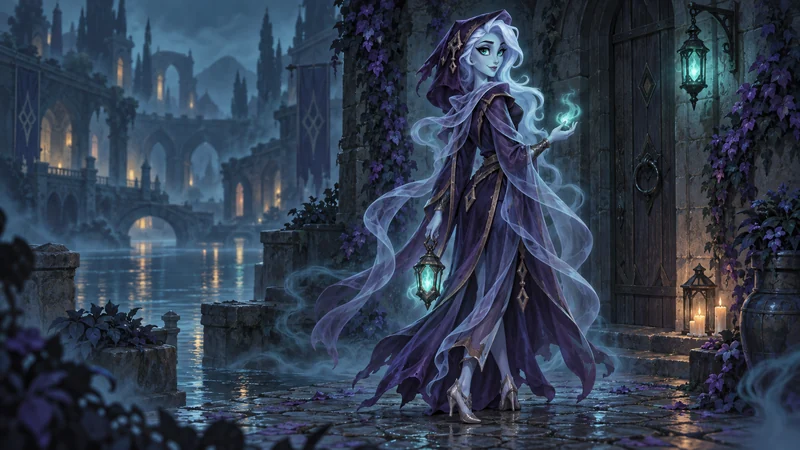 MiraFirst-generation championMira is Nera's estranged twin sister, the softer of the two.Read this biography → encountered the ferry archive much later, while tracing spirits caught at thresholds. She listened to Mara’s account and examined the bell without ringing it. Her Beyond the Veil circle did not claim the swan or rewrite the ferry’s history. MiraMiraFirst-generation championMira is Nera's estranged twin sister, the softer of the two.Read this biography → named the condition: a living spirit held by objects that had carried its repeated choices until an accident made those objects into a boundary.
The trapped swan could appear on water within sight of the bundle. It still turned toward injured people and struck the bell when someone needed attention. It did not raise the dead, choose who deserved recovery or carry messages from every name on the paper. MiraMiraFirst-generation championMira is Nera's estranged twin sister, the softer of the two.Read this biography → warned visitors that a familiar pattern was not unlimited power. The spirit remained the swan Mara had freed, with habits shaped by its own life.
Mara asked whether the spirit could be released. MiraMiraFirst-generation championMira is Nera's estranged twin sister, the softer of the two.Read this biography → said she did not know. Breaking the bell or burning the names might destroy the anchors without opening a passage. They chose preservation while continuing to research. The decision was not acceptance of permanent captivity. It was refusal to gamble with another being because grief wanted a swift answer.
MiraMiraFirst-generation championMira is Nera's estranged twin sister, the softer of the two.Read this biography → copied the rescue entries and left the originals at the ferry. Her circle included the swan among those who attended difficult passages, but the faction came after its life and did not own it. The Ledger Crow later placed the folios together because both concerned names crossing water, not because every ferrier, mourner and spirit belonged to one hidden design.
The apprentice’s first crossing
Mara required every new ferrier to make a daytime crossing before attending a funeral. The apprentice learned where the deck became slick, which rail caught loose cloth, and how the current changed below the bridge. The Swan sometimes followed, but Mara taught the route as if it would not appear. Safety could not depend on the presence of a spirit that had never agreed to serve a schedule.
Each apprentice practiced asking the same two questions: what name should be spoken, and who should receive the belongings afterward. They also practiced accepting silence. A grieving person might need time or might not trust a stranger with the answer. The ledger left a blank rather than forcing a choice. A later correction could be added with the name of the person who requested it.
At the island landing, apprentices read old tags whose families had permitted their use in training. They learned that handwriting, titles and family terms could change across one life. The Swan’s dark reflection sometimes passed beneath the dock while they read. Mara reminded them that the lesson came from the people who had shared those names, not from an animal performing approval.
The final test was the return journey. The apprentice checked that every mourner was aboard, every requested possession accounted for, and no person stood alone on the island path. Only then did Mara ring the home bell. If the Swan washed its beak at the landing, they noticed. If it did not appear, they completed the same duties. Care had to remain reliable even when wonder was absent.
The card and the surviving strike
The Ledger Crow recorded Undertaker’s Swan as a card-soul in its official Mournhand form: a broad black swan with violet-shadowed wings, a pale tag tied near its body and water rising around it. The card contains one spirit, not the people whose names once touched its feathers. Recording did not release the swan from the mortal world or turn every funeral tale into fact.
In the game, Undertaker’s Swan costs 4 energy and enters as a 3/4. After it attacks a creature and survives that combat, it heals your champion by 1. It must be the attacker, the target must be a creature, and the Swan must remain on the board after retaliation. Striking the enemy champion does not trigger the heal. A mutual destruction does not qualify.
The heal cannot take the champion above maximum health. It is tied to each qualifying attack, not to deployment or defending. If the Swan attacks a 2/2 while at full health, it takes two damage, survives at two health, and heals the champion by one. If it attacks a 4/4 without protection, both units can be destroyed and no champion healing occurs.
Its story gives the mechanic emotional meaning without adding rules. The Swan’s history of drawing attention to the injured does not grant Guard, resurrection or extra healing. A player should calculate retaliation before attacking and preserve enough health for the Swan to remain. The strongest line is a useful creature trade that also wins the champion one more morning.
The last name home
Mara continued operating the ferry into old age. Tommen managed the ledgers, and Els maintained the rails. Pela trained apprentices to ask which name a family wanted spoken. The swan’s bell remained in the archive, wrapped when storms approached. Its spirit sometimes crossed the river beside the barge, visible only where dark water held enough light to make a reflection.
On Mara’s final working day, she carried no body. She ferried the people who had shared her life to the island and back for a picnic among Edda’s lilies. They read the rescue ledger instead of the burial register: Kess, Yara’s husband, Mara beneath the stair, and others whose mornings had continued. Each entry named the people who threw ropes, applied bandages or stayed through the night.
The swan appeared at the home landing and washed its beak. Mara did not touch it. She placed Edda’s feather beside the bundle and opened the archive window. The spirit remained bound, but the gesture preserved the direction of freedom. Every keeper after her was instructed to leave an exit clear whenever the swan appeared, even if it could not yet use it.
Its birthday in the Crow’s calendar is March 12, Pisces, chosen for the empathy and river-bound life that shaped its story. Its pastime remains carrying names on feathers across the water. Its trivia remains precise: it washes its beak only after winning someone another morning. Those details belong to the Swan, while every name it carried remains a separate life returned to the people who loved it.
 Grave Lantern KeeperC04 · 2 energy · 2/3The keeper lights a lantern for every grave the city refuses to mark.Read this folio →
 Mourningglass HareC30 · 2 energy · 1/3Its reflection arrives a moment before it does, looking for the wounded it intends to follow.Read this folio →
 Prism CraneC32 · 2 energy · 1/3Folded from the program of a play that never ended, it lands on the wrong page whenever somebody lies.Read this folio →